

The $10,000 Mistake You Don’t Want To Make!
Here’s a scenario we’ve seen play out more than once. A distributor in South America or the Middle East buys a container of clear solid polycarbonate sheets at a cheap price from some other factory. The pre-production samples looked good. The vendor sent pictures of the container that was packed. Everyone's happy. Until the shipment comes.
Turns out the protective film was low-grade and left adhesive residue or scratches on half the sheets. Or the thickness tolerance was all over the place, 5.8mm in one corner, 6.4mm in another, so none of it fit the customer’s framing system. Or worse: Six months later the "UV-stabilized" sheets began to yellow, and the warranty claims began to pour in.
To avoid such things for AHD Polymer customers, At AHD, we strictly control every step from raw materials to production processes and packaging/shipping to make sure that our customers receive high quality plastic sheets and rods. We are not the cheapest but with over 30 years production experience and market understanding we offer the best value for money. If you choose AHD you are buying satisfaction.
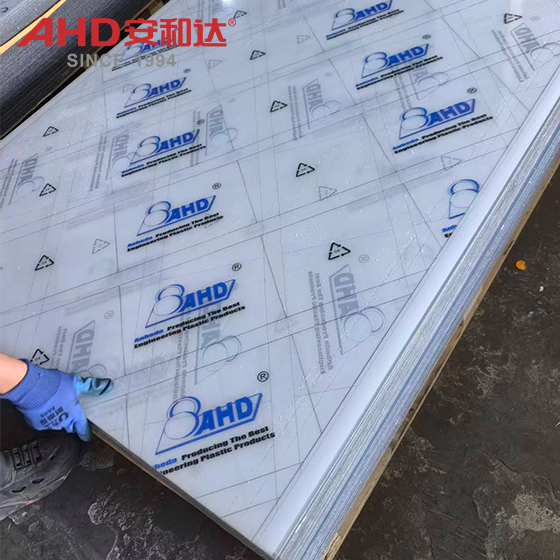
You can check the PC Sheet against your requirements in 7 aspects below. Naturally, the more detailed the requirements, the higher the production difficulty and price accordingly. So we generally require to use what is sufficient and not increase costs for unneeded requirements.
1. Dimensional Accuracy: Thickness Tolerance and Flatness
This is the simplest check, and the one most often skipped.
Solid PC sheets shall be measured at a minimum of 8 points per sheet (corners, midpoints of each edge) with a calibrated digital caliper thickness gauge. For commercial grade solid polycarbonate the acceptable tolerance of thickness is normally +/-0.2mm.
But thickness isn’t everything. Also can check:Length / Width variance/ Diagonal check/ Flatness / bow.
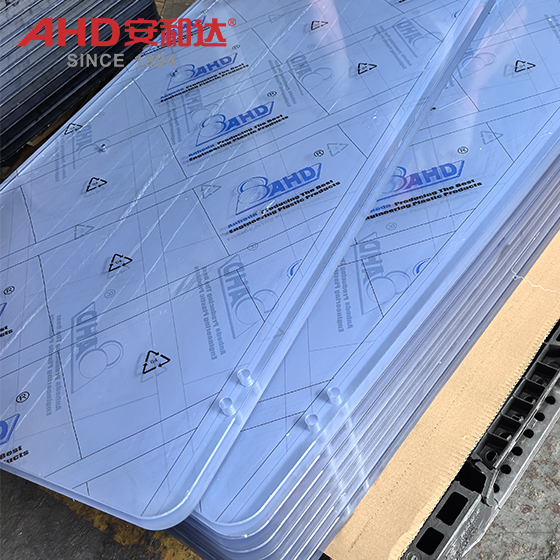
AHD Processed Polycarbonate Sheet According Clients Draw
2. Optical Clarity and Haze - Don't Just Go By Your Eyes
Clarity sells clear PC Plastic Sheet. But “looks clear” and “meets spec” are two different beasts.
Two objective metrics count here:
Light Transmittance (ASTM D1003 / ISO 13468-1): High quality virgin-grade clear solid PC should provide ≥88–91% visible light transmission.
Haze (ASTM D1003):Clear solid sheet should be ≤1% . Any more than 2-3% and the sheet will look milky or foggy, especially in daylight.
What can be done on site without a laboratory?
Hold the sheet up to a high contrast black and white grid or printed text. Distortion, waviness or a cloudy "veil" effect generally indicates uneven cooling of the extrusion, roller marks or internal stress lines. It’s not proof, but it’s a red flag that merits a haze-meter test.
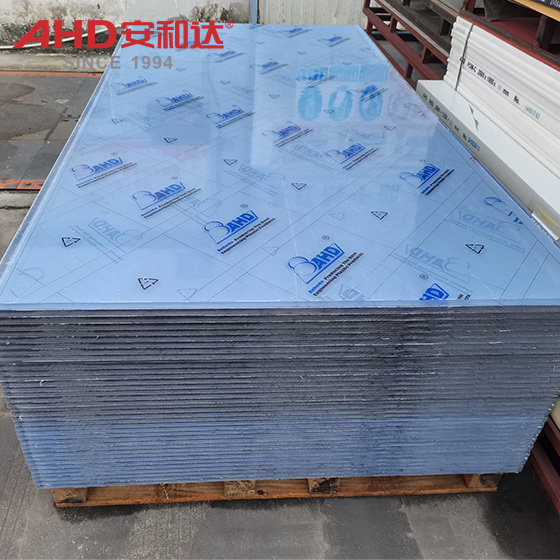
3. Surface Defect Scan: Bubbles, Gels, Scratches and Flow Lines
There are three stages in production when defects can occur:
Extrusion stage — trapped air → micro-bubbles inconsistent melt temp → flow lines / "ghost marks"
Stage handling – dirty rollers, ungloved hands, abrasive conveyor surfaces → fine scratches
Packaging stage — grit under protective film → abrasion patterns
The real test:
Inspect each sheet carefully under even overhead lighting (or preferably, raking side-light). The last sheets in a run tend to be when die buildup and roller contamination peaks so pay special attention to them.
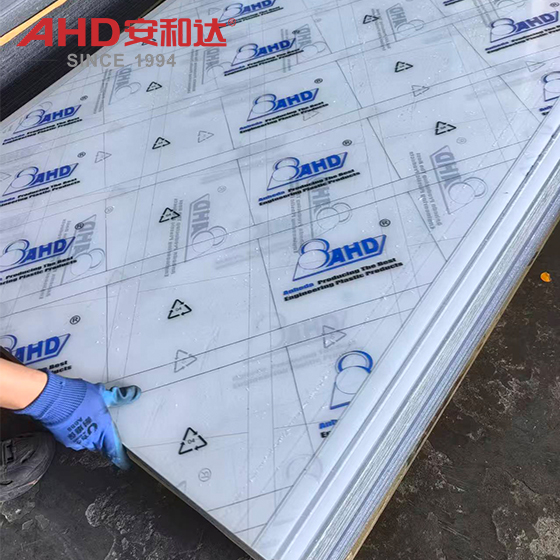
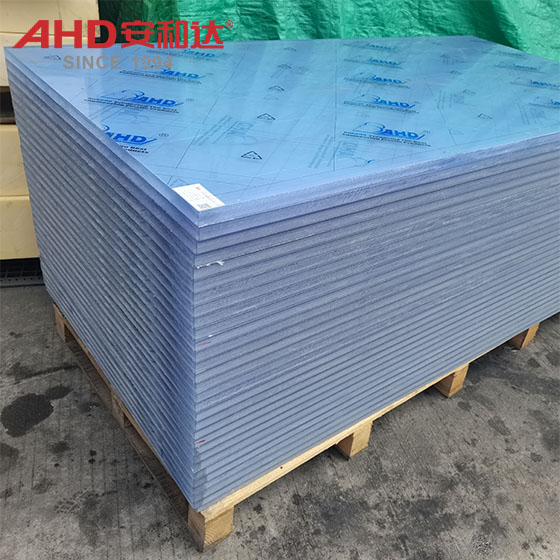
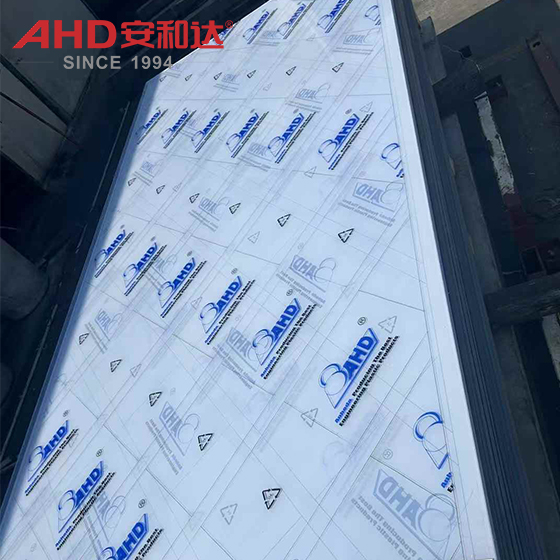
4. Protective Film & Labeling — The Detail that Saves Headaches
It sounds trivial, but the protective PE film is the reason why many shipments go wrong:
Poor quality film bakes on the surface of the sheet under container heat and cannot be cleanly peeled off – leaving sticky residue your end customer will blame you for.
QC checklist item :
Is the film edge trimmed cleanly (no lift at corners)?
Does the film pass a 72-hour heat test simulation cleanly?
5. UV Verification — Is There Actuallya UV Layer?
Not all "UV-stable" sheets are created equal — and not all suppliers are honest about what they're shipping.
There are two common shortcuts in the market:
| Type | Risk Level | Notes |
| True co-extruded UV layer (45–50 µm) | Low risk | UV stabilizer is embedded into the top skin during extrusion — permanent |
| Spray-on / dip UV coating | Medium–High | Can delaminate or wear off with thermal cycling |
| No UV at all (just dyed clear) | Critical | Will yellow in 3–12 months outdoors |
Some quick field checks you can ask for:
Ask the extruder to confirm the co-extruder configuration (some factories will show you the die layout).
Request a material certificate at batch level with UV additive % and thickness of layer.
To be absolutely sure, send a cross section coupon to a local lab for analysis – it will tell you if the UV layer is co-extruded or just a surface coating.
6. Impact & Brittle-Check — "Polycarbonate" Should Not Crack
Polycarbonate’s superpower is impact strength. But if the sheet isn’t dried properly before extrusion, or the regrind is contaminated, or the recycled content is too high, the sheet can become embrittled – meaning it might pass a drop test today, but explode into a thousand pieces three months down the line when exposed to heat.
Practical pre-shipment screening:
mandrel bend test (for thin sheets ≤6mm): surface stress-cracking should not occur when the sheet is bent around a specified radius.
Request Gardner impact or dart drop data from the production batch – not just a generic catalog claim. (ASTM D5420 / ISO 6603)
Ask: Was the resin dried to ≤0.02% moisture content before extrusion?
One container of embrittled sheet can sour a distributor’s relationship with their entire network of wholesale buyer’s contractors. This check is worth a mint.

7. Final Mile Killer -Export Packaging & Pallet Integrity
We saved the best for last. This one is always underestimated by buyers.
You can make perfect sheets and then ruin them in transit if the packaging fails. For sea freight to Africa, South America or the Middle East, it’s a rough trip: container stacking, humidity swings, port handling.
Your packaging QC should check:
Wooden Pallets Fumigated (ISPM 15 stamp — or you’ll get stuck at customs).
Edge protectors (rigid L-angle cardboard or PVC) on all four sides;
Stretch-wrap tension — tight enough so the sheets don’t slide against each other.
Top/bottom cap boards. Prevent puncture damage from fork lift.
Moisture barrier (poly liner or desiccant packs) for tropical humidity routes.

Bottom Line: QC Is a Filter – Use It to Find Better Matches
The suppliers who welcometh these checks? Those are your partners for the long haul.
At the end of the day your customers don’t care what the supplier promised you.It matters to them that the sheets arrive clear, dimensionally accurate, UV protected and installation ready. ‘For every hour of disciplined QC you do, that’s an hour you don’t have to spend on warranty claims, replacement freight and apologising to contractors.’
Want to Compare Samples Side-By-Side or Looking for a Quote?
If you are vetting suppliers and want to benchmark sheet quality before committing to a full container, we can ship you a comparison sample kit (all new-grade clear solid PC in your target thickness) with test reports .
[Request a Sample/ Get a Quote] – give us your target thickness, monthly volume and destination port and our team will respond within 24 hours with a matched specification offer.
