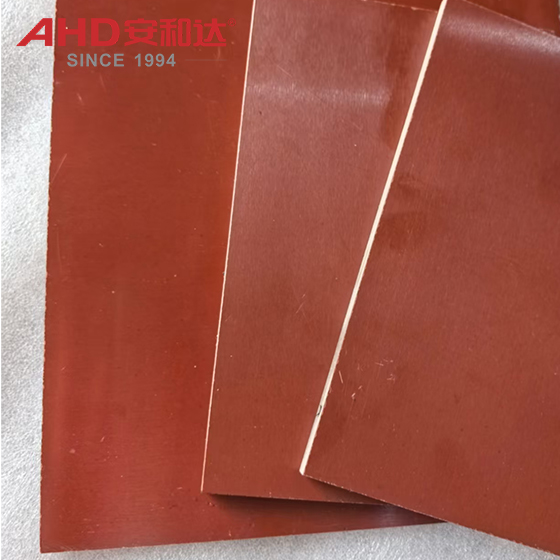
Paper phenolic, cotton cloth phenolic, or glass epoxy FR4/G10?All "insulate" on paper. Wrong pick in the field shows as cracked slot wedges, swollen busbar supports, or a BOM cost.
The old saw that phenolic is cheap is dispelled in this article. We’ll look at phenolic paper laminated sheet, cotton cloth, and FR4 with real-world data and walk through where paper phenolic actually wins in motors and switchgear and where it doesn’t.
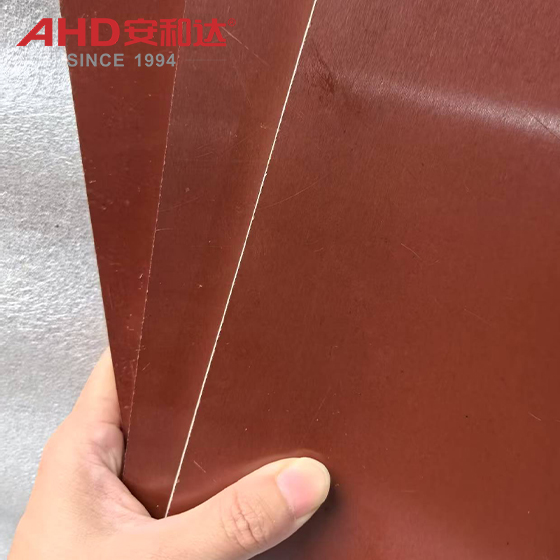
The Insulation Conundrum: Motors and Switchgear Require Different Things
From afar, motor and switchgear insulation look similar – both must have dielectric strength, dimensional stability, and machinability. But the failure modes are different:
On the motor side: slot wedges, phase insulation and terminal boards are subject to cyclic vibration, rotor heating (Class E/B, 120–130 °C) and winding compaction forces. Every start-up gets hammered on the wedge. If the material is too brittle it will chip, if too soft it will creep.
Switchgear side: arc barriers, phase separators, busbar supports, and arc chutes are exposed to electromagnetic forces resulting from fault current and arc-flash events. Here the killer is not just dielectric strength but arc quenching and maintaining clearance geometry after a fault.
Three families of materials are in the running for these jobs. The mistake most engineers make is they default to FR4 because it’s better. And often it's not, and you're paying a 2-3x premium for properties that you don't use.
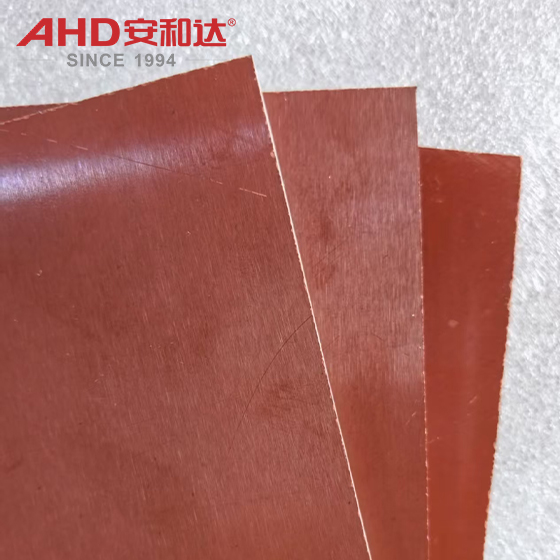
Paper Phenolic Laminate Sheet vs. Cotton Cloth vs. FR4: The Data That Actually Drives Selection
| Paper Phenolic | Cotton-Cloth Phenolic | FR4 | |
| Dielectric strength | ≥ 10–15 kV/mm | 8–12 kV/mm | 18–22 kV/mm |
| Flexural strength | 100–140 MPa | 110–150 MPa | 340–480 MPa |
| Density | 1.30–1.40 g/cm³ | 1.35–1.40 g/cm³ | 1.70–1.90 g/cm³ |
| Continuous temp | 120 °C | 120 °C | 130 °C |
| Flame Retardant | HB | HB | V-0 |
| Cost | Baseline | Higher | Much Higher |
What the table tells you:
Paper phenolic owns the "dry indoor ≤600 V, high-volume punched parts, cost-sensitive" quadrant. That's terminal boards, slot wedges, arc chutes, phase barriers.
Cotton-cloth steps in when the part sees shock/vibration/impact— bushings, gears, wear plates. But it machines slower and can't be cold-punched cleanly.
FR4 Sheet/G10 Sheet is the upgrade when you need UL 94 V-0, >60% RH, outdoor, or flexural loads >10 kpsi. Switchgear arc barriers in modern gear increasingly spec GPO-3 (glass-polyester) over paper for exactly this reason — but paper still holds the low-to-mid voltage OEM segment on cost .
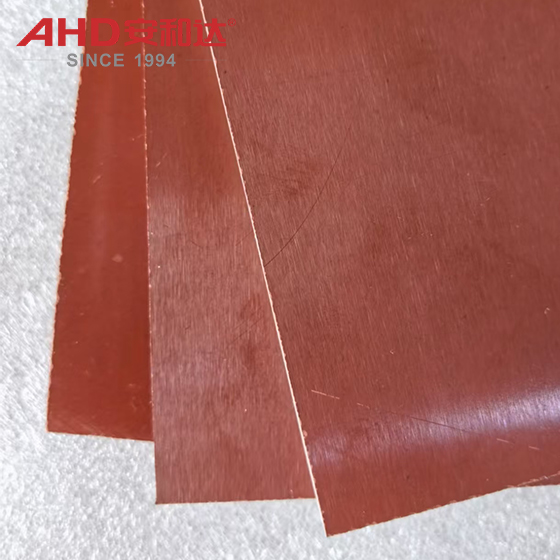
Real Scenarios with Real Specs: Where Paper Phenolic Sheets Really Shines
1. Motor Slot Wedges (3021 / PFCP202)
0.3–1.0 mm phenolic paper strip is commonly used as slot wedges in small-to-medium induction motors (≤500 kW). Why paper on cloth here?
Smooth surface = no magnet wire strand wear during thermal cycling.
The cold-punchable grade lets you die cut wedge profiles at high speed — cloth can’t do this cleanly.
3021 specs (typical) Density 1.30 - 1.40 Bending ≥117 Mpa Vertical dielectric in oil 90 °C ≥16 MV/m Water immersion insulation resistance ≥1.0 × 10⁷ Ω
The work load for motor slot wedge insulation is primarily compression (wedge seated by slot taper) with some vibration. Paper is the Goldilocks of materials: not too snapable, not too expensive to be a consumable on rewinds.
2. Arc Barriers & Arc Chutes (3026 / PFCP203)
The counter-intuitive point is that Paper Phenolic Sheet is better than FR4 for arc chutes, not worse.
When an arc strikes, phenolic resin chars support flame, not. That carbonized track actually helps quench the arc by increasing local resistance – FR4's brominated epoxy self-extinguishes cleaner but doesn't give you that track-resistance assist.
Standard specs for switchgear arc barrier phenolic:
Barrier plates: 3–10 mm, separating live phases, brown (test for saturation with resin).
Busbar supports: CNC machined, carry bus weight + fault magnetic force.
Contact boxes: custom routed, typically 3026 for upgraded arc rating.
3026 sacrifices a little moisture resistance for arc performance -- if your gear is in a climate controlled substation, you're good.
3. Punched Terminal Boards & Busbar Spacers (XXXPC / XPC)
In high-volume stamping, paper phenolic is unmatched. XXXPC (cold-punchable, premium electrical) is available on high speed presses for terminal strips, relay bases and distributor blocks. Cotton can't punch clean--you'd have to machine every hole. FR4 will not without destroying tooling.
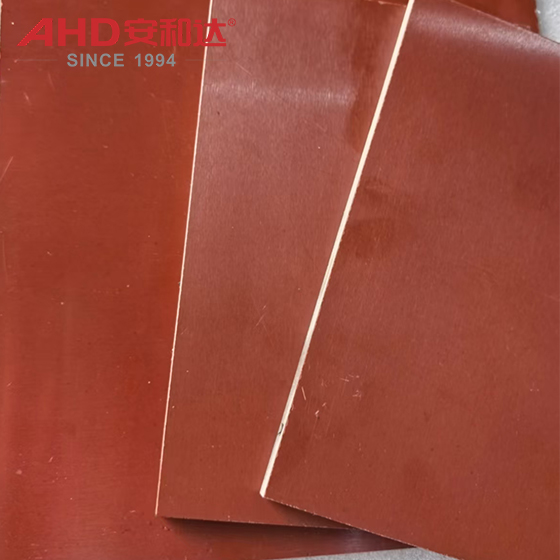
AHD Paper Phenolic Board
Why AHD for Phenolic Paper Laminated Sheet
AHD has been running presses on engineering plastic sheet and rod for 32 years, and phenolic paper is one of those products where "the resin penetration either took or it didn't" — you can't fix it downstream.
What that means for your PO:
Performance compliance >99% on dielectric, flex, and water-absorption minima.
Custom: thickness 0.8–100 mm, sheet, ROHS on file.
Also in-house: cotton-cloth, FR4/G10— so when your next design doesneed to step up from paper, you're not re-qualifying a new vendor.
Volume pricing kicks in at low MOQ, and we hold 2–4 week lead times on standard grades ex-China with consolidated freight options.
Q1: Why do some switchgear specs reject phenolic paper entirely and demand other?
Two triggers: (a) the spec calls UL 94 V-0 — paper phenolic is HB (chars, doesn't self-extinguish fast enough for the listing), and (b) the gear is rated >600 V or goes outdoors/coastal where moisture drops paper's dielectric 35–45% . If neither applies — dry indoor MV gear, <600 V — paper (3026) is still widely accepted by Tier-1 switchgear OEMs.
Q2: What are the important machining precautions for phenolic paper sheets to prevent delamination and burrs?
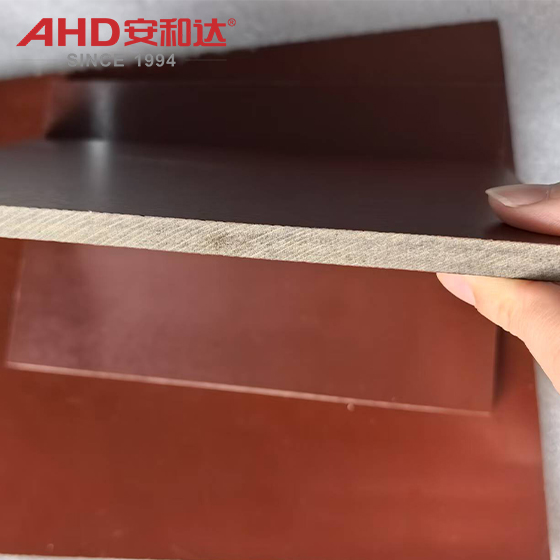
Phenolic paper laminated sheet is a thermoset composite, unlike metals, and machining it like steel will ruin the part. The two biggest failure modes are delamination and edge burring.
Tooling . Always use tungsten carbide or diamond coated tools. High speed steel (HSS) dulls fast, creating heat from friction that softens the resin matrix.
Cooling: Do not use liquid coolants. Phenolic paper absorbs moisture and temporarily degrades dielectric properties. Cooling: Use compressed air.
Drilling: Use a “peck-drilling” cycle (drill in, back out to clear chips, drill in again). This stops chip packing, the number one cause of internal layer separation around the hole.