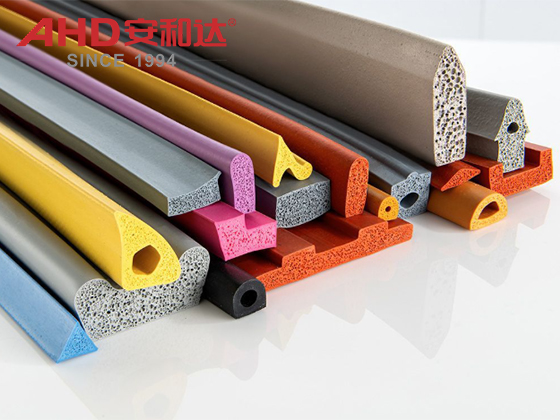
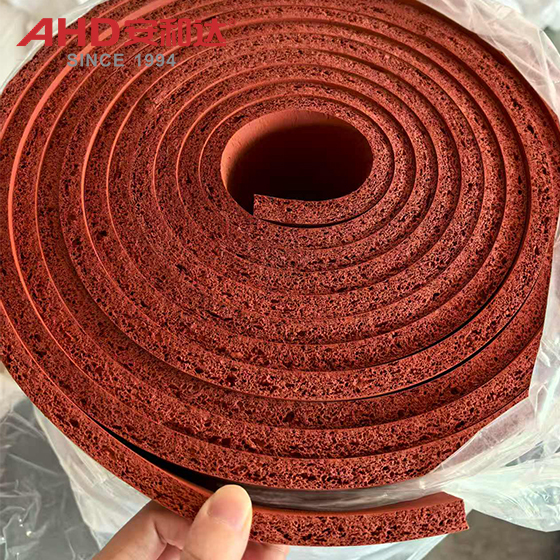
AHD Silicone Foam Sheet
Definition
1. Closed-Cell Structure
• Closed-cell structure refers to a silicone foam material with closed pores. The pores are not interconnected, like small, independent bubbles enclosed within the material.
2. Open-Cell Structure
• The pores in an open-cell structure are interconnected, forming a network-like structure that allows air and other substances to flow through these pores.
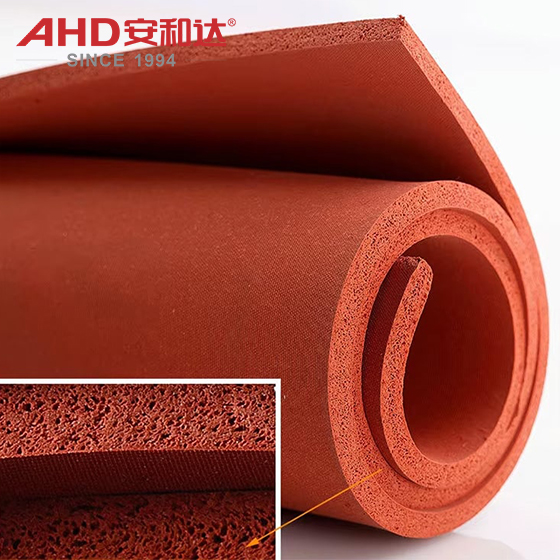
AHD closed cell silicone foam sheet
Property Comparison
1. Physical Properties
• Density: Silicone foam with a closed-cell structure typically has a relatively high density because the pores are independent and closed, resulting in a more compact structure. Open-cell structures may have a lower density because the pores are interconnected, resulting in a looser overall structure.
• Water Absorption: Closed-cell structures have poor water absorption. Because the pores are closed, water cannot easily enter the material. Open-cell structures have better water absorption, allowing water from the outside to enter the material through the interconnected pores.
2. Mechanical Properties
• Elasticity: Closed-cell structures have good elasticity. When subjected to external forces, they can recover well. Because the pores are independent, external forces are less likely to cause irreversible changes in the pore structure. Open-cell structures have relatively poor elasticity. When subjected to large external forces, the pore structure is easily deformed and difficult to fully recover.
• Strength: Closed-cell structures have relatively high strength, such as tear resistance, because their compact structure and stable connections between components are relatively strong. Open-cell structures have relatively low strength. The interconnected pores make the material more susceptible to damage along the pore lines when subjected to external forces.
3. Chemical Properties
• In terms of chemical stability, both materials generally have good chemical stability, but closed-cell structures may be more resistant to attack by external chemicals due to their enclosed structure, as it is more difficult for chemicals to penetrate the material.
Applications
1. Applications of Closed-Cell Structures
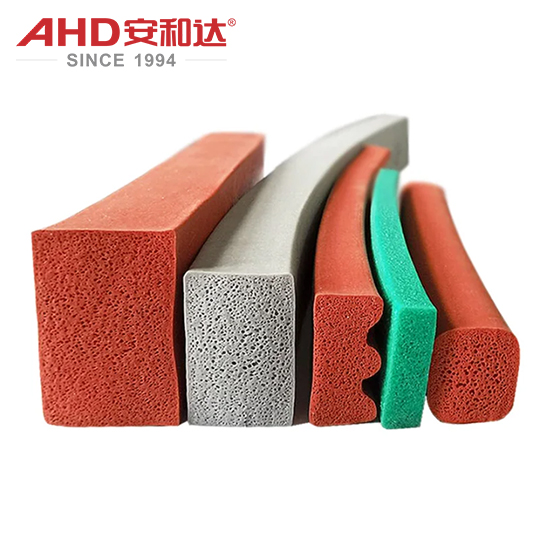
• Due to their excellent waterproofing, thermal insulation, and elastic properties, closed-cell silicone foam sheets and rods are often used in sealing applications, such as waterproofing in electronic devices, as fillers for thermal insulation layers in the construction industry, and in packaging for items requiring cushioning and protection.
2. Applications of Open-Cell Structures
• Due to their excellent sound absorption and air permeability, open-cell silicone foam sheets and rods can be used as filter materials, such as dust and other particulate matter in air purification equipment. They can also be used to make sound-absorbing materials, playing a role in noise control projects.
Recommended Usage
• For applications requiring waterproofing, heat insulation, high elasticity, and high strength, such as sealing and cushioning, we recommend choosing a closed-cell silicone foam sheet.
• For applications requiring sound absorption, ventilation, or filtration, such as air purification and noise control, we recommend choosing an open-cell silicone foam sheet.