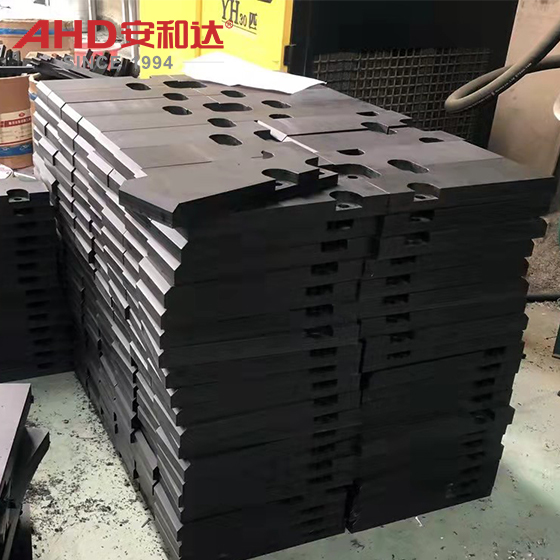
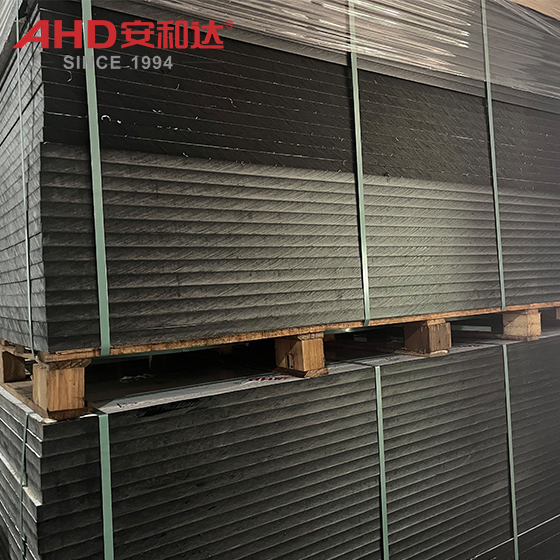
ESD PTFE sheet is a composite sheet that combines anti-static (ESD, Electrostatic Discharge) functionality with the properties of polytetrafluoroethylene (PTFE). Based on PTFE resin, it incorporates conductive fillers (such as carbon black, carbon nanotubes, metal powder, or conductive fibers) to impart controlled conductivity to the already highly insulating PTFE. This reduces the surface resistivity to levels that meet ESD protection standards, preventing static electricity buildup and damage to sensitive components or the environment.
How is ESD PTFE sheet made?
The production process primarily includes raw material mixing, molding, sintering, and post-processing. The key is to ensure that the conductive filler is evenly dispersed within the PTFE matrix:
1. Raw Material Pretreatment: PTFE resin and conductive filler are mixed in appropriate proportions. High-speed stirring, ball milling, or ultrasonic dispersion processes are used to evenly disperse the filler and prevent agglomeration.
2. Molding: Blanks are formed using a molding or extrusion process. During molding, the mixture is placed in a mold and pre-pressed at 20-30 MPa. The blanks are then heated to above the melting point of PTFE (approximately 327°C) for sintering to crosslink and solidify the resin.
3. Sintering and Cooling: The sintering temperature is controlled at 360-380°C (PTFE's melting temperature range) for 2-4 hours to ensure sufficient crosslinking of the molecular chains. Cooling is then performed slowly to prevent cracking caused by internal stress.
4. Post-processing: The sintered plates are processed to the target size through turning, milling or grinding. Surface treatment can further optimize the performance.
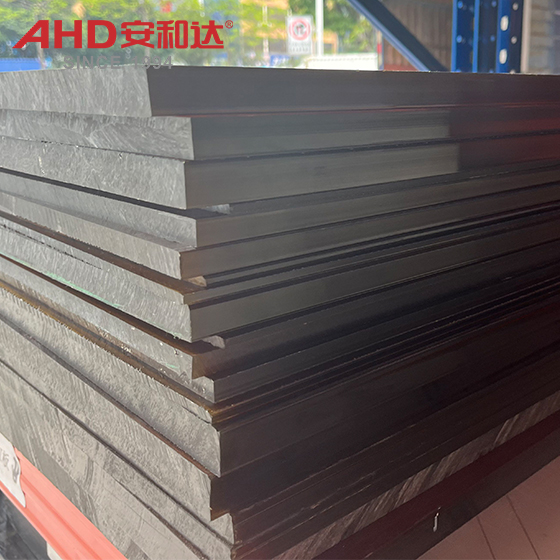
Core Features and Advantages
Features:
• Anti-static performance: Surface resistivity of 10⁶~109 Ω/sq (static dissipation time <1 second), effectively dissipating static electricity and preventing sparks or electromagnetic interference.
PTFE Basic Properties:
• Wide temperature resistance: -200°C~260°C (long-term use), up to 280°C for short periods;
• Chemical stability: Resistant to strong acids, strong bases, and organic solvents (except molten alkali metals);
• Low coefficient of friction: Static coefficient of friction ≈0.04 (the lowest among solids), dynamic coefficient of friction ≈0.01;
• Extremely low surface energy (≈18 mN/m) for strong anti-adhesion properties;
• Aging resistance: Excellent UV and weather resistance (over 10 years of outdoor use).
Advantages:
• Comprehensive Protection: Compared to common anti-static materials (such as conductive ABS and PVC), ESD PTFE offers significantly superior heat resistance, corrosion resistance, and anti-adhesion, making it suitable for harsh environments.
• Long-lasting Stability: The conductive network embedded within the PTFE matrix is less susceptible to wear and tear and aging (its lifespan far exceeds that of surface-coated anti-static materials).
• Lightweight: With a density of only 2.1-2.3 g/cm³ (lower than metal), it is suitable for lightweight applications.
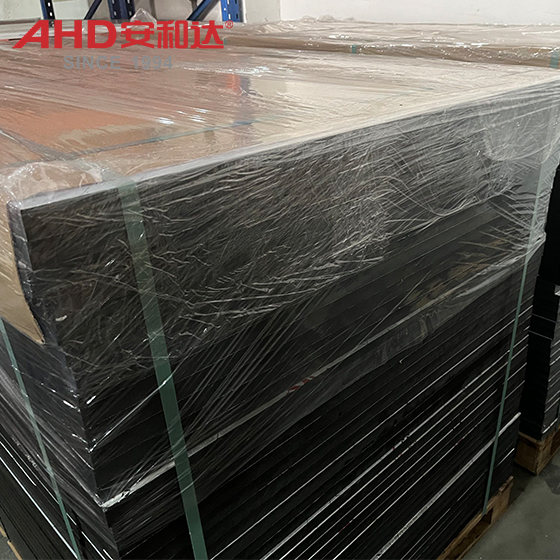
Common Applications
ESD PTFE sheet, with its combined properties of anti-static, corrosion-resistant, and heat-resistant, is widely used in applications sensitive to static electricity or in harsh environments:
• Electronics and semiconductors: Wafer carriers, LED chip carriers, and FPC (flexible printed circuit) processing jigs (anti-static to prevent chip breakdown).
• Precision optics: Optical lens fixtures and laser equipment platforms (anti-adhesion and anti-static to reduce dust absorption).
• Chemical/pharmaceuticals: Corrosion-resistant anti-static reactor liners and pharmaceutical packaging trays (acid and alkali resistant and prevents dust explosions caused by static electricity).
• Aerospace: Satellite electronics compartment insulation and aircraft interior anti-static panels (lightweight, heat-resistant, and cosmic ray-resistant).
• Medical equipment: Surgical instrument trays and sterilization equipment carriers (resistant to alcohol/disinfectant corrosion and anti-static to prevent bacterial absorption).
Usage Precautions
1. Temperature Limit: Long-term operating temperature should not exceed 260°C, and short-term operating temperature should not exceed 280°C (high temperatures may weaken the interface between the filler and PTFE).
2. Machining: Use specialized cutting tools when cutting to avoid static electricity generated by high-speed friction. Avoid excessive compression that may cause filler dislodgement.
3. Chemical Compatibility: While resistant to most chemicals, avoid contact with extreme substances such as molten alkali metals (such as sodium and potassium) and high-temperature fluorine gas (>250°C).
4. Cleaning and Maintenance: Wipe the surface with a neutral detergent (such as ethanol or deionized water). Avoid using strong abrasive cleaning tools to prevent filler wear.
5. Electrostatic Verification: Surface resistivity must be tested before use (random inspection of each batch is recommended) to ensure it meets the surface resistivity standard of 10⁶ to 10¹¹ Ω/sq.
ESD PTFE sheet is an innovative combination of PTFE and conductive technology. It is suitable for demanding scenarios requiring "anti-static + extreme environment tolerance". Its core value lies in achieving multiple properties that are difficult for a single material to achieve through material modification. It is one of the key materials for precision protection in the fields of electronics, chemicals, and medicine.