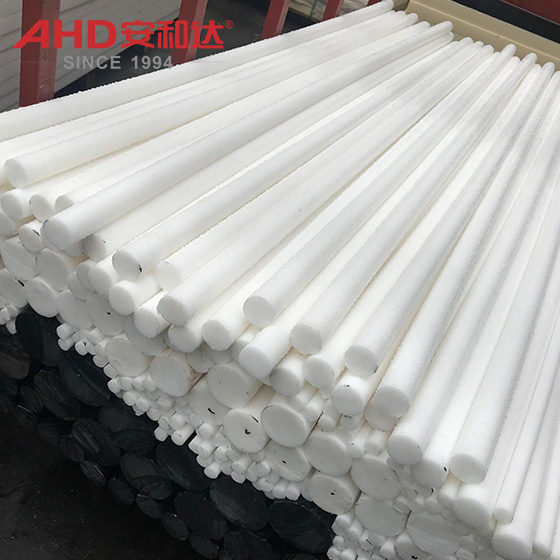
POM (polyoxymethylene) is a high-performance engineering plastic widely used in gears, bearings, precision parts, and other fields. POM-C and POM-H are two common types of POM, differing primarily in their molecular structure and modification. The following provides a detailed analysis of their definitions, characteristics, applications, and advantages:
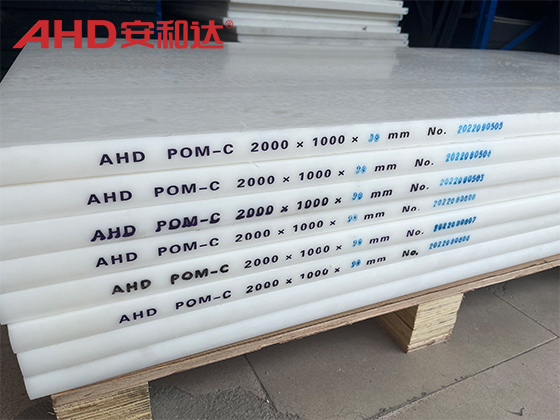
AHD White Polyoxymethylene Sheet
I. Basic Definitions
POM-H (homopolyoxymethylene): Produced through the homopolymerization of formaldehyde monomer (HCHO), its molecular chain structure consists of pure -O-CH₂- repeating units and exhibits high molecular regularity.
POM-C (copolyoxymethylene): Typically formed by the copolymerization of formaldehyde with other monomers (such as a small amount of ethylene oxide, EO), the introduction of ether bonds (-O-) into the molecular chain disrupts the high molecular regularity of the homopolyoxymethylene.
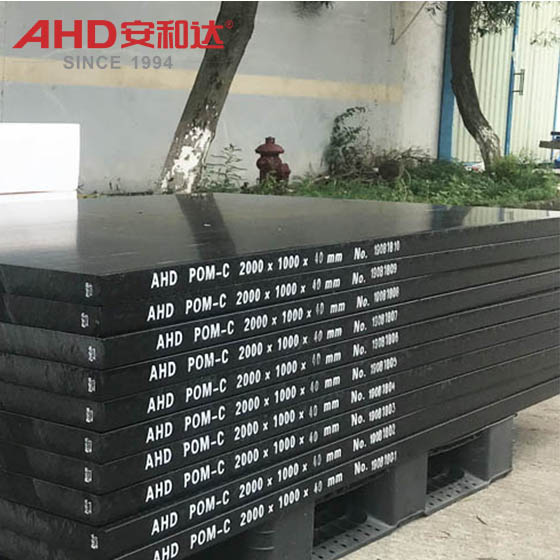
Ⅱ.Similarities
Both materials belong to the polyoxymethylene family and share similar core properties:
Mechanical Properties: Both exhibit high hardness, high rigidity, friction resistance (self-lubricating properties), and good impact resistance.
Chemical Stability: Resistant to most organic solvents (such as hydrocarbons and ketones), but not to strong acids and alkalis.
Electrical Properties: Excellent electrical insulation, suitable for use in electronic and electrical applications.
Ⅲ. Differences and Features Comparison
| Characteristics | POM-H (Polyoxymethylene Homopolymer) | POM-C (Polyoxymethylene Copolymer) |
| Molecular Structure | Pure -O-CH₂- repeating units create a highly regular molecular chain. | Containing -O-CH₂- and -O-CH₂-CH₂- (ether bonds) units reduces the regularity of the molecular chain. |
| Crystallinity | High crystallinity (approximately 75%-85%) indicates a dense structure. | Low crystallinity (approximately 60%-70%) indicates a relatively loose structure. |
| Water/Hydrolysis Resistance | Poor (easily hydrolyzed and scissioned in hot water or steam). | Excellent (ether bonds inhibit hydrolysis and are resistant to hot water above 100°C). |
| Temperature Resistance | The long-term operating temperature is approximately 80-100°C. | The long-term operating temperature can reach 100-120°C (some modified varieties can reach even higher). |
| Mechanical Properties | Higher rigidity and greater hardness (Rockwell hardness R120-130). | Excellent toughness (higher notched impact strength), slightly lower rigidity (R110-120). |
| Processing Performance | High melt viscosity and slightly poor fluidity require high-temperature processing. | Excellent melt fluidity allows for a wider processing window (especially for injection molding). |
| Dimensional Stability | The shrinkage rate is larger at high temperatures, resulting in slightly lower dimensional stability. | The shrinkage rate is more stable, resulting in less dimensional change at high temperatures. |
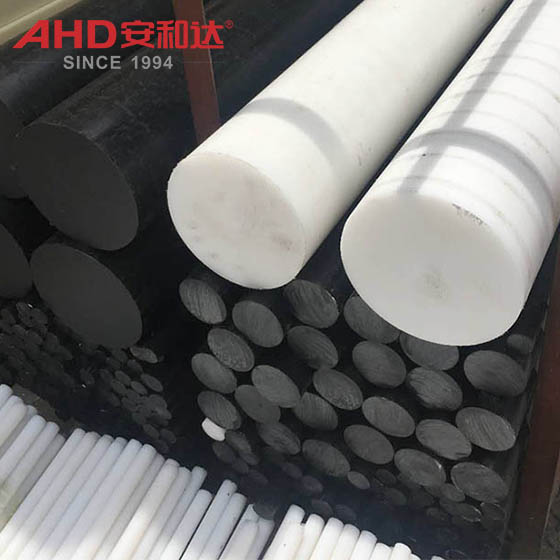
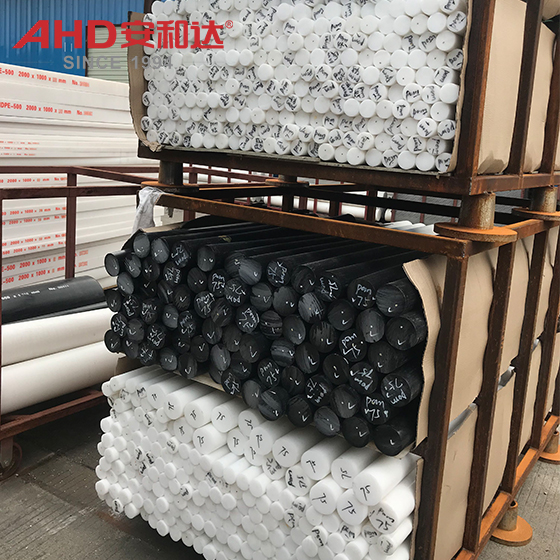
AHD POM Rod
IV. Application Differences
POM-H (Polyoxymethylene Homopolymer):
Due to its high rigidity, high hardness, and dimensional accuracy, it is more suitable for applications requiring high structural strength and dimensional stability, such as:
Precision mechanical parts: gears, bearings, cams, and precision screws;
Electronic and electrical appliances: switches, relay housings, and precision connectors;
Daily necessities: zipper pulls and gear transmission components.
POM-C (Polyoxymethylene Copolymer):
Due to its superior hydrolysis and temperature resistance, it is suitable for humid, high-temperature, or chemical environments, such as:
Automotive: Engine peripheral parts (such as throttle bodies) and cooling system components;
Water treatment equipment: Valve seals and water pump impellers;
Industrial components: Oil- and water-resistant seals and chemical pipe joints.
V. Core Advantages Summary
Advantages of POM-H:
High rigidity, high hardness, and high dimensional accuracy make it suitable for precision structural parts; low cost (relatively simple production process).
Advantages of POM-C:
Excellent hydrolysis and temperature resistance, wide application range; improved toughness and strong impact resistance; and high processability (especially injection molding).
Note: Different manufacturers may use different nomenclatures for POM-C/POM-H (for example, some manufacturers simply use "homopolymer" or "copolymer"). When selecting a material, consider its performance based on specific material parameters (such as melting point, water absorption, and notched impact strength). Furthermore, POM can be modified to create even more sub-categories (such as adding glass fiber reinforcement or flame retardants), so the choice should be based on application requirements.