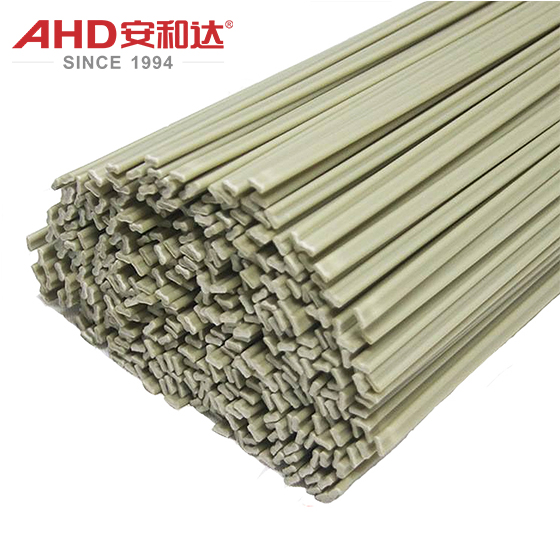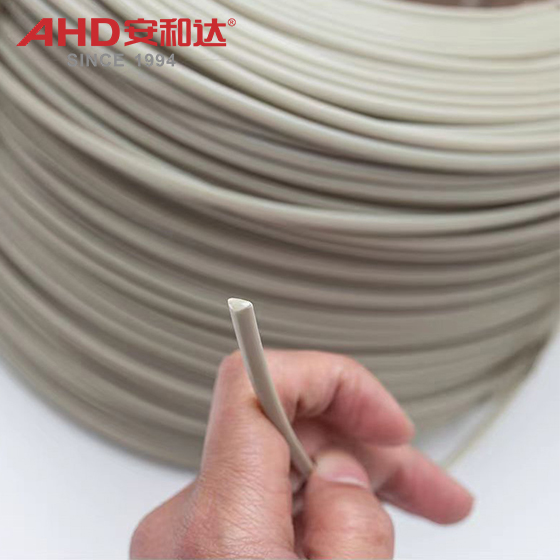
Ⅰ.PP Welding Rod (Polypropylene Welding Rod) Detailed Explanation
PP Welding Rod (Polypropylene Welding Rod) is a filler consumable specifically designed for welding polypropylene (PP) materials. Its primary component is high-purity polypropylene (a small amount of modifier may be added to optimize performance). Its purpose is to fill gaps in the connection or repair of PP products (such as pipes, tanks, and plates) by heating and melting them, fusing them with the parent material to form a secure joint.
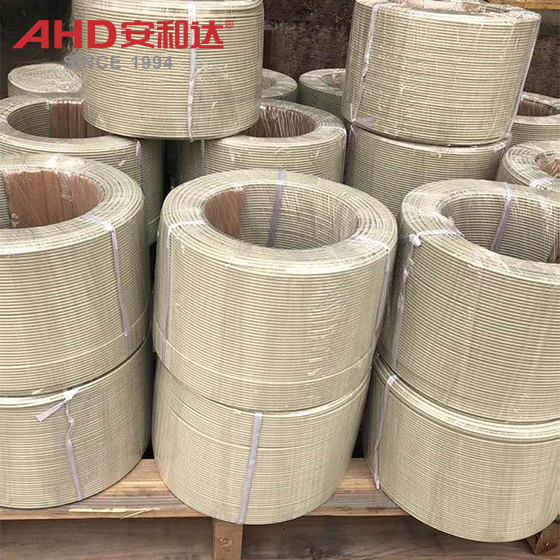 AHD Welding PP Rod Roll
Ⅱ.Characteristics and Advantages of Plastic Welding Rods
1. Core Characteristics
Material Compatibility: Its chemical structure is consistent with that of the PP substrate (both are polyolefins), allowing for seamless fusion after melting, preventing interfacial delamination caused by material differences.
Melting Point Matching: Its melting point is approximately 160-170°C, close to that of the PP substrate, allowing for simultaneous melting during welding, minimizing over-scorching and incomplete fusion.
Mechanical Properties Similar to the Parent Material: The tensile strength and impact resistance of the welded joint can reach 80%-95% of that of the parent material (depending on the welding process), meeting the requirements of most structural components.
Excellent Chemical Resistance: Inheriting PP's resistance to acids, alkalis, salts, and organic solvents, it is suitable for applications such as chemical containers and pipelines.
Moderate Temperature Resistance: Its long-term operating temperature range is -20°C to 100°C (short-term resistance to 120°C), consistent with that of the PP substrate, and welding does not affect its overall temperature resistance.
2. Key Advantages
Low Cost: Made from general-purpose PP, this welding rod is cheaper than other engineering plastic welding rods, making it suitable for large-scale applications.
Simple Process: Requires no complex equipment (basic tools include a hot air gun/welding gun and welding rods), and requires less operator skill than butt fusion or electrofusion.
High Flexibility: Suitable for irregular joints, repairs, or small-batch production (such as custom PP equipment repairs), whereas butt fusion welding of large equipment requires specialized machine tools.
Environmentally Friendly and Safe: Contains no toxic additives, and the welding process produces no irritating gases (only olefin gases from the mild decomposition of PP at high temperatures, which require ventilation).
III. Instructions (Using the most common hot air welding method as an example)
1. Preparation
Tools and Materials: Hot air gun (adjustable temperature, 200-300°C recommended), PP welding rod (2-4mm diameter, suitable for the joint gap), angle grinder/sandpaper (grinding tools), alcohol/acetone (cleaning agent).
Environmental Requirements: Dry (humidity <70%), well-ventilated (to avoid accumulation of decomposition gases), temperature 5-35°C (low temperatures require a longer preheating time).
2. Operational Procedures
Surface Preparation (critical):Remove oil and dust from the PP base material at the joint; Wipe with alcohol or acetone to ensure no residue remains (grease can cause cold welds).
Grinding Rough Surfaces: Use an angle grinder or sandpaper to roughen the joint edges (to increase the fusion area) and clean any grinding dust.
Preheating and Adjustment:Set the heat gun to 250-300°C (refer to the PP grade for the specific temperature). Hold the nozzle 10-15mm from the base metal and evenly preheat the joint and welding rod.
Welding Process:Maintain a steady heat gun to melt the base metal joint and welding rod simultaneously (the molten end of the welding rod should appear translucent).
Feeding the welding rod: Gently press the welding rod at a 45° angle to merge it with the joint molten pool. Feed the welding rod at a steady speed (approximately 2-5cm/minute) to avoid buildup or breakage.
Compacting the molten pool: Use a roller or your fingers (wearing heat-resistant gloves) to gently press the weld to remove any air bubbles and ensure a tight fit.
Cooling and Post-Processing:Allow natural cooling (do not force water cooling) to avoid internal stress cracking. After cooling, inspect the weld: A weld that is free of cracks, pores, and looseness when manually bent is acceptable.
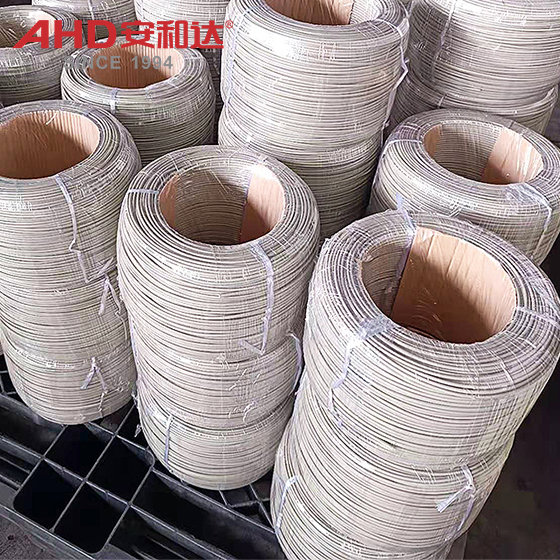
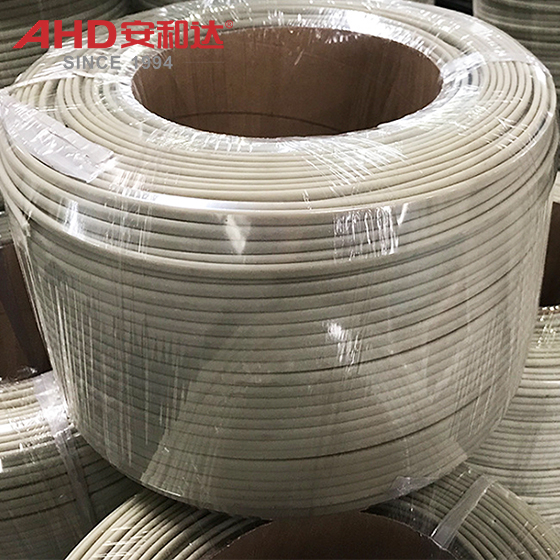
AHD Welding PP Rods Rolls
IV. Key Points
1. Material Matching
Select welding rods based on the PP base material type: homopolymer PP (high rigidity) welding rods should be used; copolymer PP (high toughness) welding rods should be used. Otherwise, delamination may occur due to differences in crystallinity.
2. Surface Preparation is Crucial
Grease and dust can form an isolation layer, resulting in a cold weld. Unpolished smooth surfaces have insufficient fusion area, reducing strength by over 50%.
3. Temperature Control
Too low a temperature: The welding rod and base material will not fully melt, resulting in a "fake weld" (appearing normal but internally unbonded).
Too high a temperature: The PP decomposes, producing carbides (black impurities), which reduce the corrosion resistance and strength of the weld.
4. Welding Speed and Pressure
Excessive speed: The weld pool is not fully integrated, which can easily cause porosity. Too slow speed: Over-melting the material can lead to collapse or burn-through.
Uneven pressure: This can cause partial incomplete fusion or buildup in the weld, requiring a steady feed force.
5. Adjustments for Special Scenarios
Thick plate welding (>5mm): Multiple layers are required, with the first layer filling gaps and the second layer covering and compacting.
Chemical environments: Welding rods with anti-aging agents (such as UV stabilizers) are preferred to extend outdoor service life.
Summary
PP Welding Rods are a low-cost, efficient solution for joining PP products. Key features include material matching, strict surface treatment, and temperature control. When used correctly, they ensure joint strength close to that of the parent material. They are widely used in the chemical, packaging, construction (e.g., PP awnings), and automotive parts (e.g., PP water tanks).