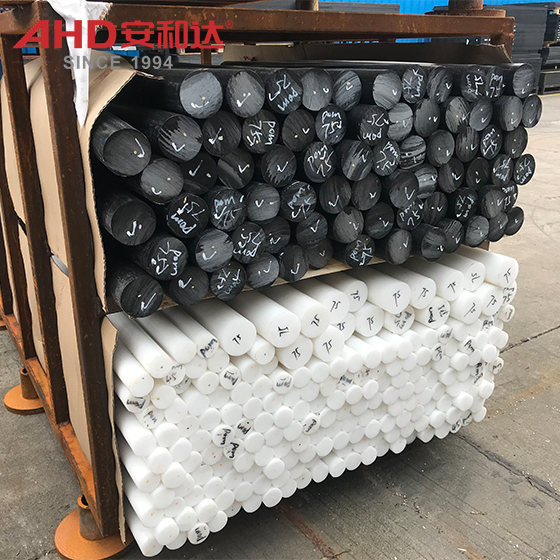
Ⅰ. What is POM Tube?
POM Tube (Polyoxymethylene Tube) is a plastic tubular product made from polyoxymethylene (POM). POM is a high-performance engineering plastic. Its molecular chain contains a large number of repeating "-CH₂O-" structures, giving it metal-like rigidity and friction resistance, earning it the nickname "steel." Produced through an extrusion process, POM Tube typically has a circular cross-section (custom shapes are also possible). It is widely used in applications requiring high mechanical strength, wear resistance, and dimensional stability.
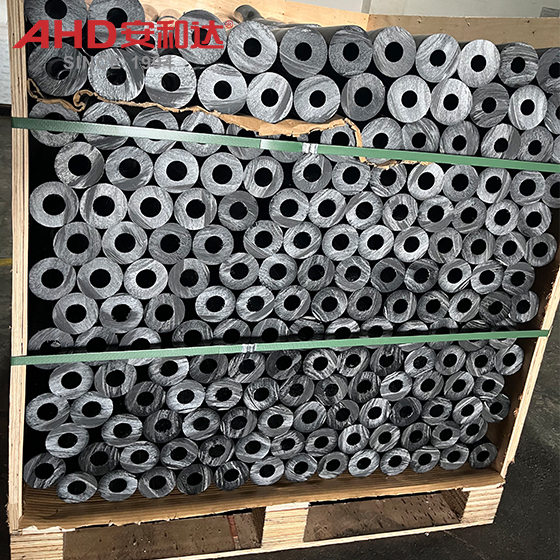
AHD POM Material Tubes
Ⅱ. POM Tube Production Process
POM Tube is primarily produced through extrusion molding, with the following process:
1. Raw Material Preparation
Select POM resin (homopolymer or copolymer), add necessary additives (such as antioxidants, lubricants, and masterbatch), and mix thoroughly.
Homopolymer POM (POM-H): High crystallinity, higher rigidity and strength, but lower toughness.
Copolymer POM (POM-C): Contains a small amount of ethylene oxide units, offering improved toughness and impact resistance, and a wider range of applications.
2. Extrusion
Plasticizing and Extrusion: POM granules are fed into a single-screw or twin-screw extruder and heated to a molten state (homopolymer POM, approximately 210-230°C; copolymer POM, approximately 190-210°C).
Tube Forming: The molten material is extruded through an annular die to form a hollow tube, which is then pulled out at a constant speed by a haul-off machine.
Cooling and Shaping: The tube enters a water trough or air cooling section to cool and solidify (the cooling rate affects crystallinity and dimensional stability).
Cutting and Coiling: Tubes are cut to length according to specifications or wound into coils (for small-diameter tubes).
3. Post-Processing (Optional)
Surface Treatment: Polishing or Coating.
Printing and Labeling: Specifications, material, and batch number are marked.
Performance Testing: Testing for wall thickness uniformity, tensile strength, and temperature resistance.
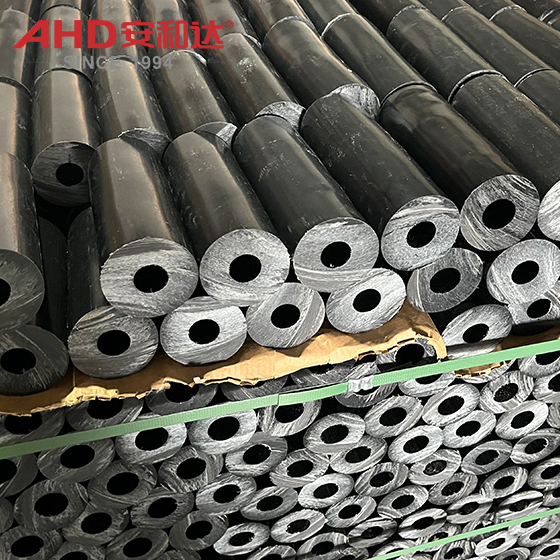
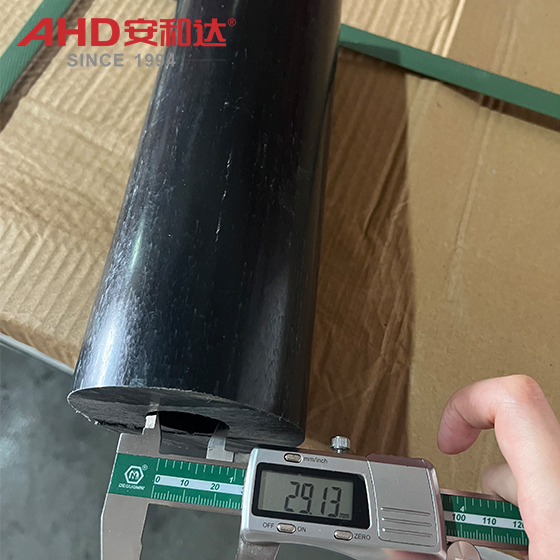
Ⅲ.The core properties of POM Tube support its applicability.
POM is a crystalline engineering plastic available in two grades: homopolymer (POM-H) and copolymer (POM-C). While their properties differ slightly (homopolymer offers greater rigidity, copolymer offers greater toughness), they share the following key characteristics, which determine their applicability as tubing:
High mechanical strength: Tensile strength and impact resistance surpass those of ordinary plastics, approaching those of metal.
Low friction and wear resistance: Self-lubricating, with wear resistance second only to polytetrafluoroethylene (PTFE).
Chemical resistance: Resistant to organic solvents (such as alcohols and hydrocarbons), weak acids and bases, but not strong acids (such as concentrated sulfuric acid) or strong oxidants.
Dimensional stability: Low hygroscopicity, minimal impact from ambient humidity, and precise tolerance control.
Fatigue resistance: Withstands long-term cyclic stresses (such as reciprocating motion).
Comparative Advantages (vs. other plastic pipes):
vs. Nylon (PA) pipe: More wear-resistant and dimensionally stable;
vs. Polyethylene (PE) pipe: Higher strength and rigidity;
vs. Polytetrafluoroethylene (PTFE) pipe: Lower cost and higher strength.
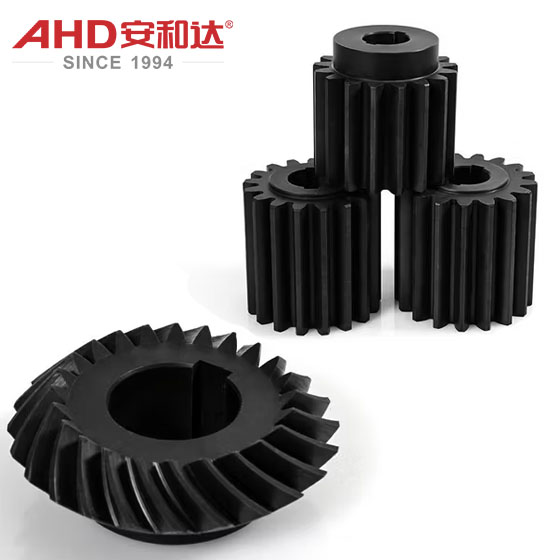
POM Machining Parts
Ⅳ. How to Use POM Tubes and Rods
Processing Methods:
Machining: Ideal for machining on automatic lathes, it can produce precision parts. If the material has high internal stresses before machining, it requires stress relief to prevent deformation.
Injection Molding: Drying is generally not required if the material is stored in a dry environment. Injection pressure is generally 700-1200 bar, with a medium to high injection speed. Any type of runner and gate can be used. Hot-nozzle runners are recommended for homopolymer materials, while either internal or external hot runners can be used for copolymer materials. The melt temperature is 180-280°C, and the mold temperature is 20-40°C.
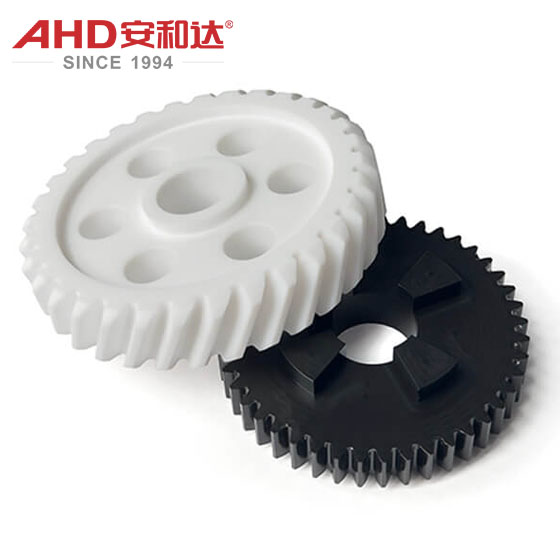
POM Processed Parts
Ⅴ. Usage Precautions
Dimensional Accuracy: Select tolerances based on the application (e.g., high-precision tubing is required for precision transmission, while standard tolerances are acceptable for general structural parts).
Temperature Limits: The long-term operating temperature range for POM is approximately -40°C to 100°C. Exceeding this temperature will cause embrittlement/deformation. For high-temperature applications, a modified formula should be selected.
Chemical Compatibility: Avoid prolonged contact with strong oxidizing acids (e.g., concentrated nitric acid) and highly polar solvents (e.g., acetone). A "media immersion test" should be performed beforehand.
Lubrication (Optional): Although self-lubricating, a small amount of silicone oil or PTFE grease can be added for high-load/high-speed applications (a POM-compatible lubricant must be selected).
Securing Method: Interference fit or retaining ring/circlip securing is preferred. For gluing, use a POM-specific adhesive (e.g., epoxy resin adhesive with a toughening agent) to avoid corrosion from standard adhesives.
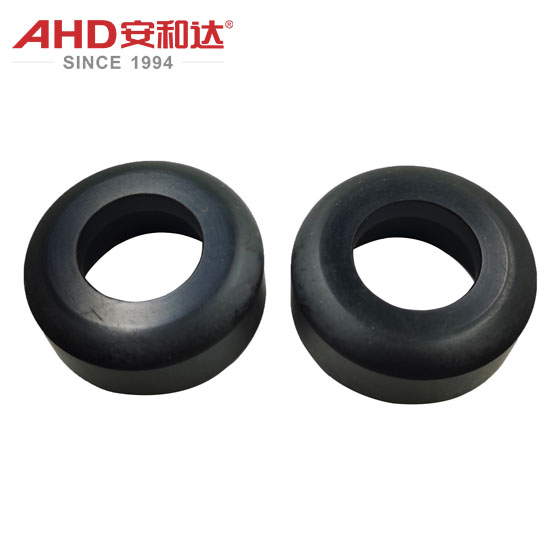
Ⅵ. Application of POM Tubes and Rods
POM tubes and rods (polyoxymethylene tubes and rods) are high-performance engineering plastics with a wide range of applications, primarily in the following areas:
Mechanical Equipment: They can be used to manufacture transmission and precision components such as gears, bearings, pulleys, cams, impellers, and rollers. Their excellent wear resistance and self-lubricating properties ensure low noise and long life at high speeds.
Automotive: They are used to manufacture components for brake systems, fuel systems, and air conditioning systems, such as brake pedals, radiator valves, fuel tank caps, water pump impellers, and carburetor housings. Their lightweight and wear-resistant properties enhance driving safety and comfort.
Medical Equipment: Due to their excellent biocompatibility and easy sterilization, they can be used to manufacture medical devices such as surgical instrument handles and internal components of infusion pumps.
Electrical and Electronics: With their excellent electrical insulation, heat resistance, and chemical resistance, they are used to manufacture electrical insulators, sockets, switches, connectors, and other electronic components.
Chemical Industry: They are resistant to corrosion from various chemicals and are used to manufacture valves, pipe fittings, and pumps for chemical equipment.
Daily Home Use: It can be used to create furniture accessories, decorative items, appliance housings, sinks, water heater components, and more, combining aesthetics and durability.
Other Applications: It is also used in sports equipment, construction, textile machinery, and other fields.
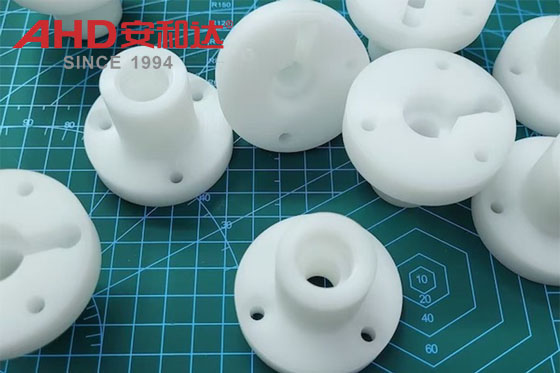
POM Tube is a high-performance engineering plastic pipe. Its core value lies in achieving metal-like strength and wear resistance at a plastic cost. It is suitable for wear-resistant applications, precision transmission, or fluid transmission in precision machinery, automation equipment, automotive, and other fields. When using it, choose a homopolymer or copolymer type based on the operating conditions, and pay attention to installation design and maintenance to maximize its lifespan. Its production relies on a high-precision extrusion process, with key technical requirements centered around adapting to the operating conditions, reducing stress, and controlling tolerances.
AHD Polyoxymethylene Rod