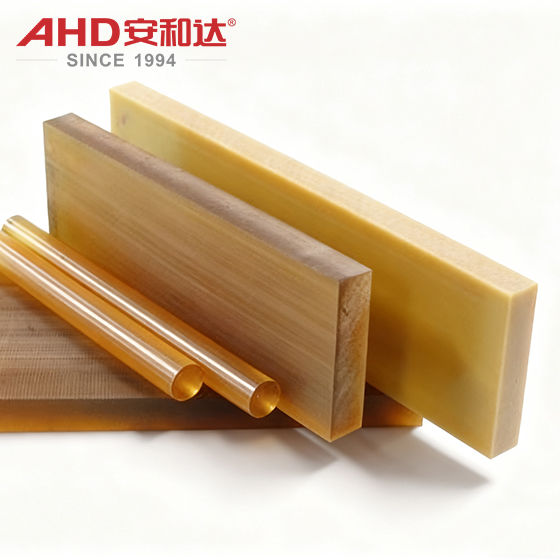
Ⅰ.What is PEI GF?
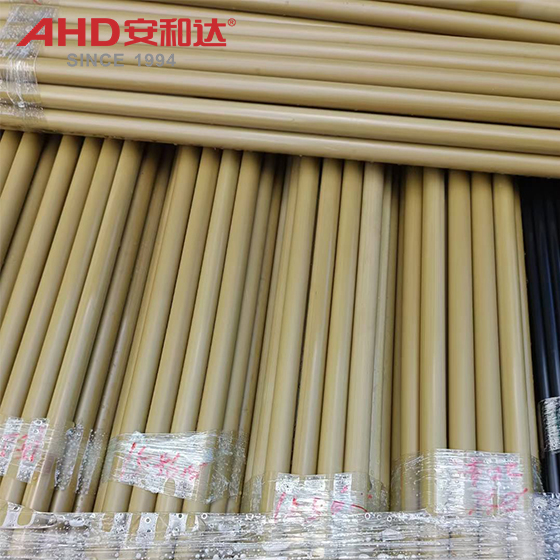
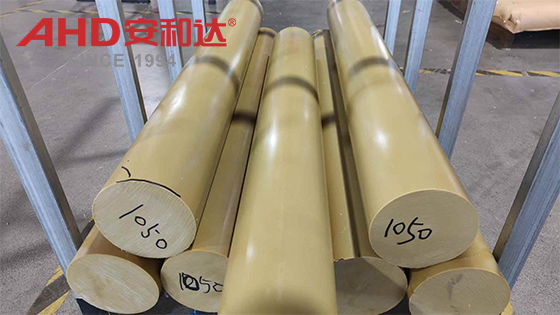
PEI GF, short for Glass Fiber Reinforced Polyetherimide, is a high-performance engineering plastic composite material. It uses polyetherimide (PEI) as a matrix resin, reinforced with glass fiber (GF, typically 10%-40%), and is molded into sheets or rods. PEI itself is a semi-crystalline, amorphous thermoplastic with excellent heat resistance, mechanical properties, and chemical resistance. The addition of glass fiber further enhances its strength, rigidity, and dimensional stability.
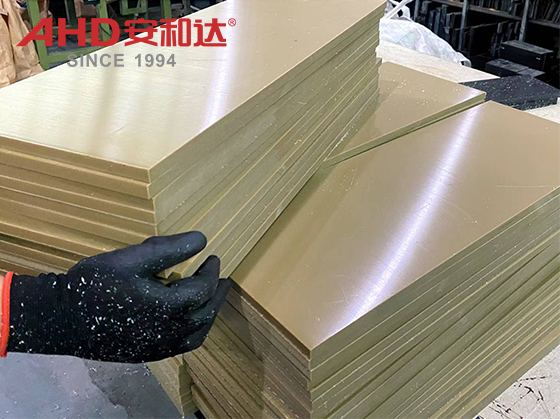
Ⅱ. How is it produced?
PEI GF sheets and rods are primarily produced using the extrusion process. For products with special specifications or extremely demanding requirements, compression molding may also be used.
The basic production process is as follows:
Raw Material Preparation and Mixing: PEI resin pellets (usually already premixed with glass fiber, known as PEI GF pellets) are thoroughly dried in an oven. Because PEI absorbs moisture, thorough drying is essential to prevent hydrolysis and degradation during processing.
Melt Extrusion: The dried PEI GF pellets are fed into the extruder hopper. Within the extruder, the material is heated and sheared, melting it into a viscous, fluid state.
Molding and Shaping:
Sheet Production: The molten material is extruded through a flat die, forming a sheet-like melt. The melt then enters a carefully temperature-controlled three-roll calender for calendering, cooling, and shaping, ultimately resulting in a sheet of uniform thickness.
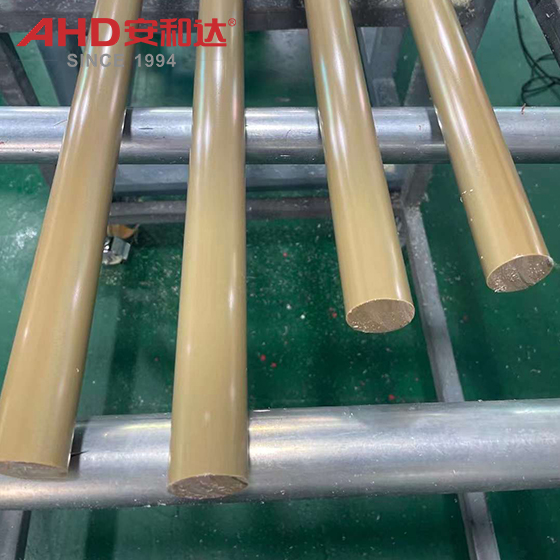
Rod Production: The molten material is extruded through a circular die to form a rod. The rod then enters a water-cooled or vacuum-cooled sintering tank for cooling and shaping, resulting in a rod with a uniform diameter.
Pulling and Cutting: The shaped plate/rod is pulled out by a haul-off machine at a constant speed and finally cut into desired lengths by a cutting device.
Post-Processing and Inspection: The product may undergo stress annealing to reduce internal stresses. After rigorous dimensional and performance inspection, it is packaged and stored.
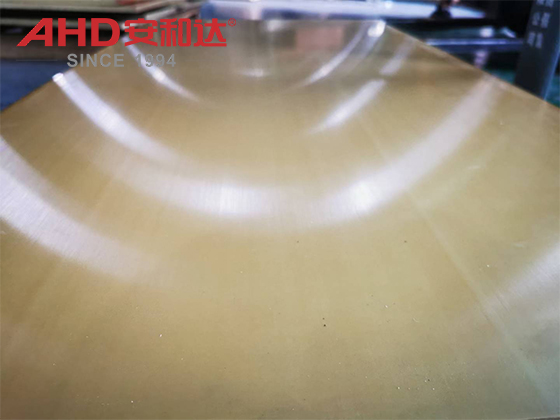
Ⅲ. What are its characteristics and advantages?
PEI GF material combines the advantages of PEI resin and glass fiber, offering exceptional overall performance.
| Feature | Specific Performance | Advantages |
| Mechanical Properties | High strength, high rigidity, and high hardness. The addition of glass fiber gives it significantly higher flexural strength and modulus than unreinforced PEI. Excellent creep resistance minimizes deformation under long-term loads. | Parts are structurally stronger, less prone to deformation, and can withstand high loads. |
| Heat resistance | High! Long-term operating temperatures can reach 170°C to 180°C, and short-term temperature resistance can exceed 200°C. The heat deflection temperature (HDT @ 1.8MPa) can reach over 200°C. | It can operate in high-temperature environments for long periods without softening, maintaining stable performance. |
| Flame Retardancy | Inherently flame retardant! It achieves UL94 V-0 rating (the highest flame retardancy rating) without the addition of any flame retardants and emits very low smoke during combustion. | It meets the most stringent fire safety requirements and is suitable for use in safety-critical applications such as aerospace, electrical and electronics, and more. |
| Dimensional Stability | Excellent! Its low coefficient of linear expansion and moisture absorption minimize its impact on temperature and humidity. | It enables the manufacture of high-precision parts with minimal dimensional variation due to environmental factors, ensuring reliable assembly and functionality. |
| Chemical Stability | Resistant to a wide range of chemicals, including dilute acids, weak bases, hydrocarbons, esters, and halogenated hydrocarbons. However, it is not resistant to highly polar organic solvents (such as ketones and some chlorinated solvents) and strong bases. | Suitable for a variety of working media environments. |
| Electrical Insulation | Excellent electrical properties, including high dielectric strength and low dissipation factor, with stable performance over a wide temperature and frequency range. | It is an ideal high-temperature insulation material for electronic and electrical components. |
| Processability and Other | Although it is a thermoplastic, its processing temperature is very high (approximately 350-400°C). It is self-extinguishing and has good wear resistance. | It can be processed by thermoplastic methods such as injection molding and extrusion, but specialized high-temperature equipment is required. |
IV. Where Will It Be Used?
Due to its exceptional performance, PEI GF Sheet and Rod is primarily used in high-end industrial fields with demanding performance requirements.
Aerospace:
Applications: Manufacturing aircraft interior brackets, supports, covers, connectors, and more. Its high strength, lightweight (relative to metal), and excellent flame retardancy and low smoke properties meet the stringent standards of the aviation industry.
Electronic and Electrical/Semiconductor Industry:
Applications:
Wafer Processing: Used in the manufacture of wafer carriers, fixtures, arms, and other components requiring extremely high cleanliness, low extractables, high-temperature resistance, and dimensional stability.
High-Temperature Insulation Components: Such as circuit breaker housings, coil bobbins, terminal blocks, and PCB support plates.
SMT Soldering: Used in the manufacture of reflow and wave soldering carriers and trays, as it can withstand short-term temperatures exceeding 260°C.
Automotive Industry:
Applications: Manufacturing engine peripheral components, sensor housings, transmission parts, and other components requiring resistance to high-temperature oils and long-term heat aging.
Medical Devices:
Applications: Used in the manufacture of surgical instrument frames, trays, and endoscope parts that require repeated high-temperature steam or ethylene oxide sterilization. PEI inherently meets biocompatibility requirements (certain grades).
Industrial Applications:
Applications: Used in the manufacture of high-precision gears, bearings, seals, valve components, compressor blades, and other components operating in high-temperature, oil-free environments.
V. Usage
PEI GF sheet and rod applications primarily fall into two categories: processing and forming, and direct application.
1. Processing (Making Final Parts)
Machining: Turning, milling, drilling, tapping, and other processes are possible. Carbide tools (such as tungsten carbide tools) should be used to prevent rapid wear of high-speed steel tools. Recommended cutting parameters: 500-1500 rpm, feed rate 0.05-0.2 mm/min. Cooling can be achieved with compressed air or a small amount of water-soluble cutting fluid (to prevent moisture absorption).
Connections: Screw connections (pre-drilling is recommended to avoid stress cracking), laser welding (requires specialized equipment and is suitable for precision components), and structural adhesive bonding (such as epoxy adhesive, which requires surface treatment for improved adhesion).
2. Direct Applications
Direct use in structural components, such as support frames for aircraft interiors and housing bases for automotive sensors, leverages its high strength and temperature resistance to replace metal or traditional plastics.
VI. Key Points and Precautions
When machining and using PEI GF material, the following points must be observed; failure to do so can easily lead to part failure.
1. Machining Key Points:
Tools: Sharp carbide or diamond tools must be used. Dull tools can cause tearing, chipping, and excessive heating.
Cooling: Compressed air or oil mist cooling is strongly recommended. Avoid using water-based coolants, as PEI absorbs moisture, which may affect subsequent performance or cause cracking due to sudden heating and cooling during machining.
Parameters: Utilize a high speed, light tool feed, and fast feed rate strategy. This helps dissipate heat and achieve a smooth machined surface.
Chip Removal: Glass fiber chips are irritating, so good exhaust and dust removal equipment is essential during machining. Operators should wear protective masks and glasses.
2. Hygroscopicity and Pretreatment:
PEI GF material absorbs moisture from the air. If the part will be used in high humidity or high temperatures, or requires secondary high-temperature processing (such as hot bending or bonding), the blank must be dried before processing. Typical drying conditions are 150°C for 2-4 hours.
3. Internal Stress:
During processing, cutting heat may generate internal stress within the part. For critical parts requiring high dimensional stability and crack resistance, annealing may be considered. This involves baking the part at a temperature 10-20°C below its heat deflection temperature (e.g., 180-190°C) for a period of time, followed by slow cooling to room temperature.
4. Bonding:
PEI GF materials can be bonded using specialized high-temperature epoxy resin adhesives or cyanoacrylate (fast-drying adhesives). Before bonding, the surface must be cleaned (e.g., with alcohol) and, if necessary, roughened to enhance bond strength.
5. Safety Warning:
Processing Dust: Fiberglass dust is irritating to the human respiratory system and skin. Ensure proper protective equipment. High temperature burns: Parts that have been machined or taken out of the oven may be very hot and need to be handled with care.
PEI GF sheets and rods are a typical example of high-performance engineering plastics. Glass fiber reinforcement overcomes the strength shortcomings of pure PEI while retaining its advantages such as heat and chemical resistance. They are widely used in high-end manufacturing. When using them, attention should be paid to processing temperature, drying process, and structural design to maximize the material's performance.
PEI sheet ,PEI rod and PEI GF sheet