

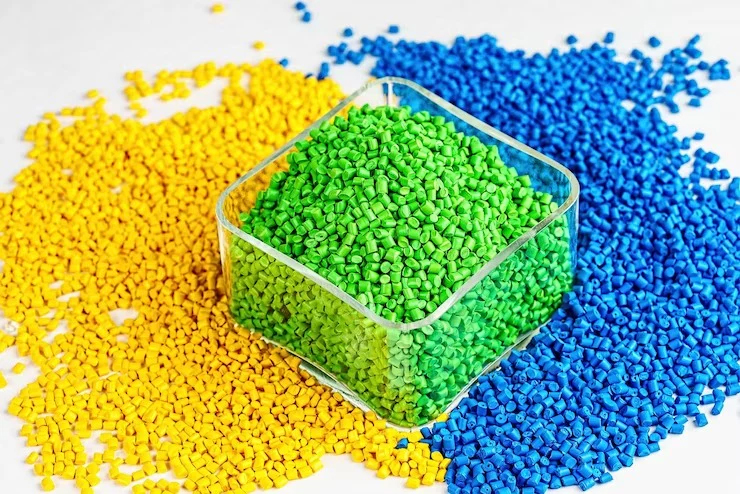
Masterbatch is a functional intermediate material commonly used in plastics processing. Essentially, it's a granular product made by uniformly mixing a high concentration of additives (or pigments) with a carrier resin. Its core function is to address issues such as uneven dispersion and metering difficulties associated with the direct addition of functional additives, enabling plastic products to more efficiently and stably achieve specific properties (such as color, antistatic properties, and flame retardancy).

Ⅰ. What is a Plastic Masterbatch?
Plastic masterbatch consists of two components:
Carrier resin (approximately 30%-70%): Serving as the "matrix," it is typically the same resin as the target plastic product (e.g., PE for PE masterbatch and PP for PP masterbatch) to ensure compatibility with the base resin.
Functional additives (approximately 30%-70%): These can be added as needed, such as pigments (color masterbatch), antioxidants (anti-aging masterbatch), flame retardants (flame retardant masterbatch), and antistatic agents (antistatic masterbatch). Simply put, masterbatch is a "concentrated functional package" - a large number of additives are wrapped in a carrier resin. When used, it only needs to be mixed with the base resin in proportion and can be evenly dispersed into the final product.
Ⅱ. How are plastic masterbatches produced?
The masterbatch production process primarily involves melt blending and pelletizing. The key steps are as follows:
1. Raw Material Preparation
Carrier Resin: Select a resin compatible with the target plastic product (e.g., for masterbatch production of PET Sheet or PET Rod, the carrier may be PET; for masterbatch production of PVC Sheet, the carrier may be PVC).
Additives: Select based on functional requirements, such as organic/inorganic pigments for color masterbatches and bromine/phosphorus flame retardants for flame retardant masterbatches. Pay attention to the purity and particle size of the additives (too fine will cause agglomeration, while too coarse will make dispersion difficult).
2. Premixing
The carrier resin and additives are placed in a high-speed mixer according to the formulated ratio. Frictional heat is used to initially mix the materials evenly. This step is critical: if the mixing is not uniform, the additives may clump during subsequent melting.
3. Melt Blending
The premixed materials enter the twin-screw extruder (the core equipment). The extruder heats the carrier resin (typically 10-30°C above its melting point) to melt it, while the shear force of the screw evenly disperses the additive throughout the carrier resin.
Screw design (such as aspect ratio and channel depth) influences dispersion: a larger aspect ratio (e.g., 48:1) results in a longer shear time and a more uniform dispersion.
4. Granulation
The melt-blended material is extruded from the extruder die into strands. After solidification by water cooling (or air cooling), it is cut into uniform pellets (approximately 2-4 mm in diameter) by a pelletizer to obtain the masterbatch.
Ⅲ. How to Use Plastic Masterbatch?
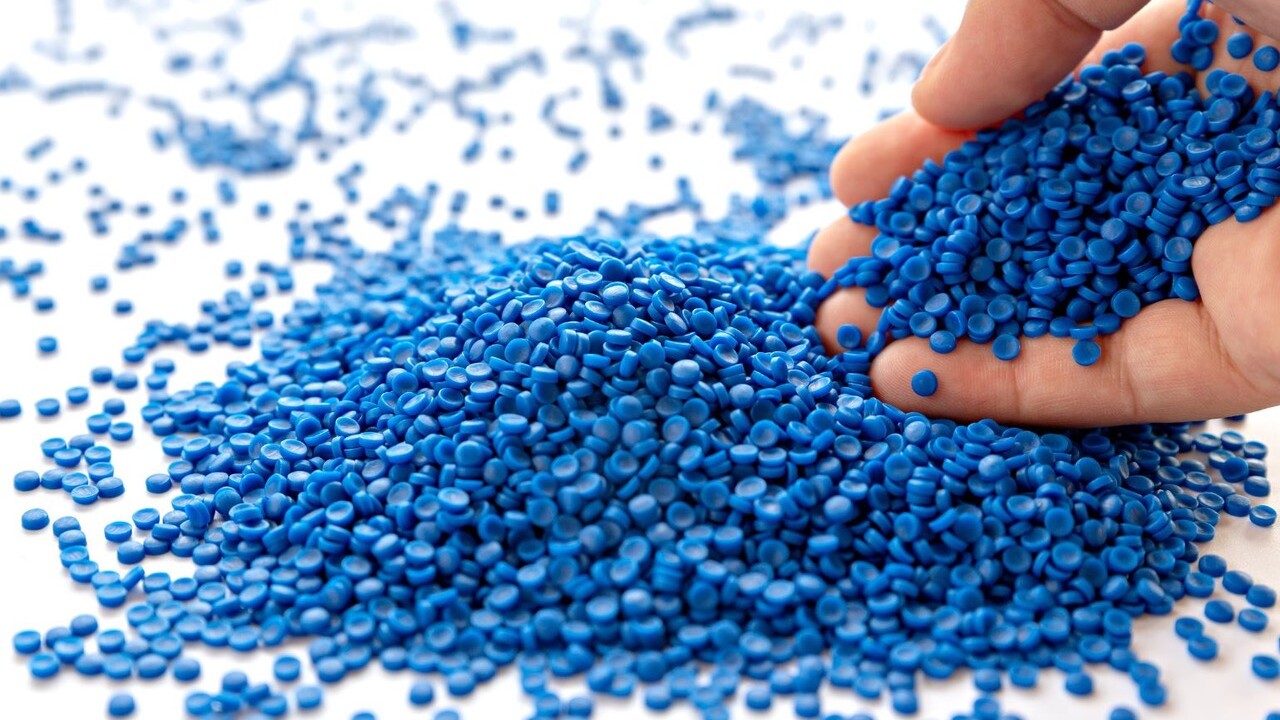
Masterbatch is very easy to use. The key is to mix it with the base resin in the correct proportion before processing. The specific steps and scenarios are as follows:
1. Usage Ratio
Typically, the masterbatch addition rate is 1%-10% (depending on the functional requirements):
Color masterbatch: Generally, a 1%-3% addition is sufficient to achieve the target color (a higher ratio is required for darker colors).
Functional masterbatch: For example, flame-retardant masterbatch may require a 5%-15% addition rate (depending on the flame retardancy level).
2. Mixing Process
The masterbatch and base resin are thoroughly mixed in a mixer to ensure even distribution. After mixing, the masterbatch is directly fed into an injection molding machine, extruder, or film blowing machine.
3. Molding Process
The mixed materials enter the processing equipment. At high temperatures, the carrier resin in the masterbatch melts with the base resin, dispersing the additives throughout the finished product, imparting its specific functionalities.
Ⅳ. Common Types and Applications of Plastic Masterbatches
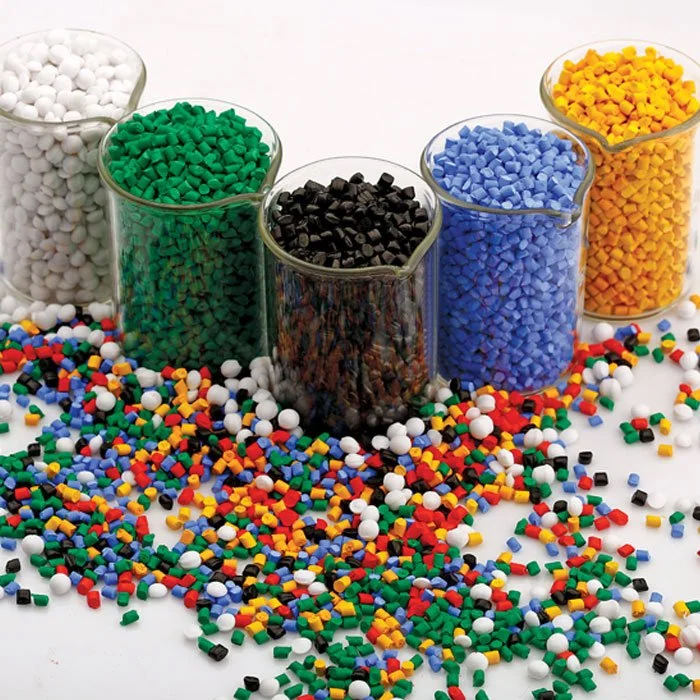
Based on their function, masterbatches can be categorized as follows:
| Type | Core Additives | Applications |
| Masterbatch | Organic/inorganic pigments, dispersants | Coloring for plastic packaging (plastic bags, bottles), daily necessities (toys, household items) |
| Flame retardant masterbatch | Brominated/phosphorus flame retardants, synergists | Electronic and electrical housings (sockets, cables), building materials (PVC pipes) |
| Antistatic masterbatch | Quaternary ammonium antistatic agent | Electronic packaging materials (IC trays), mining plastics (conveyor belts) |
| Anti-aging masterbatch | UV absorbers, light stabilizers | Outdoor plastic products (agricultural films, car bumpers) |
| Toughening masterbatch | Elastomers (such as POE), compatibilizers | Brittle plastic modification (such as toughening PP products) |
Ⅴ. Summary
Plastic masterbatches are functional enhancers in plastics processing. By combining high-concentration additives with a carrier resin, they overcome the dispersion challenges associated with direct addition, enabling more efficient production and stable product performance. From color enhancement to functional properties (such as flame retardancy and antistatic properties), masterbatches are widely used in packaging, building materials, electronics, and daily necessities, making them an indispensable intermediate material in the modern plastics industry.