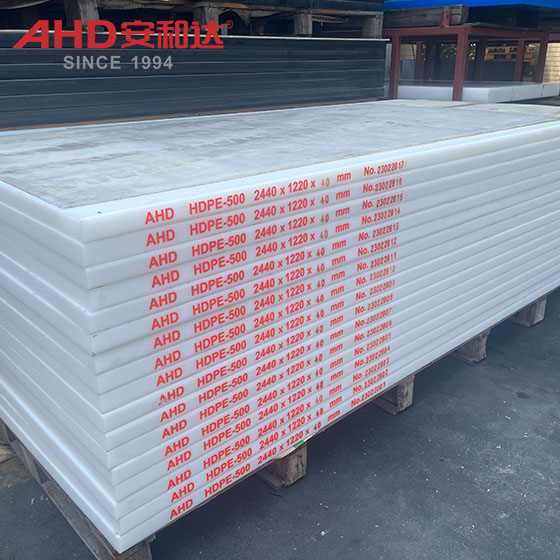
PE (Polyethylene), is a high-molecular-weight polymer formed by the polymerization of ethylene monomers (C₂H₄) and is a type of thermoplastic resin. It is one of the world's largest-produced and most widely used plastic raw materials, with excellent overall properties (such as chemical resistance, electrical insulation, and processability) making it widely used in packaging, building materials, daily necessities, industrial products, and other fields.

Ⅰ. Chemical Nature and Structure of PE
The molecular structure of PE is composed of a large number of ethylene monomers linked together through addition polymerization, with the backbone consisting of repeating "-CH₂-CH₂-" units. Performance differences are primarily due to the degree of branching and crystallinity of the molecular chain:
Number of branches: More branches result in a looser molecular chain arrangement and a lower density (such as LDPE); fewer branches (or even no branches) result in a denser molecular chain arrangement and a higher density (such as HDPE). Crystallinity: PE with fewer branches has a higher crystallinity (e.g. HDPE has a crystallinity of 70%-80%), and is more rigid, hard, and heat-resistant. PE with more branches has a lower crystallinity (e.g. LDPE has a crystallinity of about 50%-60%), and is softer and more transparent.

Ⅱ. PE Classification and Typical Raw Material Properties
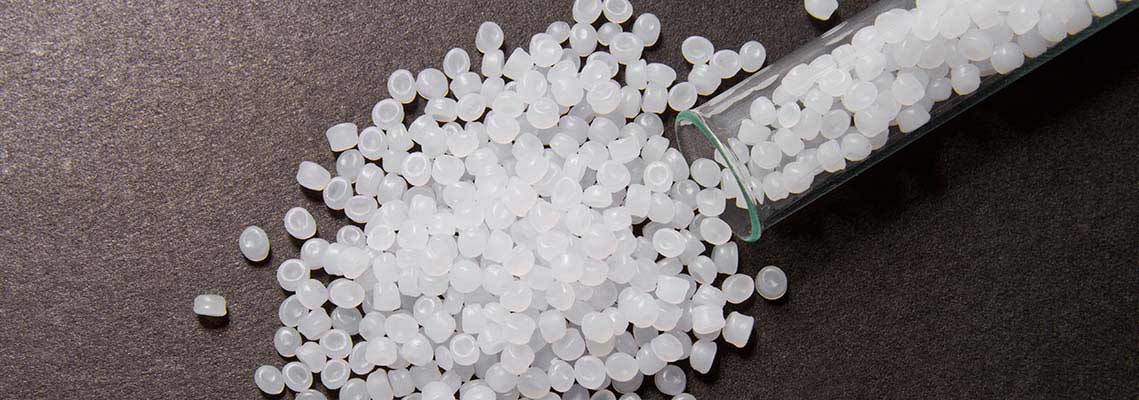
Based on differences in polymerization processes and molecular structures, PE is primarily divided into three categories. While all raw materials appear in pellet form (approximately 2-5 mm in diameter and 5-10 mm in length), their performance and applications differ significantly:
| Type | Full Name | Density (g/cm³) | Branched Chain Characteristics | Core Properties | Typical Applications |
| LDPE | Low-density polyethylene | 0.910-0.925 | Highly branched (long chain + short chain branches) | Soft, transparent, cold-resistant, easy to process | Suitable for plastic bags, agricultural films, plastic wrap, and coatings |
| LLDPE | Linear Low-Density Polyethylene | 0.915-0.925 | Short chain branches (no long chain branches) | Superior toughness and puncture resistance to LDPE, with higher tensile strength | Used for packaging film, heavy-duty packaging film, and pipes |
| HDPE | High-density polyethylene | 0.941-0.965 | Almost no branching (primarily linear structure) | Excellent rigidity, chemical resistance, and temperature resistance (-50°C to 80°C) | Suitable for plastic bottles, barrels, pipes, sheets, and pallets |
Ⅲ. How to select high-quality PE (polyethylene) raw materials?
PE (polyethylene) is categorized by density into low-density polyethylene (LDPE), linear low-density polyethylene (LLDPE), and high-density polyethylene (HDPE). The performance of different types of PE varies significantly. Choosing high-quality PE raw materials requires considering the application scenario, focusing on the following indicators:
1. Identify the PE type and application requirements.
LDPE/LLDPE: Soft and transparent, suitable for films (such as plastic bags and agricultural films).
HDPE: Highly rigid and chemically resistant, suitable for sheets, pipes, containers, and more.
Select the appropriate type based on the target product (e.g., sheets/rods are often HDPE).
2. Key Performance Indicator Testing
Physical Properties:
Density: HDPE density is approximately 0.941-0.965 g/cm³, LDPE density is approximately 0.910-0.925 g/cm³. Deviations must comply with national standards (e.g., GB/T 11115-2009).
Melt Flow Rate (MFR): This reflects processing fluidity. HDPE sheets typically have an MFR of 0.1-1.0 g/10 min (higher molecular weight, better strength); films typically have an MFR of 1-5 g/10 min (better fluidity).
Mechanical Properties: Tensile strength (HDPE ≥ 20 MPa), elongation at break (LDPE ≥ 500%), impact strength (low-temperature toughness).
Molecular Weight and Distribution: A broad MWD distribution improves processability, while a narrow MWD distribution increases strength (selection depends on product requirements).
3. Appearance and Impurity Control
High-quality PE granules should be uniform in color (usually milky white or translucent), free of yellowing, black specks, or metallic impurities (impurities can cause processing defects or performance degradation).
Spot-check granules for uniformity to avoid clumping or excessive breakage (which may be caused by improper storage or a high proportion of recycled material).
4. Chemical and Safety Specifications
Ash content: ≤0.05% (reflects the level of inorganic impurities; high ash content can easily lead to brittle products).
Moisture: ≤0.1% (PE has low hygroscopicity, but damp granules can cause bubbles to form when extruded).
Environmental protection standards must be met (e.g., non-toxic, free of harmful additives; food-grade certification must be FDA or GB 4806 certified).
5. Manufacturer and Qualification Verification
Select reputable suppliers and request factory inspection reports.
Ⅳ. How should PE raw materials be stored?
Although PE is resistant to aging, improper long-term storage can lead to degradation due to oxidation, moisture absorption, or contamination. The following points should be noted:
1. Environmental Control
Temperature: Store in a cool, dark place, ≤30°C (high temperatures accelerate oxidative degradation).
Humidity: Relative humidity ≤60% (PE has low hygroscopicity, but humid environments may cause condensation on the surface of the pellets).
Light: Avoid direct sunlight (ultraviolet rays can cause photooxidation; packaging should be done in light-blocking woven bags or cartons).
2. Sealing and Isolation
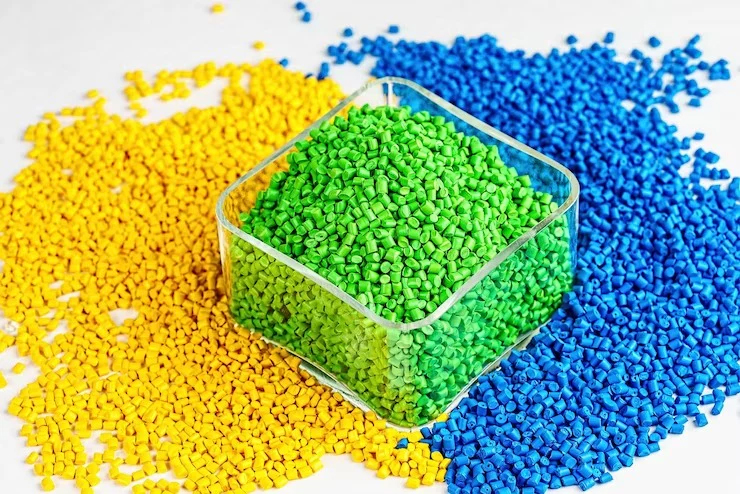
Unopened raw materials should be kept in their original packaging (moisture-proof bags or bulk bags). After opening, use as soon as possible. Any remaining raw materials should be sealed in a moisture-proof container to prevent dust and foreign matter from entering.
3. Classification and Labeling
Store raw materials of different types and batches separately to avoid confusion.
Mark the production date and expiration date (the typical expiration date for PE raw materials is 1-2 years; after expiration, retest the MFR, tensile strength, etc.).
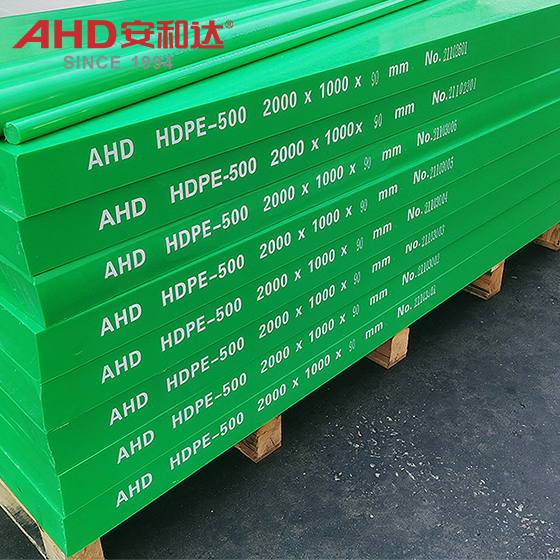
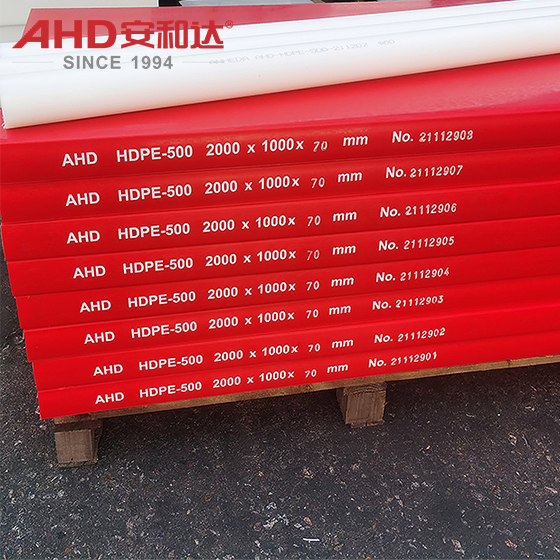
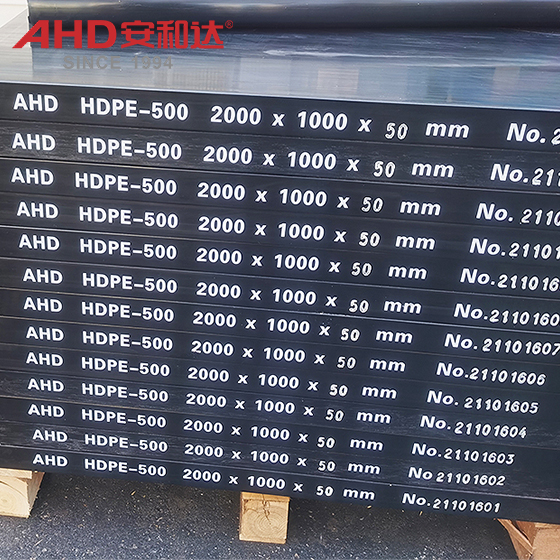
Ⅴ. How to produce high-quality PE sheets and rods?
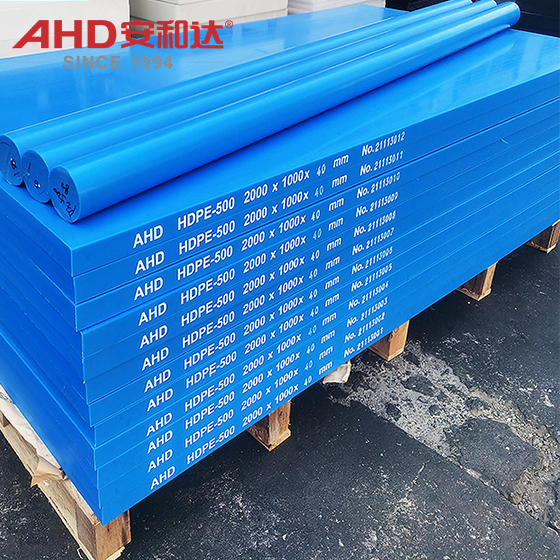
PE sheets and rods are often produced using the extrusion process. Key factors include raw material pretreatment, equipment commissioning, and process parameter control.
1. Raw Material Pretreatment
If the raw material is stored in a humid environment (such as during the rainy season in southern China), drying is required: forced air drying at 80°C for 2-4 hours (PE has low hygroscopicity, so this can be omitted during normal storage).
Recycled material should be added at ≤ 20% to avoid molecular weight loss and strength degradation due to repeated processing.
2. Equipment Selection and Commissioning
Extruder: Single-screw extruder (length-to-diameter ratio L/D = 25-30, suitable for HDPE sheet and HDPE rod) or twin-screw extruder (excels in mixing, suitable for modified PE with fillers).
Mold:
Die gap: Uniform (sheet thickness deviation ≤ ±0.1mm). Adjust according to target thickness (e.g., for a 10mm sheet, the die gap should be approximately 10.5-11mm to compensate for cooling shrinkage). Setting Die: Use vacuum or water cooling to ensure dimensional stability (cooling water temperature for HDPE is 15-25°C; for LDPE, slightly higher).
3. Process Parameter Control
Temperature:
HDPE: Barrel temperature 180-220°C (rear section 160-180°C, front section 200-220°C), die head 210-230°C (avoid low temperatures that lead to poor plasticization or high temperatures that lead to degradation).
LDPE: Barrel temperature 160-200°C (low melting point to prevent overheating and decomposition).
Screw Speed: 5-20 rpm (low speed ensures sufficient plasticization and avoids shear overheating).
Back Pressure: 0.5-2 MPa (increasing back pressure improves melt uniformity and reduces bubbles).
4. Pulling and Post-Processing
Pulling Speed: Match the extrusion speed (pulling too fast results in thinner thickness, while pulling too slowly can cause bulking) and maintain a constant speed (deviation ≤ ±0.5%).
Cooling: After shaping, cool naturally or pass through cooling rollers to avoid internal stress caused by rapid cooling.
Cutting and Trimming: Cut using a saw or laser, and trim to remove burrs (excessive burrs will affect dimensional accuracy).
5. Quality Control
Appearance: Smooth surface, free of scratches and bubbles, and no delamination on the cross section.
Dimensions: Thickness tolerance ≤ ±0.2mm (sheet), diameter tolerance ≤ ±0.3mm (rod).
Performance: Tensile strength and Vicat softening point are randomly inspected to ensure compliance with application requirements.
High-quality PE raw materials must be screened based on type, performance indicators, and test reports. Storage priorities include dryness, light protection, and sealing. Processing into sheets and rods hinges on controlling extrusion temperature, mold precision, and pulling speed, while also strengthening process quality inspections. Through comprehensive process control, stable production of high-performance PE sheets and rods is possible.