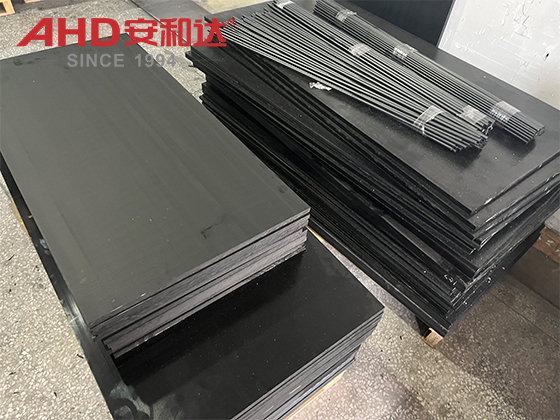
ESD PEI Sheet (anti-static polyetherimide sheet) and ESD PEEK Sheet (anti-static polyetheretherketone sheet) are both high-performance anti-static engineering plastic sheets, primarily used in electronics, semiconductors, precision manufacturing, and other fields that are sensitive to static electricity and require high-reliability protection. The following comparative analysis focuses on six dimensions: material properties, ESD performance, physical/chemical properties, processability, application scenarios, and cost.
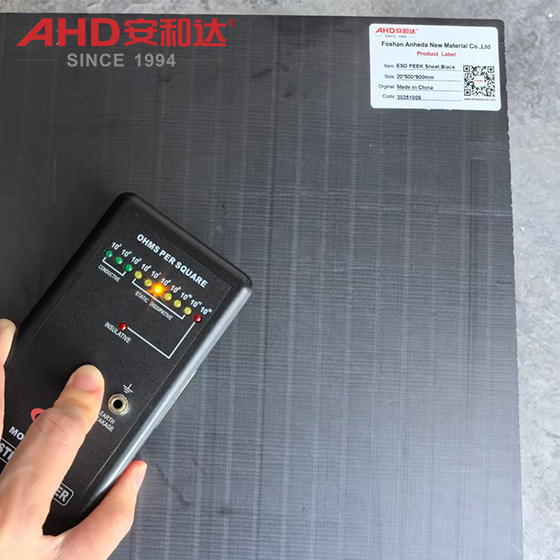
1. Material Basics
| Dimensions | ESD PEI SHEET | ESD PEEK SHEET |
| Base Resins | Polyetherimide (PEI) | Polyetheretherketone (PEEK) |
| Structural Features | Contains aromatic ether bonds and imide rings, resulting in a strong molecular chain. | Contains aromatic ether bonds and ketone bonds, resulting in a more flexible and highly crystalline molecular chain. |
| Feature Positioning | General-purpose high-performance plastic with high-temperature rigidity and easy processing | Top-tier engineering plastic with exceptional heat and chemical resistance |
2. ESD Performance
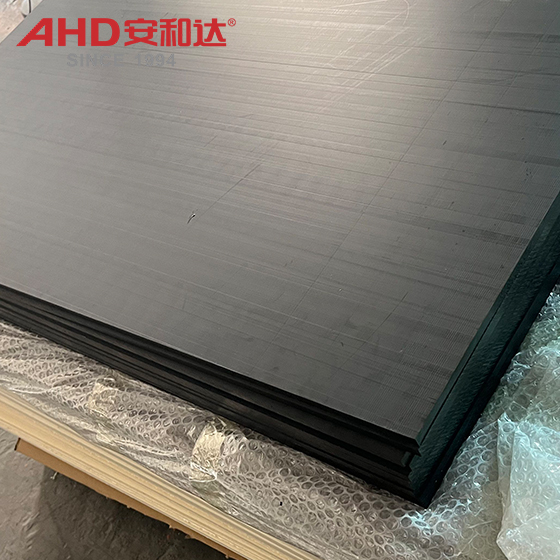
Both devices achieve static dissipation by adding conductive fillers (such as carbon fibers, carbon nanotubes, or carbon black). A comparison of their core ESD parameters is as follows:
| Parameters | ESD PEI SHEET | ESD PEEK SHEET |
| Surface resistivity | 10⁶~10¹⁰ Ω/sq (typical value 10⁸~10⁹) | 10⁶~10¹¹ Ω/sq (typical value 10⁸~10¹⁰) |
| Volume resistivity | 10⁵~10⁹ Ω·cm | 10⁴~10⁹ Ω·cm |
| Triboelectric voltage | ≤100 V (normal environment) | ≤80 V (normal environment, more stable) |
| Static decay time | ≤2s (IEC 61340-2-1 standard) | ≤1.5s (faster dissipation, suitable for high-precision applications) |
Summary: The ESD levels of the two materials are similar, but PEEK has a slightly better electrostatic dissipation stability and speed due to its more uniform molecular chains and better filler dispersion.
3. Physical and chemical properties
| Dimensions | ESD PEI SHEET | ESD PEEK SHEET |
| Long-term operating temperature | -60°C to 170°C | -50°C to 250°C |
| Tensile Strength | ≥90 MPa (unfilled), approximately 70 MPa for conductive grades | ≥95 MPa (unfilled), approximately 85 MPa for conductive grades |
| Fatigue Resistance | Fair (prone to creep under cyclic loading) | Excellent (strength retained at least 80% after 5 million cycles) |
| Chemical Resistance | Resistant to alcohols, weak acids and bases, but not strong solvents (such as acetone) | Resistant to almost all organic solvents (except concentrated sulfuric acid), acids and bases |
| Hygroscopicity | High (equilibrium water absorption rate 1.5%) | Very low (equilibrium water absorption rate 0.5%) |
| Flame retardancy | UL94 V-0 (thickness 0.25mm) | UL94 V-0 (thickness 0.25mm) |
Summary: PEEK excels in temperature resistance, chemical corrosion resistance, and fatigue resistance. PEI offers balanced performance under normal conditions, with higher hygroscopicity but lower cost.

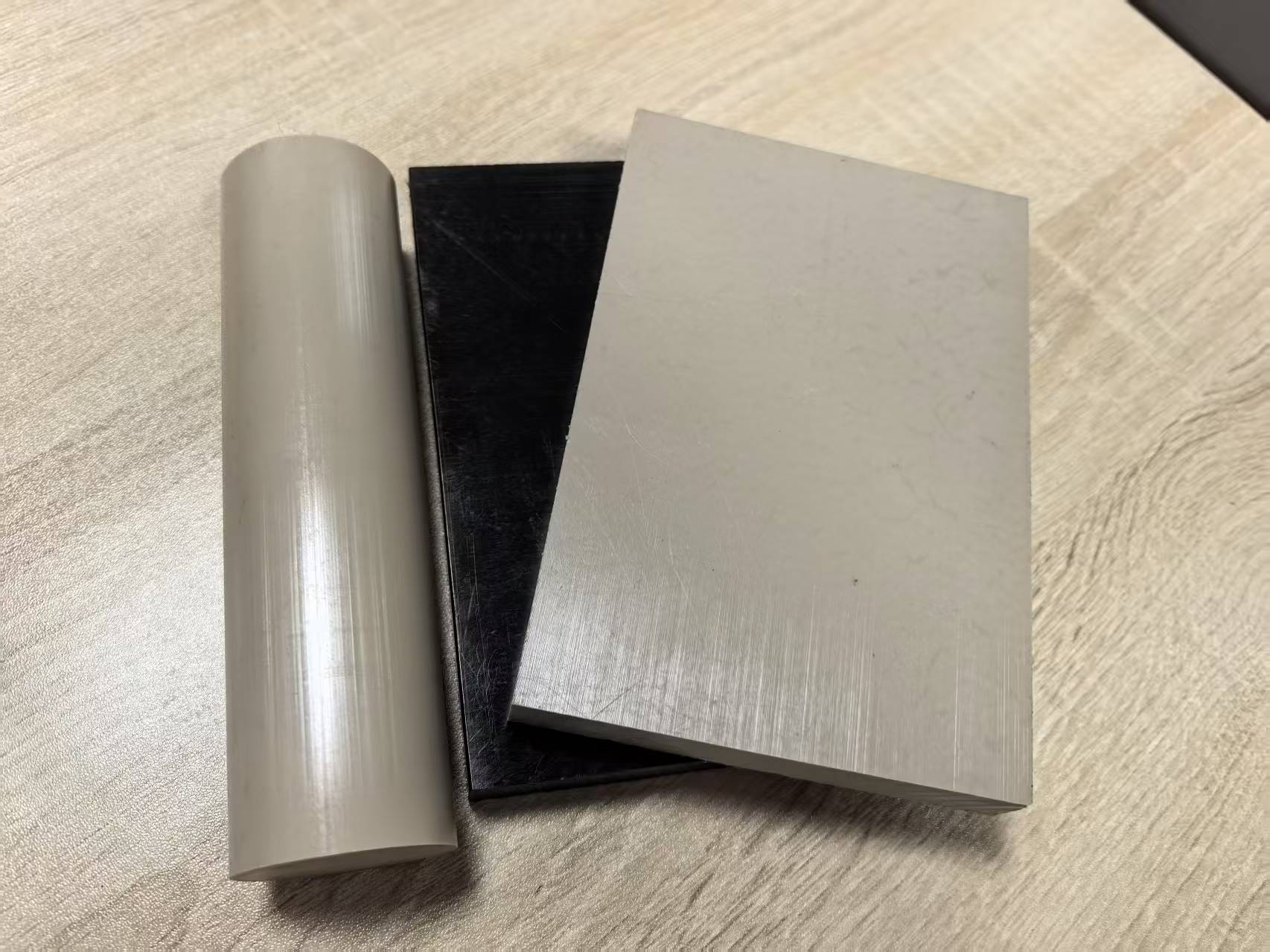
PEI SHEET
4. Processing performance
| Dimensions | ESD PEI SHEET | ESD PEEK SHEET |
| Molding Temperature | Injection Molding: 340-380°C; Extrusion: 360-400°C | Injection Molding: 380-420°C; Extrusion: 400-450°C |
| Equipment Requirements | A standard high-temperature injection molding machine is sufficient. | Specialized high-temperature equipment is required (barrel and mold must be resistant to 400°C+). |
| Machinability | Easy to cut and drill, with good dimensional stability | Cutting requires carbide tools, offering excellent dimensional stability |
| Weldability | Laser weldable | Laser weldable (but with higher process requirements) |
Summary: PEI has a low processing threshold and is suitable for mass production; PEEK requires high-precision equipment and has higher processing costs.
5. Application Scenarios
ESD PEI SHEET:
Suitable for electronic protection in medium-to-high-temperature (≤170°C) and moderately corrosive environments, such as:
SMT chip trays, IC carriers, and electronic component transfer boxes;
Anti-static fixtures and jigs for semiconductor packaging and testing equipment;
Anti-static insulation components for medical devices (non-contact with body fluids).
ESD PEEK SHEET:
Suitable for ultra-high-temperature (≥200°C), highly corrosive, or high-precision applications:
Semiconductor wafer manufacturing (high-temperature exposure in photolithography and etching processes);
Anti-static brackets for high-frequency electronic devices in aerospace;
Anti-static and corrosion-resistant pipe flanges in the chemical industry;
Anti-static insulation components for medical implants (for improved biocompatibility).
6. Cost Comparison
Raw Material Cost: PEEK resin is approximately 3-5 times more expensive than PEI.
Processing Cost: PEEK requires high-temperature equipment, resulting in higher energy consumption and maintenance costs.
End Product Price: ESD PEEK sheets are typically 4-6 times more expensive than ESD PEI sheets.
7. How to Choose?
Choose ESD PEI Sheet: For applications with a limited budget, operating temperatures ≤170°C, no severe corrosion, and a focus on cost-effectiveness and ease of processing (e.g., general electronic process fixtures).
Choose ESD PEEK Sheet: For applications with high temperatures (>170°C), severe corrosion, high precision, or long life requirements (e.g., high-end semiconductor processes and aerospace components).
Key Decision Point: Balancing temperature, corrosive environment, precision requirements, and cost.