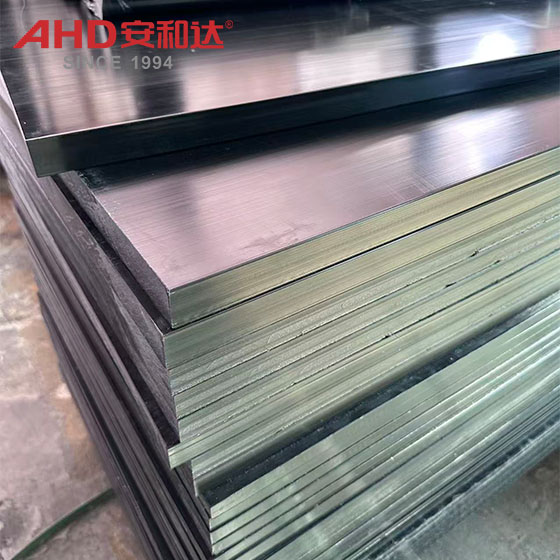
ESD POM (antistatic polyoxymethylene) and ESD PA6 Nylon (antistatic nylon 6) are both engineering plastics modified to achieve electrostatic protection. Their core goal is to reduce surface resistivity and prevent static electricity accumulation. While similar in base resin properties and ESD modification logic, the two differ significantly in performance, applications, and usage scenarios due to inherent differences in the base resins (such as polarity and hygroscopicity).

I. Similarities
1. Core Objective: ESD Protection
Both products reduce surface resistivity by adding antistatic agents or conductive fillers to prevent electrostatic discharge (ESD) damage to electronic components (such as ICs and sensors). They are primarily used in ESD-sensitive applications such as precision electronics, semiconductors, and medical devices.
2. Common Base Resin Extensions
POM and PA6 are both crystalline engineering plastics. ESD modification retains some of the advantages of the base resin:
Mechanical Strength: Both products have similar tensile strength (ESD POM approximately 60-70 MPa, ESD PA6 approximately 70-80 MPa) and flexural modulus (approximately 2.5-3.5 GPa vs. 2.8-3.5 GPa), meeting the load-bearing requirements of most structural components.
Friction Resistance: Inheriting the low friction characteristics of the base resin (ESD POM friction coefficient is approximately 0.1-0.25, while ESD PA6 is approximately 0.15-0.3), it can be used in sliding components (such as conductive pulleys and light-load bearings).
3. Processing Compatibility
Both materials are compatible with injection molding, and the mold design principles are similar (e.g., shrinkage control: POM is approximately 1.2-2.0%, while PA6 is approximately 0.8-1.5%, the difference primarily stems from the shrinkage of the base resin).
II. Key Differences
1. ESD Performance Stability
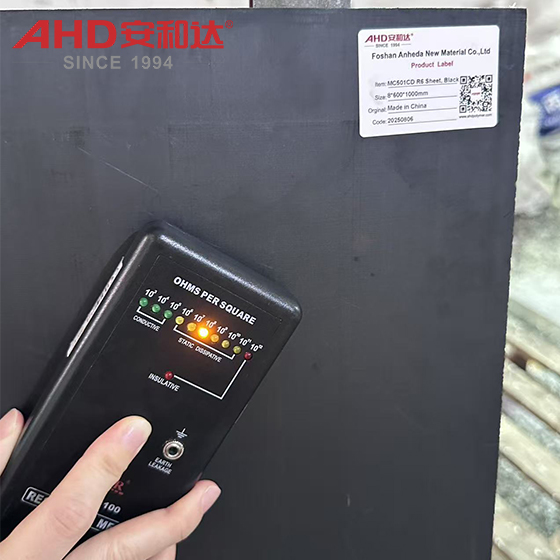
ESD POM: The POM molecular chain is non-polar and has extremely low hygroscopicity. Antistatic agents added during ESD modification are less likely to migrate or become ineffective due to moisture absorption, resulting in high long-term surface resistivity stability.
ESD PA6: The PA6 molecular chain contains polar amide bonds and is highly hygroscopic. After absorbing moisture, water acts as an ionic conductor, aiding conductivity and potentially reducing surface resistivity in the short term. However, under long-term high humidity conditions, antistatic agents (such as carbon black) are easily encapsulated by a water film, resulting in poor resistivity stability.
2. Influence of the Intrinsic Properties of the Base Resin
| Performance | ESD POM | ESD PA6 |
| Heat Resistance | Long-term operating temperature: 60-80°C, heat deflection temperature (HDT) approximately 110-130°C (unreinforced). | Long-term operating temperature: 80-120°C, HDT approximately 150-180°C (unreinforced), offering superior heat resistance. |
| Chemical Resistance | It has excellent resistance to organic solvents (such as hydrocarbons and oils) and weak acids and bases; however, it is susceptible to strong oxidizing acids (such as concentrated sulfuric acid). | It has slightly poor resistance to organic solvents (e.g., phenol and formic acid), but has better resistance to polar solvents (such as water and alcohols). |
| Dimensional Stability | It absorbs virtually no moisture, and its dimensions are minimally affected by ambient humidity (tolerance accuracy ±0.05mm). | It will swell (approximately 1-2%) after absorbing moisture, requiring strict drying (moisture content <0.1%). It is suitable for applications with tight tolerance requirements. |
| Fatigue Resistance | High fatigue strength (long life under cyclic loading), suitable for reciprocating parts such as gears. | Although slightly lower in fatigue strength, it offers superior toughness (notched impact strength approximately 5-8 kJ/m² vs. 4-6 kJ/m² for POM). |
3. Differences in ESD Modification Methods
ESD POM: Due to POM's low polarity, antistatic agents are often polymer-based permanent antistatic agents. These agents form a conductive layer on the surface through molecular chain migration, preventing fillers like carbon black from excessively weakening mechanical properties. (Suitable for high-precision gears and precision sliders.)
ESD PA6: PA6 has high polarity and is compatible with carbon black fillers (low cost) or polymer antistatic agents. However, high carbon black loadings may increase surface roughness and affect dimensional accuracy. (Suitable for conductive pulleys and fixtures that require low precision but low cost.)
III. Differences in Usage
1. Application Selection
ESD POM: Preferred for applications requiring high precision, low humidity, or high humidity fluctuations, such as:
Conductive gears and wafer fixtures in semiconductor packaging equipment (require dimensional stability to prevent electrostatic damage to the chip);
Precision transmission components in medical devices (such as insulin pen gears, which must be resistant to disinfectants and free of moisture absorption).
ESD PA6: Suitable for applications requiring high temperature resistance, allowing for some moisture absorption, or requiring cost sensitivity, such as:
Conductive jigs in consumer electronics assembly lines (require temperature resistance of 80-100°C and no impact from short-term moisture exposure);
Conductive sliders in low-cost logistics sorting equipment (requires low dimensional accuracy, and carbon black filling reduces costs).
2. Processing Considerations
ESD POM: Strict drying is not required (moisture content <0.2% is sufficient). The injection molding temperature is 180-210°C. The mold must be corrosion-resistant (POM easily decomposes and produces formaldehyde gas).
ESD PA6: Must be fully dried (moisture content <0.1%, otherwise it is prone to hydrolysis and degradation), injection molding temperature 220-250°C, and the mold needs to be designed with venting grooves (PA6 has good fluidity and is prone to overflow).
IV. Appearance Differences
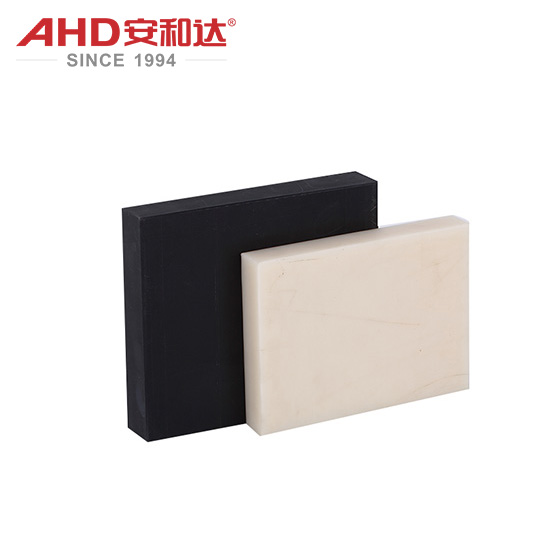
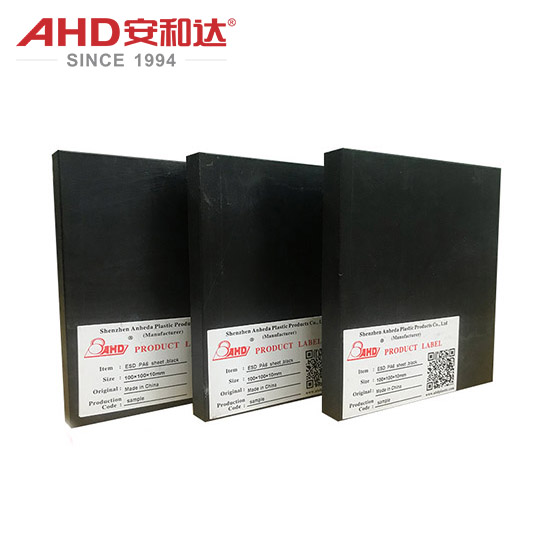
Color: If ESD POM uses a polymer antistatic agent, its color is typically natural (creamy white or light gray); if carbon black is added, the color becomes darker but more uniform. ESD PA6, because PA6 easily disperses carbon black, is often dark gray or black (higher carbon black content results in a darker color).
Surface Texture: ESD POM has a smoother surface (POM's high crystallinity results in a glossy mold surface); ESD PA6 may have a slightly rougher surface due to its hygroscopicity or carbon black filling (especially with a high carbon black content).
Summary
ESD POM and ESD PA6 are both antistatic engineering plastics. Their core similarities lie in their ESD protection and basic mechanical properties. However, ESD POM excels in dimensional stability and long-lasting ESD performance in humid environments, making it suitable for high-precision, low-humidity applications. ESD PA6 offers superior heat resistance and lower cost, making it suitable for applications with high temperature requirements or less demanding precision. The choice should be made based on a comprehensive consideration of humidity, temperature, precision, and cost. The initial distinction can be made based on color and surface texture.
AHD antistatic polyoxymethylene sheet