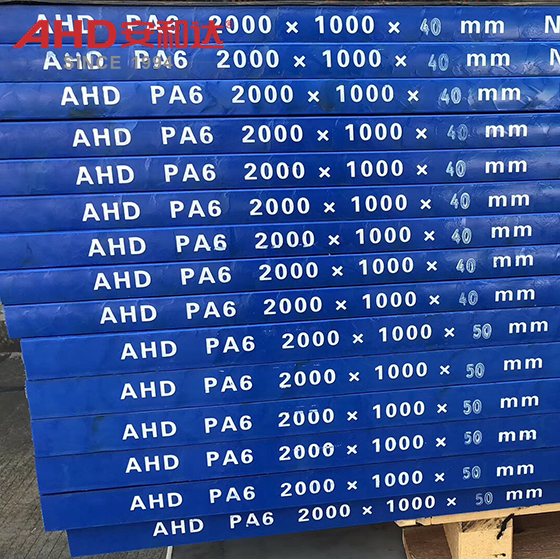
Nylon PA6 and PA66 are both core engineering plastics within the polyamide (nylon) family.
PA6 is produced through the ring-opening polymerization of caprolactam. Its molecular chain contains a low density of amide bonds, resulting in a low melting point (215-225°C) and high hygroscopicity (equilibrium water absorption of approximately 3.5%). However, it offers superior toughness, good processing fluidity, and low cost. It is commonly used in general mechanical structures or cost-sensitive applications, such as electronic device brackets, tool handles, and low-temperature components.
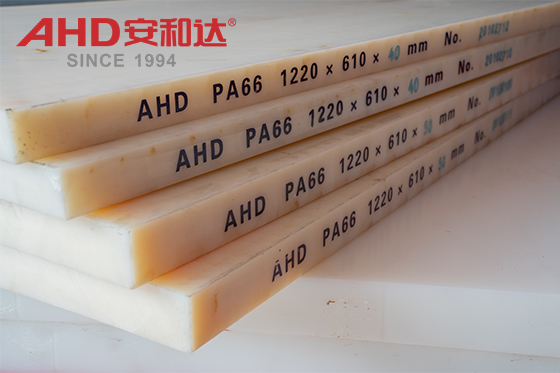
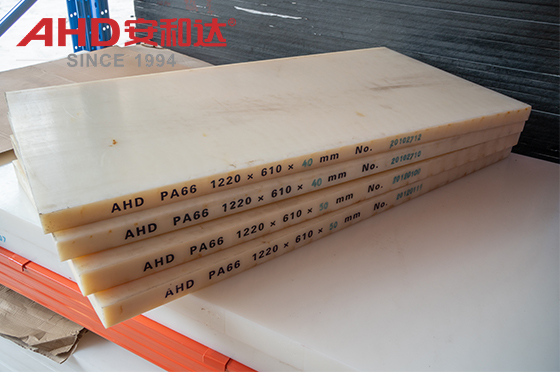
Nylon66 Sheet, produced through the polycondensation of adipic acid and hexamethylenediamine, has a higher density of amide bonds, a higher melting point (260-265°C), and lower hygroscopicity (approximately 2.5%). It combines increased rigidity, heat resistance (long-term operating temperature of 80-100°C), and wear resistance, making it suitable for high-temperature, high-load, and precision transmission applications, such as automotive engine peripheral gears, industrial pulleys, and textile machinery transmission components.
The two materials complement each other in terms of "general toughness" and "high-performance heat resistance," respectively, and together constitute the core application system of nylon materials.

AHD PA66 Nylon Plastic Sheet
I. Similarities
Basic Properties: Both are semi-crystalline thermoplastic engineering plastics with recurring amide bonds (-CONH-) in the molecular backbone. They share common nylon properties (such as high wear resistance, oil resistance, and self-lubrication).
Core Performance: Both exhibit excellent mechanical strength, impact resistance, and chemical resistance (to organic solvents, weak acids, and weak bases).
Processability: Both can be formed through injection molding, extrusion, and compression molding, making them suitable for manufacturing profiles such as plates and rods.
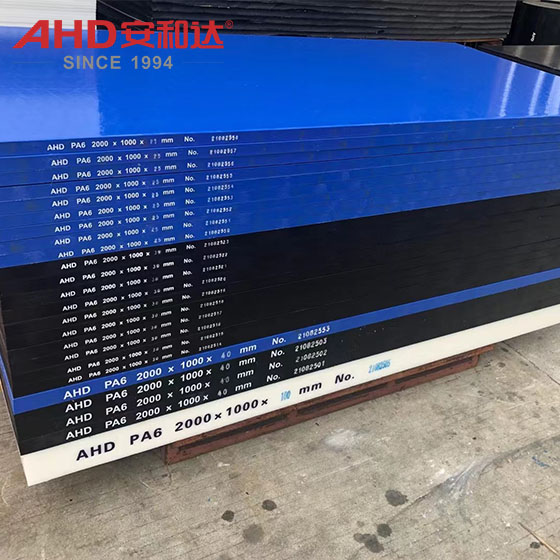
II. Differences
1. Feature Comparison
| Dimensions | PA66 Sheet and Rod | PA6 Sheet and Rod |
| Molecular Structure | Formed by the polycondensation of adipic acid and hexamethylenediamine, it has a higher amide bond density (one amide bond per two carbon atoms). | Formed by the ring-opening polymerization of caprolactam, it has a lower amide bond density (one amide bond per six carbon atoms). |
| Melting point | Higher (260-265°C), better heat resistance. | Lower (215-225°C), slightly weaker heat resistance. |
| Hygroscopicity | The equilibrium water absorption rate is approximately 2.5%, resulting in better dimensional stability. | Higher water absorption, approximately 3%, can lead to dimensional expansion and decreased mechanical properties due to moisture absorption. |
| Mechanical Properties | Higher stiffness and tensile strength (tensile strength 80-90 MPa), but slightly lower toughness. | Higher toughness (higher elongation at break), but lower stiffness (tensile strength 70-80 MPa). |
| Temperature Resistance | Long-term operating temperature: 80-100°C, short-term temperature resistance: up to 150°C. | Long-term operating temperature: 60-80°C, short-term temperature resistance: approximately 120°C. |
| Crystallinity | High crystallinity (approximately 30-40%) results in increased rigidity but slightly increased brittleness. | Low crystallinity (approximately 20-30%) results in increased flexibility. |
2. Comparison of advantages
| PA66 | PA6 |
| It maintains better rigidity at high temperatures, making it suitable for high-temperature load scenarios. | It also offers excellent processing fluidity, making it easy to form complex structures. |
| Outstanding wear and creep resistance, resulting in a longer lifespan. | Excellent low-temperature toughness (remains flexible at -40°C) and excellent impact resistance. |
| High dimensional stability (low hygroscopicity), suitable for precision parts. | Lower cost |
| Slightly better chemical resistance (such as alcohol and grease resistance) than PA6. | Excellent self-lubrication and a lower coefficient of friction. |
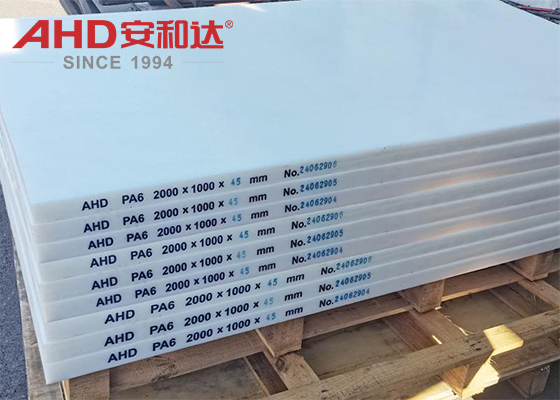
3.Comparison of usage
| PA66 | PA6 | |
| Drying | Requires strict drying (moisture content <0.1%), recommended at 120°C for 4-6 hours (dew point ≤ -40°C). | Requires drying (moisture content <0.2%), 110-120°C for 6-8 hours (due to higher hygroscopicity). |
| Processing Temperatures | Barrel temperature 280-300°C, mold temperature 80-120°C (to improve crystallinity and reduce internal stress). | Barrel temperature 240-260°C, mold temperature 60-100°C (to avoid overheating and decomposition). |
| Cooling Control | The cooling rate should be uniform to avoid rapid cooling that can cause internal stress cracking. | Accelerated cooling can be used appropriately because the risk of internal stress is minimized due to low crystallinity. |
4.Comparison of precautions
| PA66 |
PA6
|
| Avoid prolonged use in environments above 120°C (prone to oxidative degradation). | Avoid long-term storage in high humidity environments (>80% RH), as this may result in poor dimensional stability. |
| High rigidity can lead to stress concentration, requiring annealing for complex structures. | Mechanical properties degrade significantly after moisture absorption, requiring a moisture-proof coating in critical applications. |
| It drips during combustion, requiring the addition of a flame retardant. | Dripping is more noticeable during combustion, and special formulations are required for high flame retardancy requirements. |
| Avoid contact with strong acids (such as concentrated sulfuric acid) and strong oxidizers, as they can corrode the product. | It is also less resistant to polar solvents (such as phenol), so proper precautions are required. |
Summary
PA66 is more suitable for high-temperature, high-load, and precision applications, while PA6 offers advantages in low-cost, high-toughness, low-temperature, or light-load applications. When choosing between these two options, consider temperature, humidity, load, and cost: Choose PA66 for high-temperature and heavy-load applications, and PA6 for general structures or cost-sensitive applications.