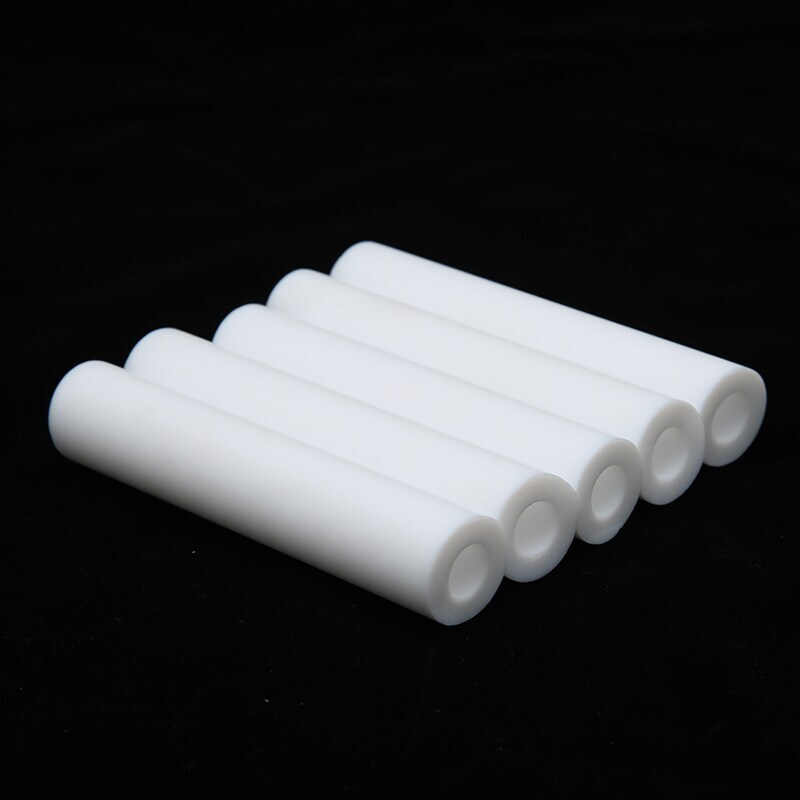
Definition of PTFE Tubing
PTFE tubing (polytetrafluoroethylene tubing) is a tubular product made from polytetrafluoroethylene (PTFE, trade name "Teflon") resin through extrusion, pressing, or molding. PTFE is a fluorine-containing polymer material with a unique molecular structure (repeating units of -CF₂-CF₂-), which gives it exceptional comprehensive properties and makes it an irreplaceable material in industrial and high-end fields.
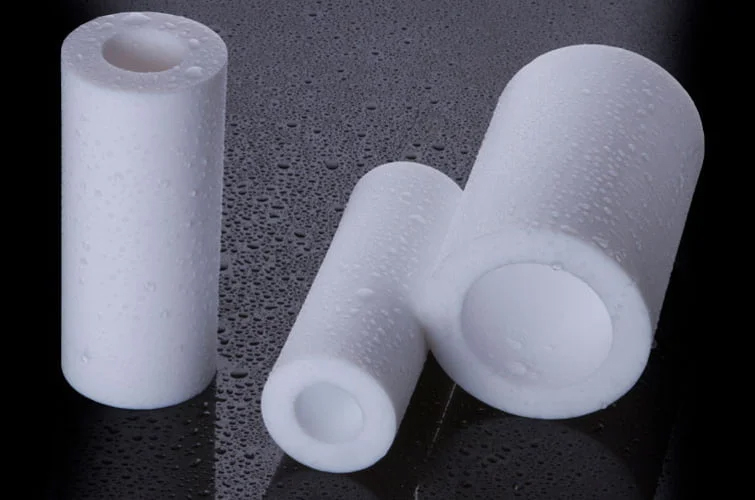
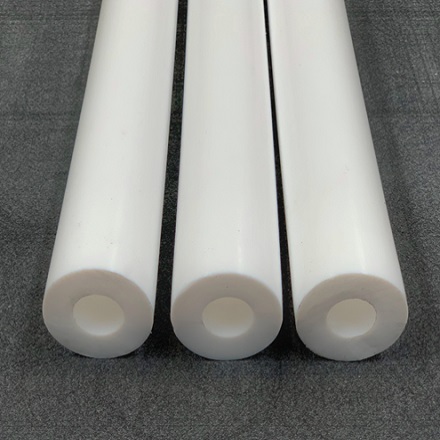
Hollow PVDF Plastic Rod
Core Advantages and Features
PTFE tubing far surpasses ordinary plastic tubing in performance. Its key advantages are as follows:
1. Superior Chemical Stability
It is virtually unreactive with all chemicals (except molten alkali metals, fluorine, and strong oxidants at high temperatures). It is resistant to corrosion from strong acids (such as aqua regia and concentrated sulfuric acid), strong bases, and organic solvents (such as acetone and gasoline), making it the most chemically inert plastic tubing.
2. Wide Temperature Range
It has a long-term operating temperature range of -200°C to 260°C (short-term resistance to 280°C). It does not become brittle at low temperatures and does not soften at high temperatures (melting point approximately 330°C), making it suitable for use in extreme temperature environments.
3. Extremely Low Friction Coefficient and Non-Stick
The surface friction coefficient is only 0.04 (close to ice), one of the lowest among solid materials. Its extremely low surface energy makes it virtually impervious to adhesion by any liquid or solid (such as grease or adhesives), and it exhibits excellent self-cleaning properties.
4. Excellent Electrical Insulation
It features a low dielectric constant (approximately 2.1) and an extremely high volume resistivity (>10¹⁸ Ω·cm). Frequency and temperature have minimal effects on its insulation performance, making it an ideal insulating material for high-frequency electronic devices.
5. Aging and Weathering Resistance
It is UV- and ozone-resistant, resists aging even under long-term exposure to outdoor environments or radiation, and offers a long service life.
6. Biocompatibility
It is non-toxic and extractable, meeting FDA and ISO 10993 biosafety standards, making it suitable for medical implants or applications involving human body contact.
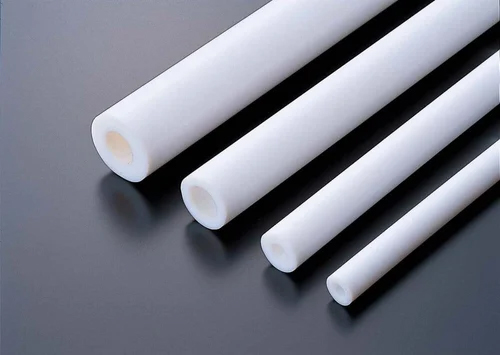
Instructions
Connection Methods:
Hot Pressing/Welding: Leveraging the plasticity of PTFE, heat (approximately 350-400°C) is used to create a sealed connection through extrusion or high-frequency welding. Suitable for high-purity or high-pressure applications.
Mechanical Connection: Use with dedicated ferrules, threaded connectors, or flanges. Pay attention to the gasket material (such as fluororubber) to avoid direct metal contact with the pipe wall.
Loose-Sleeve Connection: Used for applications requiring frequent disassembly and secured with an elastic sealing ring.
Installation Precautions:
Avoid excessive bending (recommended minimum bend radius ≥5 times the pipe's outer diameter) to prevent inner wall flattening and stress concentration.
Surface Cleaning: Wipe with anhydrous ethanol or deionized water before installation to remove any remaining particles (especially in the semiconductor and medical fields).
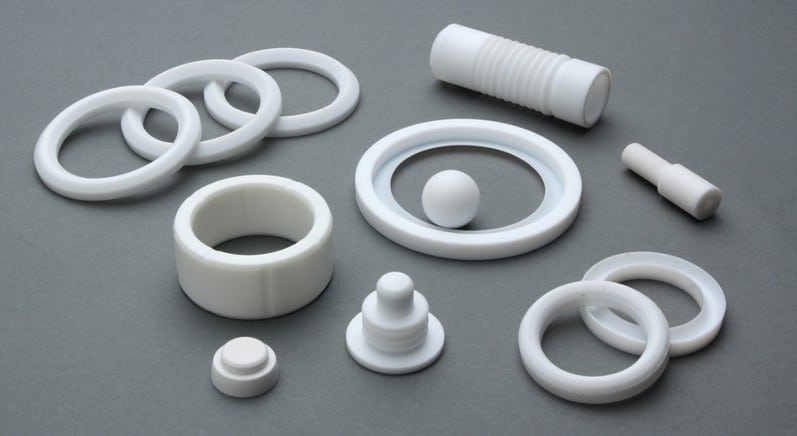
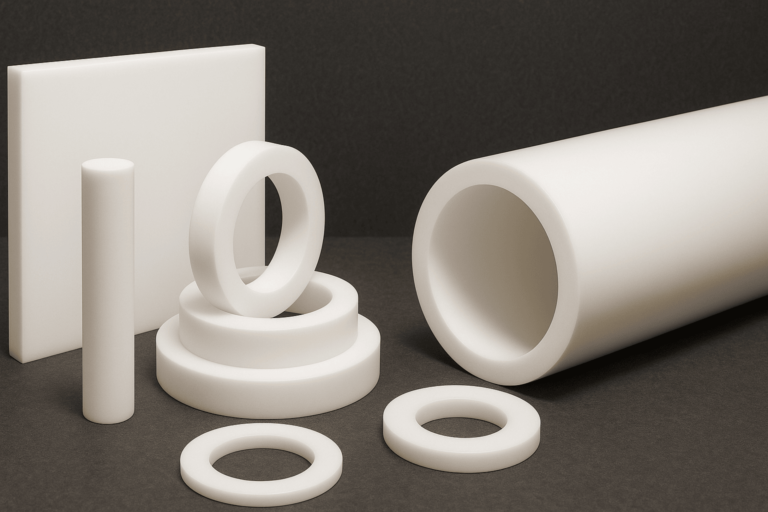
PTFE rods and tubes processing into parts
Can thick-walled PTFE plastic tube be processed?
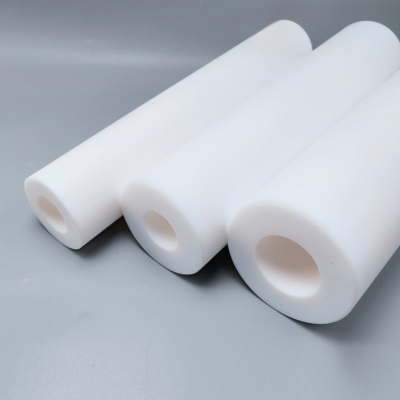
Yes, thick-walled PTFE tube (typically defined as having a wall thickness ≥ 2mm, or thicker than conventional thin-walled tube (0.5-2mm)) typically requires further processing. The reasons are:
Original thick-walled tubes are mostly straight and cannot directly meet the structural requirements of complex applications (such as elbows, fittings, reducers, seals, etc.);
The thick wall provides greater mechanical strength and pressure resistance, but processing is required to adapt to specific equipment interfaces or functions (such as adding bosses, slotting, drilling, etc.);
Some applications require reducing material costs (for example, replacing high-cost, integrally molded parts with thick-walled tube processing).
Processing Methods for Thick-Wall PTFE Tube
1. Mechanical Cutting (Most Mainstream)
Using lathes, milling machines, drilling machines, and other equipment, thick-walled tubes are turned, milled, and drilled. Suitable for manufacturing shaft sleeves, cylindrical parts, and special-shaped structures.
Turning:
Goal: To process thick-walled tubes into outer diameters, inner bores, end faces, or stepped structures (e.g., for sealing rings and guide sleeves).
Key: PTFE has poor thermal conductivity and is prone to localized softening or even melting during cutting. Therefore, slow cutting speeds and sharp carbide or diamond-coated cutting tools are required to reduce frictional heat.
Note: Avoid using water-based cutting fluids for cooling; compressed air or a small amount of grease is often used.
Milling/Drilling:
Used for machining flat surfaces, slots, or through-holes (e.g., sensor mounting holes and fluid diversion channels in thick-walled tubes).
Use a carbide milling cutter and control the cutting depth to prevent material deformation due to heat buildup.
Core Purposes of Processing
1. Manufacturing Complex Structural Components
Original thick-walled pipes are straight and cannot be directly used in applications requiring elbows, tees, or reducers. Through thermoforming or machining, they can be converted into elbows, reducers (e.g., 50mm to 30mm), and other fittings, eliminating the risk of leaks caused by splicing multiple straight pipe sections.
2. Improving Sealing and Pressure-Resistant Capacity
Machining Sealing Surfaces: A flat or tapered surface is created on the end of a thick-walled pipe through turning or flanging. This increases the contact area when mating with a metal flange and improves sealing (suitable for high-pressure chemical pipelines).
Adding Bosses/Retaining Rings: Bosses are machined onto the outer wall of a thick-walled pipe to fit into the equipment housing, preventing displacement due to pressure or vibration.
3. Adapting to Precision Equipment Interfaces
Semiconductor and medical equipment require extremely high dimensional accuracy for their interfaces. The outer and inner diameters of the original thick-walled pipe may not match, requiring precise turning to achieve the target dimensions.
4. Reduce Costs and Material Waste
Directly sourcing custom-shaped thick-wall PTFE parts is extremely expensive. By processing thick-walled tubing, custom structures can be created, reducing material waste.
5. Enhanced Functionality
Grooving: Circular grooves are created on the outer wall of thick-walled tubing to accommodate O-rings or wires, enhancing the seal with the connector.
Drilling: Holes are drilled into the sidewall of thick-walled tubing to create sensor mounting holes or flow diversion holes.
Processing Difficulties and Precautions
Thermal Management: PTFE has poor thermal conductivity and is prone to localized overheating during cutting or thermoforming, leading to softening and deformation. Strict temperature control is required (use compressed air for cooling during turning and uniform heating during thermoforming).
Shrinkage Control: PTFE can experience linear shrinkage of 1-3% during cooling (increasing with wall thickness). Allowance for shrinkage must be made during processing.
Tool Selection: Use tools with high hardness and low friction coefficient to avoid tool sticking and burrs.
Cleaning Control: In the medical and semiconductor industries, ultrapure water or alcohol cleaning is required after processing to avoid metal debris and oil residue.
Thick-walled PTFE tubing is not only processed, but also a key step in achieving its functionalization. Through processes such as mechanical cutting, thermoforming, and welding, it can be transformed into complex structural components that meet the requirements of high precision, high sealing, and high-pressure resistance. It is widely used in the chemical, semiconductor, medical, and aerospace industries. During processing, thermal deformation, shrinkage, and cleanliness must be carefully controlled to ensure the performance and reliability of the final component.
Key Applications
Chemical and Pharmaceutical: Transporting highly corrosive media (such as hydrochloric acid, nitric acid, and solvents), or as corrosion-resistant piping for reactors and distillation columns.
Electronics and Semiconductors: Insulation for high-frequency cables (such as those used in 5G communications and radar), or corrosion-resistant gas/liquid piping for semiconductor equipment (such as hydrofluoric acid and photoresist).
Medical: Implantable devices such as artificial blood vessels, cardiac patches, and urinary catheters (with excellent biocompatibility); non-stick coatings for surgical instruments.
Aerospace: High-temperature and oil-leak-resistant hydraulic piping in engine compartments, or insulation for high-frequency signal transmission lines in satellites and rockets.
Food and Beverage: High-purity food-grade PTFE tubing (FDA-compliant) is used to transport hot oil, syrups, and alcohol to prevent residual contamination.
New Energy: Corrosion-resistant electrolyte piping for lithium battery production lines, or weather-resistant cable sheathing for photovoltaic equipment.
PTFE tubing, with its comprehensive properties as the "King of Plastics," is irreplaceable in extreme environments, high-precision, and biosafety applications. When using it, attention should be paid to temperature, pressure, and cleanliness control to maximize its benefits and extend its life.