I. What is PEEK Raw Material?
PEEK (Polyetheretherketone) is a high-performance specialty engineering plastic, belonging to the aromatic semi-crystalline thermoplastic polymer material. Its molecular backbone consists of alternating ether bonds (-O-) and ketone bonds (-CO-) linking benzene rings, giving it excellent comprehensive properties:
High Temperature Resistance: Long-term service temperature up to 250℃ (short-term 300℃), melting point approximately 343℃;
High Strength: Tensile strength approximately 90-100MPa, modulus 3.6-4.0GPa, outstanding fatigue resistance;
Chemical Corrosion Resistance: Almost insoluble in all organic solvents except concentrated sulfuric acid;
Radiation Resistance: Better resistance to gamma rays than traditional plastics;
Biocompatibility: Non-toxic, can pass medical-grade certification.
PEEK raw materials are usually in granular form, divided into pure PEEK and modified PEEK (such as glass fiber/carbon fiber filled, graphite/PTFE wear-resistant modified, etc.), widely used in high-end fields such as aerospace, medical, electronics, and automotive.

II. How to Select High-Quality PEEK Raw Materials?
High-quality PEEK raw materials must meet performance stability, processing adaptability, and application requirements. They can be selected from the following dimensions:
1. Define Application Requirements
Select the type based on the intended use:
Pure PEEK: Used in high-purity applications (e.g., medical implants, semiconductor devices);
Filled/Modified PEEK: Glass fiber (GF) reinforcement improves rigidity, carbon fiber (CF) reinforcement enhances thermal/electrical conductivity, and PTFE/graphite reduces the coefficient of friction.
2. Testing Core Performance Indicators
Molecular Weight and Distribution: High molecular weight improves mechanical properties, and uniform distribution ensures processing stability;
Melt Flow Rate (MFR): Reflects processing fluidity. The MFR of pure PEEK is typically 2-10 g/10min (360℃/3.8MPa), requiring compatibility with processing equipment;
Mechanical Properties: Tensile strength, flexural modulus, and impact strength must meet standards;
Thermal Properties: Glass transition temperature (Tg≈143℃), melting point (Tm≈343℃), heat distortion temperature (HDT@260℃≥310℃);
Purity and Impurities: No black spots or colored particles; metal ion content (such as Fe, Ni) ≤10 ppm (lower for medical grade).

3. Verify Supplier Qualifications
Select certified manufacturers; require batch testing reports for materials, including key data such as MFR, density, and mechanical properties; prioritize suppliers with R&D capabilities, who can customize formulations (e.g., low-gas release, hydrolysis-resistant versions).
4. Appearance and Physical Inspection
Uniform Particle Size: No adhering, broken, or irregularly shaped particles
Consistent Color: Pure PEEK should be light amber; modified materials should have stable color without impurities;
Odor: No obvious pungent odor (inferior materials may produce small-molecule volatiles due to decomposition).

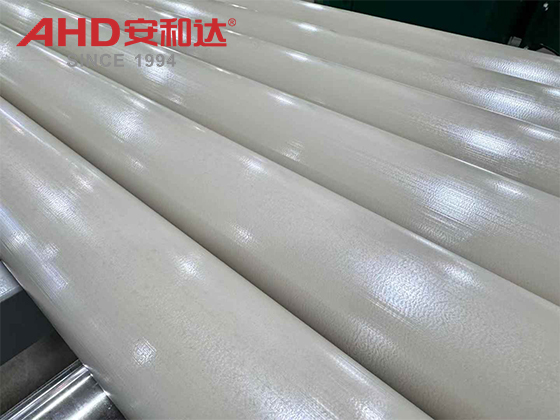
AHD Polyetheretherketone Rod (PEEK Plastic Rod)
III. How to Store PEEK Raw Materials?
PEEK has low hygroscopicity (equilibrium moisture absorption rate <0.5%), but improper long-term storage may affect processing performance or lead to degradation. The following precautions should be taken:
1. Environmental Control
Temperature: 20-30℃, avoid high temperatures (>50℃ may cause slow thermal oxidation);
Humidity: Relative humidity <60%. Although hygroscopicity is low, a humid environment may cause surface moisture adsorption, resulting in bubbles during processing;
Light: Store away from light (ultraviolet light may accelerate polymer aging).
2. Packaging and Storage
Keep the original packaging sealed (usually a moisture-proof aluminum-plastic bag + cardboard box). Unused raw materials should be resealed;
Avoid heavy pressure when stacking (to prevent particle breakage);
Keep away from chemical reagents (such as acids and alkalis) to avoid contamination.
3. Shelf Life
Unopened raw materials are recommended to be used within 12 months. Once opened, use within 6 months (long-term exposure may lead to contamination).

AHD Polyetheretherketone Sheet (PEEK Plastic Sheet)
IV. How to Process High-Quality PEEK Sheet and PEEK Rod?
PEEK sheets/rods are typically produced through extrusion molding. The key lies in raw material pretreatment, equipment debugging, and process control.
1. Raw Material Pretreatment: Drying
Although PEEK has low hygroscopicity, it still needs to be dried before processing to remove surface moisture and prevent bubbles or degradation during extrusion:
Drying Temperature: 120-150℃ (150℃ recommended for pure PEEK; for modified materials, follow the supplier's recommendations);
Drying Time: 4-6 hours (using a dehumidifying dryer);
After Drying: Use immediately to avoid secondary moisture absorption.
2. Equipment Selection
Extruder: A twin-screw extruder (L/D ratio ≥ 32:1) is recommended to ensure sufficient plasticization of the material; the screw must be wear-resistant (PEEK containing glass fiber/carbon fiber is prone to wear).
Die: The sheet/rod extrusion die must have a uniform flow channel to avoid material stagnation (the die head can be polished to reduce shear heat generation); the sheet die should be equipped with a perforated plate + distributor to ensure consistent melt flow rate.
3. Process Parameter Control
Temperature:
Barrel: Rear section 280-320℃ (preheating and plasticizing), Middle section 340-380℃ (melting), Front section 360-400℃ (homogenization);
Die: 360-390℃ (slightly below decomposition temperature to avoid material degradation).
Pressure: Screw speed 5-20 rpm (low speed reduces shear heat), Back pressure 0.5-2 MPa (ensuring melt density).
Cooling:
Sheet: Cooled by a three-roll calender to avoid rapid cooling leading to internal stress;
Bar: Water bath cooling, sufficient cooling length (>1 meter) to ensure complete crystallization.

4. Post-treatment
Annealing: Sheets/bars can be annealed at 150-200℃ for 2-4 hours to eliminate internal stress and improve dimensional stability.
Surface Treatment: For a particularly smooth surface, the sheet can be polished.
5. Common Problems and Solutions
Bubbles/Silver Stains: Insufficient drying → Extend drying time;
Surface Roughness: Die head temperature too low → Increase die head temperature;
Insufficient Mechanical Properties: Excessive cooling → Lower cooling water temperature and extend cooling time;
Uneven Color: Uneven raw material mixing → Strengthen mixing before drying, or use color masterbatch for pre-dispersion.
As a high-performance material, the quality of PEEK depends on the selection of raw materials, storage conditions, and processing technology. By rigorously selecting suppliers, controlling the storage environment, and optimizing extrusion temperature, pressure, and post-processing, high-performance PEEK sheets/rods can be produced to meet the needs of high-end applications.
AHD Rod PEEK