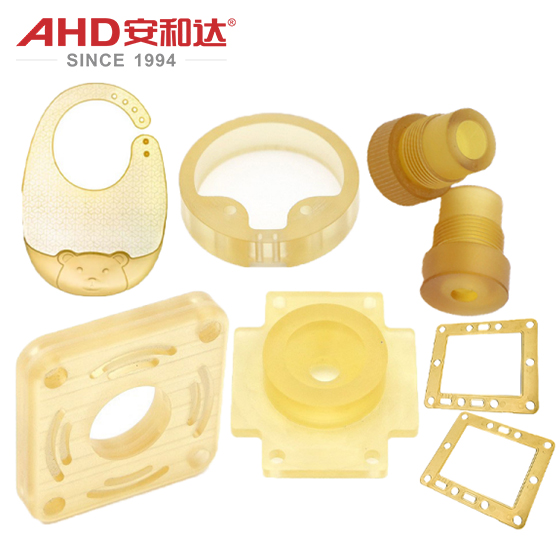
PPSU (polyphenylsulfone) and PSU (polysulfone) are both high-performance sulfone engineering plastics. Their molecular backbones contain sulfone groups (-SO₂-) and aromatic ring structures, thus possessing excellent high-temperature resistance, chemical resistance, and mechanical properties. However, due to differences in molecular structure (PPSU contains benzene ring substituents, while PSU is linked by ether bonds), there are significant differences in their specific properties and applications. The following comparative analysis focuses on five aspects: characteristics, advantages, uses, application methods, and precautions.
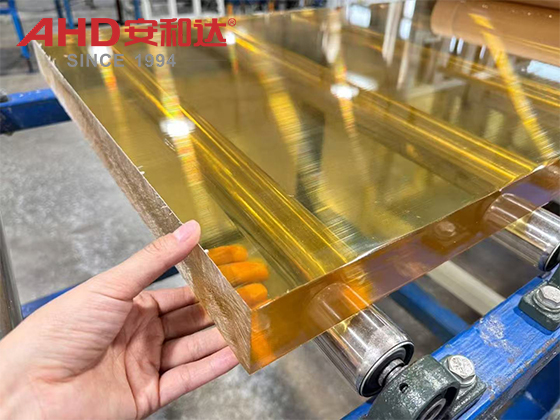
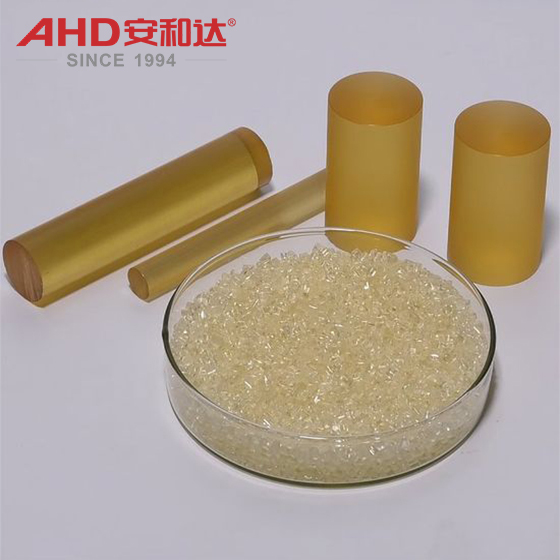
Polysulfone PSU Sheet
I. Similarities
Basic Category and Core Structure: Both are sulfone polymers, with sulfone groups (-SO₂-) and phenylene groups in the main chain, belonging to non-crystalline thermoplastic engineering plastics.
Common Basic Properties:
High Temperature Resistance: Long-term operating temperatures are higher than ordinary engineering plastics, and they can operate stably in environments above 150℃;
Chemical Resistance: Resistant to acids, alkalis, and organic solvents (such as alcohols and hydrocarbons), with good stress cracking resistance;
Mechanical Properties: Possess high tensile strength, modulus, and impact resistance;
Purity: Halogen-free, low leaching, and meets medical/food contact safety standards (some levels).
Ⅱ.Differences
1. Feature Comparison
| Performance Indicators | PPSU Sheet & Rod | PSU Sheet & Rods |
| Glass Transition Temperature (Tg) | Approx. 220℃ (Higher temperature resistance) | Approx. 185℃ |
| Long-term Operating Temperature | 180℃ (Short-term up to 200℃) | 160℃ (Short-term up to 180℃) |
| Hydrolysis Resistance | Extremely strong (Undeformed after repeated sterilization under high temperature and high pressure steam) | Good |
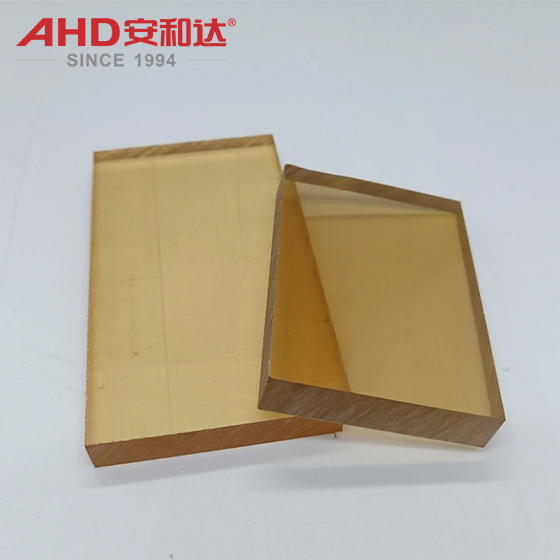
| Transparency | Semi-transparent (Slightly yellowish) | Highly transparent (Close to glass) |
| Hygroscopicity | Low | Higher |
| Radiation Resistance | Superior (Stronger resistance to gamma rays) | Good |
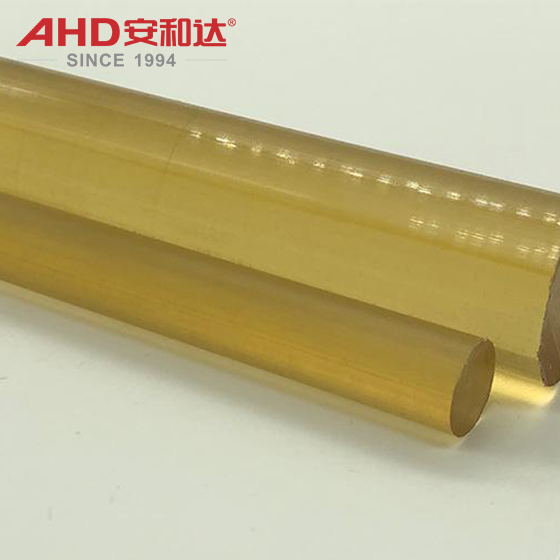
PPSU Rod
2. Advantages Comparison
PPSU's core advantages:
Ultra-high temperature sterilization resistance: Can withstand repeated sterilization with high-temperature and high-pressure steam at 134℃ (such as medical sterilization), while PSU is prone to hydrolysis in long-term steam environments;
Superior impact resistance: Notched impact strength (approximately 60 kJ/m²) is higher than PSU (approximately 40 kJ/m²), making it more resistant to impacts;
Radiation and chemical resistance: Better resistance to strong oxidants (such as sodium hypochlorite) and gamma rays than PSU;
Low moisture absorption: Superior dimensional stability, with less deformation in humid environments.
PSU's core advantages:
High transparency and optical performance: Light transmittance close to glass, suitable for optical lenses, lampshades, etc.;
Superior electrical insulation: Lower dielectric loss at high frequencies, suitable for high-precision electronic insulating components;
Lower cost: Price is approximately 70%~80% of PPSU (due to slightly inferior performance, market demand is greater);
Processability: Slightly better melt flow, potentially shorter injection molding cycle.
3. Application Comparison
Typical Applications of Polyphenylsulfone PPSU Sheets and Rods:
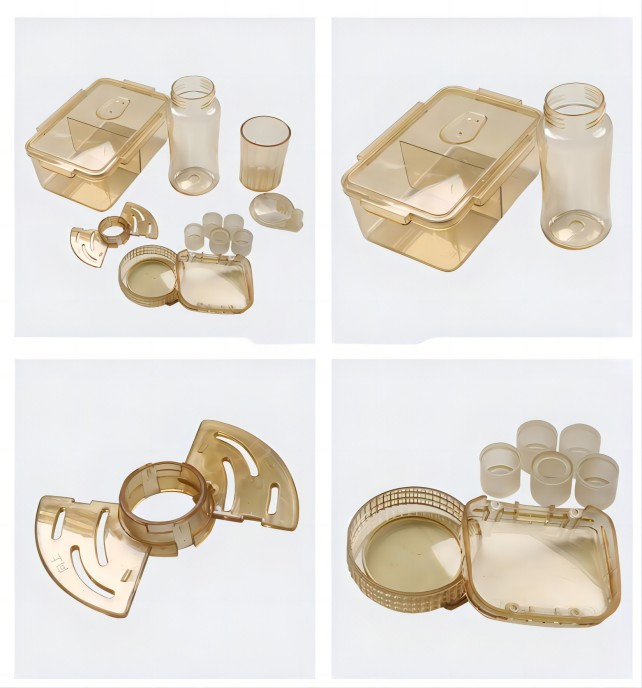
Medical Field: Surgical instruments, dental equipment, and baby bottles that can be repeatedly sterilized under high temperature and pressure (drop-resistant and hot water-resistant);
Aerospace: High-temperature resistant structural components (such as connectors and sensor housings);
Industrial Field: Pump and valve components and seals for highly corrosive/high-temperature environments;
Food Contact: Kitchen utensils for high-temperature cooking.
Typical Applications of Polysulfone Sheet and Rod:
Electronics and Electrical: High-insulation terminals and coil frames;
Optics: Optical lenses, filter substrates, and laser equipment windows;
Food/Daily Necessities: Transparent tableware;
Automotive: Headlight covers (combining transparency and temperature resistance).
Ⅲ. Comparison of Precautions
PPSU: Avoid prolonged contact with highly polar solvents (such as dimethyl sulfoxide, DMSO), as this may cause swelling; Strict temperature control is required during processing (decomposition is likely above 400℃); Medical-grade products must be verified to meet standards.
PSU: Avoid prolonged use in highly alkaline environments (such as concentrated NaOH solution), as hydrolysis is likely; Prolonged stress at high temperatures (>180℃) can lead to creep, so avoid large-span load-bearing structures; Transparent products require care to prevent scratches.
Both PPSU and PSU are high-performance sulfone materials, but PPSU is superior in high-temperature sterilization resistance, hydrolysis resistance, and impact resistance, making it suitable for medical and extreme environment scenarios. PSU, on the other hand, is superior in transparency, electrical properties, and cost, making it more suitable for optical and electronic fields. The choice should be made based on specific needs (such as temperature, chemical resistance, and optical requirements) and cost.