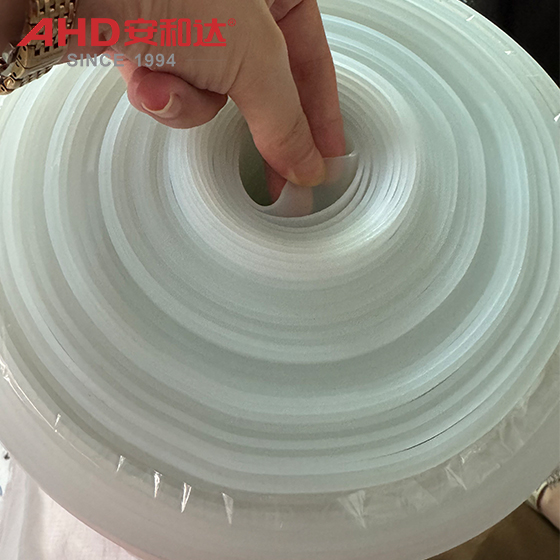
Silicone Sheet, NBR Sheet, and EPDM Sheet are three common types of rubber sheets, differing primarily in their chemical composition, molecular structure, and resulting physicochemical properties. The following comparative analysis examines them from three dimensions: chemical composition, key properties (temperature resistance/weather resistance/chemical resistance, etc.), and typical applications:
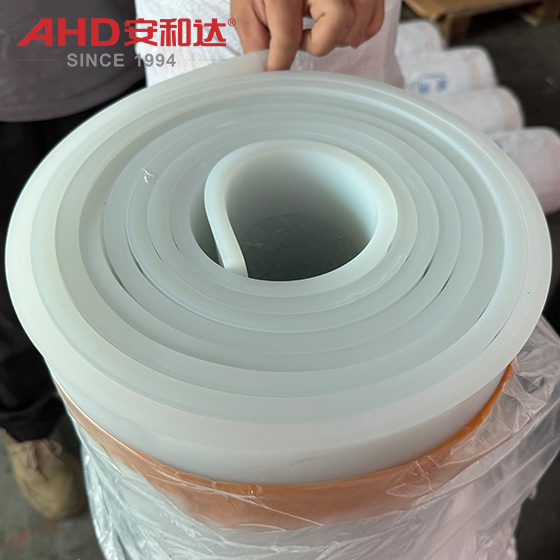
AHD Silicone Rolls
I. Chemical Composition
Silicone Sheet: The main component is polysiloxane (-Si-O- main chain), with side groups consisting of organic groups such as methyl (-CH₃) or vinyl (-CH=CH₂). The high bond energy of the silicon-oxygen bond (Si-O) (approximately 452 kJ/mol) imparts excellent thermal and oxidative stability.
NBR Sheet: A copolymer of acrylonitrile (AN, containing polar cyano-CN) and butadiene (BD, containing nonpolar double bonds). The acrylonitrile content (typically 18%-50%) determines its oil resistance: higher content results in stronger oil resistance, but may decrease elasticity and low-temperature performance.
EPDM Sheet (Ethylene Propylene Diene Monomer): A ternary copolymer of ethylene, propylene (non-polar), and a small amount of non-conjugated diene (such as ethylene-1,3-norbornene, ENB, providing crosslinking sites). The main chain consists of fully saturated carbon-carbon single bonds (C-C), with no double bonds, exhibiting outstanding aging resistance.
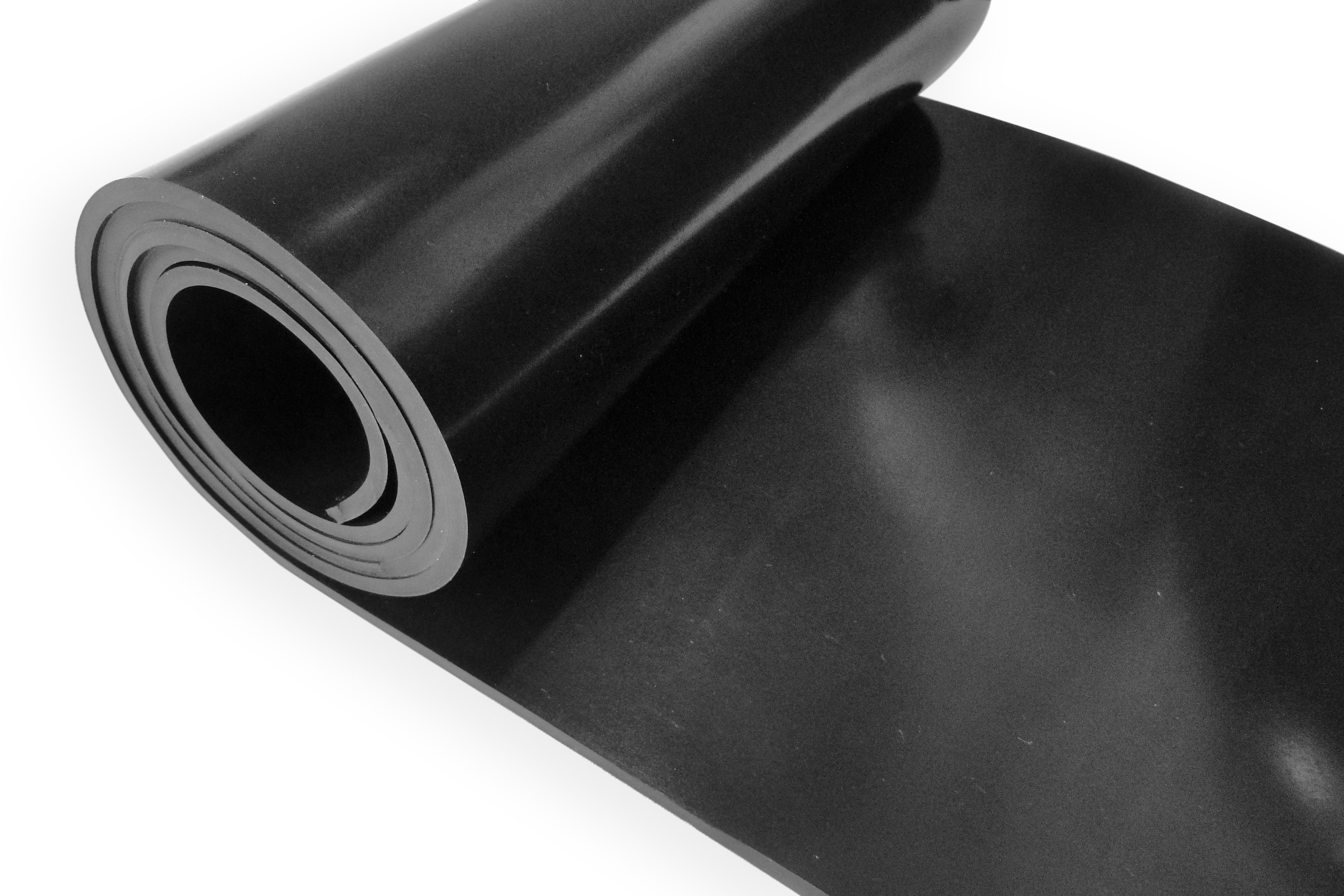
NBR Sheet
II. Key Performance Comparison
1. Temperature Resistance
AHD Silicone Rubber Sheet: Widest temperature range, -100℃~250℃ (short-term up to 300℃), does not harden at low temperatures and does not decompose at high temperatures, suitable for extreme temperature environments.
NBR Sheet: Lower temperature resistance, -40℃~120℃ (long-term use recommended ≤100℃), easily oxidized and degraded at high temperatures, hardness increases and elasticity decreases at low temperatures.
EPDM Sheet: Moderate temperature resistance, -50℃~150℃ (short-term up to 170℃), better than NBR but weaker than silicone rubber; better low-temperature performance than NBR (acrylonitrile is non-polar, molecular chains are more flexible).
2. Weather Resistance and Aging Resistance
AHD Silicone Rubber Sheet: Excellent weather resistance, resistant to UV rays, ozone, and oxidation, with minimal performance degradation after long-term outdoor use.
NBR Sheet: Poor weather resistance, double bonds are easily attacked by ozone and UV rays, prone to cracking during outdoor use.
EPDM sheet: Excellent weather resistance (main chain saturation), resistant to ozone, ultraviolet rays, and heat-oxidative aging, with a long outdoor life (second only to silicone rubber).
3. Chemical Resistance
AHD Silicone Rubber Sheet: Resistant to weak acids and alkalis, and polar solvents (such as water and alcohols), but easily swells in non-polar solvents (such as gasoline and lubricating oil); moderate resistance to concentrated acids/alkalis.
NBR Sheet: Extremely strong oil resistance (due to poor compatibility between polar cyano groups and non-polar oils), especially resistant to mineral oil, fuel oil, and hydraulic oil; but poor resistance to polar solvents (such as acetone and esters) and weather resistance.
EPDM Sheet: Excellent resistance to polar media (such as acid/alkali/salt solutions, alcohols, and ethylene glycol), but not oil-resistant (easily swells in non-polar oils); good resistance to steam and hot water (saturated main chain is not easily hydrolyzed).
4. Mechanical Properties
AHD Silicone Rubber Sheet: Good elasticity and low compression set, but low tensile strength (typically ≤10 MPa), and moderate abrasion resistance.
NBR sheets: High tensile strength (15-25 MPa), good abrasion resistance (butadiene segment provides toughness), suitable for high-load sealing or friction applications.
EPDM sheets: Excellent elasticity, good tear resistance, and high retention of mechanical properties after aging (main chain saturation makes it less prone to breakage).

EPDM Sheet
III. Typical Application Scenarios
Silicone Sheet Roll: High-temperature sealing (oven/industrial furnace sealing strips), electronic insulation (PCB gaskets, thermal pads), medical/food grade applications (non-toxic, FDA compliant), extreme temperature environments (aerospace/automotive sensor sealing).
NBR Sheets: Oil-resistant sealing (automotive oil pans, transmission seals), oil pipeline linings, industrial oil storage container sealing, oil-resistant rubber rollers (printing presses/rolls).
EPDM Sheets: Weather-resistant sealing (building waterproof membranes, automotive door and window sealing strips), acid and alkali-resistant equipment linings (chemical storage tank linings), automotive wiper/radiator hoses, high-pressure steam pipeline sealing.
Summary: How to Choose?
Requires resistance to extreme temperatures or electrical insulation → Silicone rubber sheets;
Requires oil resistance or high abrasion resistance → NBR sheets;
Requires weather resistance, acid and alkali resistance, or water resistance → EPDM sheets.
AHD Roll of Silicone Sheet