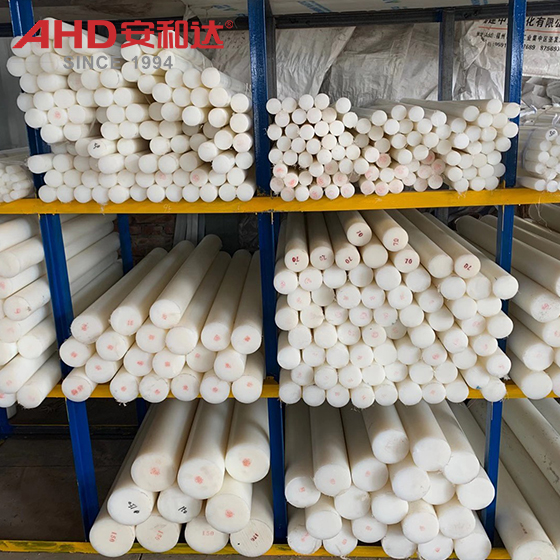
How to Select High-Quality PA6 Nylon Raw Materials?
First, quickly identify the quality by appearance.
The appearance characteristics of PA6 (Nylon 6) raw materials are closely related to their production process, purity, and modification status. Observing the appearance can provide a preliminary judgment on the quality of the raw materials and whether they meet the requirements.
1. Basic Form: Granular PA6 raw materials are usually shipped in granular form (granules are the mainstream in industry). The granule morphology is determined by the granulation process, and the following are common:
Cylindrical/Oval: The most common, produced by underwater pelletizing or strip pelletizing processes. The granule length is generally 2-4mm, the diameter is 2-3mm, and the surface is smooth (due to uniform cooling).
Spherical/Near-Spherical: Some high-flowability or specially modified PA6 may use spray drying or special granulation processes, resulting in granules that are closer to spherical and have better flowability.
2. Color: White/Milk White, Semi-transparent Virgin PA6 (new material) without added color masterbatch or fillers typically presents:
Color: White or milky white (similar to the color of milk), with no obvious color difference.
Transparency: Semi-transparent to semi-transparent (because PA6 is a semi-crystalline polymer with a crystallinity of approximately 20-30%, light can partially penetrate). Complete opacity may indicate excessive crystallinity (e.g., high-viscosity materials) or the addition of nucleating agents; cloudy or grayish appearance may indicate impurity contamination or degradation.
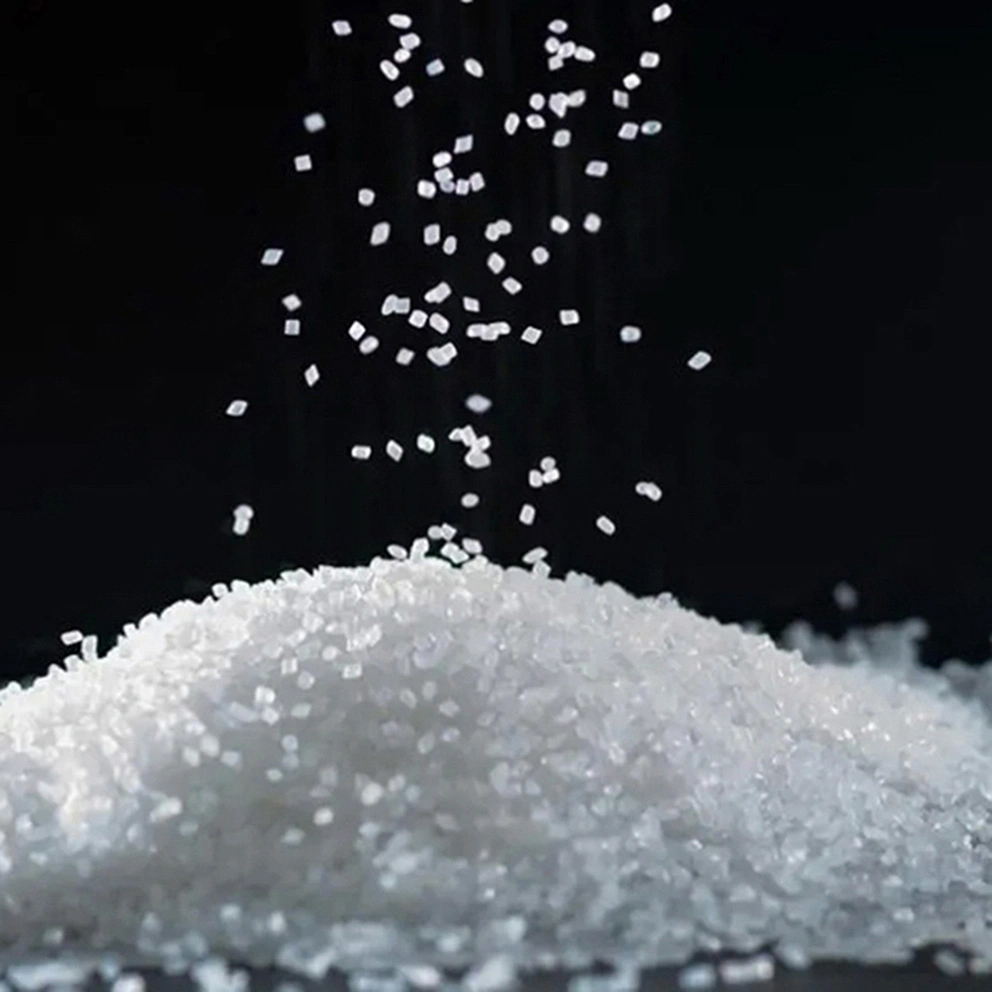
3. Surface Condition: Smooth and Defect-Free. High-quality PA6 granules should have a smooth, burr-free surface with clear edges (due to uniform cooling during granulation). Rough surfaces, scratches, or adhesion may indicate:
Poor granulation process (e.g., dull pelletizer, insufficient cooling); Improper storage leading to frictional damage between granules; Raw materials containing low molecular weight components (prone to adhesion).
4. Purity: No obvious impurities. High-quality PA6 raw materials should have uniform particle size and be free of the following abnormal substances:
Gel particles: Transparent or translucent hard small particles (due to cross-linking caused by localized overheating during polymerization or granulation); Black spots/carbonized particles: Black or dark brown small spots (due to high-temperature degradation and carbonization during processing or storage); Discolored particles: Particles that differ in color from the main component (e.g., yellow, gray, possibly due to impurities or uneven batch mixing); Broken particles/powder: Excessive fine powder (>10%) may be due to breakage during granulation or clumping and breakage after moisture absorption during storage.
5. Possible Causes of Abnormal Appearance If the appearance of PA6 raw material does not conform to the above characteristics, it may reflect quality problems or improper storage/transportation:
Yellowing: Long-term high-temperature storage (>40℃) or oxidation from oxygen exposure leads to molecular chain breakage and the formation of chromophores;
Sticky: Not dried after absorbing moisture, causing surface moisture adsorption and particle adhesion;
Layering/Clumping: High humidity in the storage environment causes the raw material to clump after absorbing moisture (it can regain its looseness after drying);
Odor: An amine odor not inherent to PA6 (normal new material has a slight amide odor). A pungent odor may indicate recycled material or additive decomposition.
The typical appearance of high-quality PA6 nylon raw material is: white/milky white, translucent cylindrical or elliptical granules with a smooth and uniform surface, free of impurities, gels, black spots, or adhesion. By observing these characteristics, reliable raw materials can be initially screened. If abnormalities are found (such as yellowing, black spots, excessive powder), further verification is required in conjunction with physical property testing (such as MFR, thermal stability).
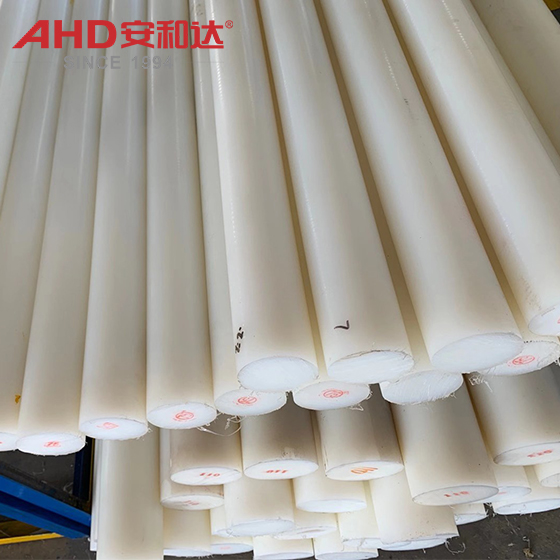
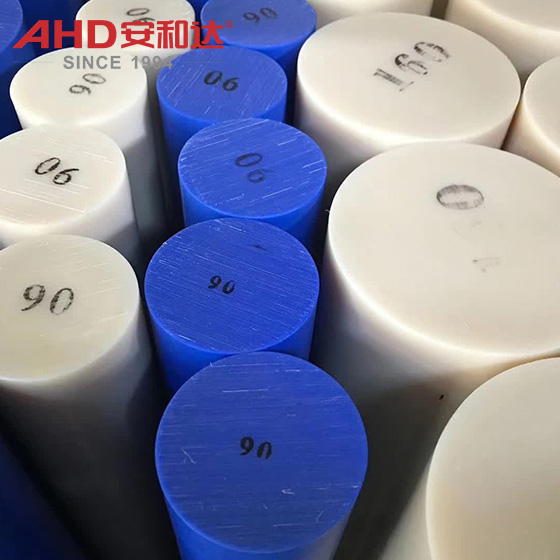
AHD PA6 Rod
Then you can check from other aspects.
PA6 (Nylon 6) is a semi-crystalline thermoplastic engineering plastic, and its quality directly affects the performance of the final product. The following key points should be considered when selecting high-quality PA6 raw materials:
1. Core Performance Indicators
Molecular Weight and Viscosity: The performance of PA6 is closely related to its molecular weight, usually indirectly reflected by melt flow rate (MFR, 230℃/2.16kg). The MFR of general-purpose PA6 is generally 2-8 g/10min (high flowability grade can be <2, high rigidity grade can be >8).
Selection should be based on product requirements: thin-walled parts require low viscosity (high MFR), while thick-walled or high-strength parts require high molecular weight (medium to low MFR).
Hygroscopicity: PA6 readily absorbs water (equilibrium water absorption rate is approximately 3-5%). High-quality raw materials should have controlled residual moisture (sufficiently dried before leaving the factory) to avoid hydrolysis or bubbling during processing.
Impurities and Hue: Particles should be uniform and free of impurities (such as gel or black spots), and the color should be pure white or translucent (yellowing may be due to oxidation or impurity contamination).
Thermal Stability: Pass the thermogravimetric analysis (e.g., weight loss <1% at 280℃/2h) to avoid decomposition and gas generation at high processing temperatures (affecting surface quality).
2. Suppliers and Qualifications
Select certified suppliers who provide Material Safety Data Sheets (MSDS) and physical property test reports (e.g., tensile strength, notched impact strength, heat distortion temperature). For industrial-grade PA6, it must be clearly stated whether it is "virgin material" (pure resin) or "recycled material" (performance may be degraded).
3. Application Scenarios: High-Temperature Environments
Select high-melting-point (PA6 melting point approximately 220-225℃) and low-hygroscopic modified varieties.
Abrasion-Resistant Applications: Select self-lubricating PA6 modified with molybdenum disulfide, graphite, or PTFE.
Food Contact: Must meet food-grade standards.
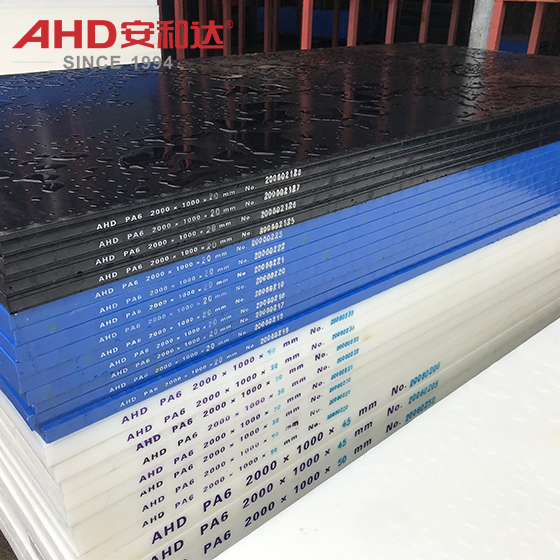
How to process PA6 into high-quality PA6 Nylon Plastic Sheet and Rod?
PA6 Sheet / Rod are typically produced through extrusion molding. The key steps are as follows:
1. Pretreatment: Drying PA6 is highly hygroscopic and must be dried to a moisture content <0.1% before processing (otherwise it is prone to hydrolysis, leading to a decrease in molecular weight and the appearance of silver streaks on the surface).
Equipment: Hot air circulating drying oven or dehumidifying dryer.
Conditions: Temperature 100-120℃, time 4-6 hours (extend to 8 hours for small particle size or high humidity).
2. Extrusion Molding
Equipment: Single-screw or twin-screw extruder (twin-screw extruders are more suitable for modified PA6, resulting in more uniform mixing).
Temperature control: Barrel temperature 230-280℃ (gradually increase from the feeding section to the die head to avoid localized overheating and degradation).
Screw parameters: L/D ratio ≥24:1 to ensure sufficient plasticization.
3. Die Design: The sheet/bar die must match the cross-sectional dimensions, with uniform die clearance (to avoid thickness deviation). The die head temperature should be slightly lower than the die head temperature (260-270℃) to reduce melt expansion after extrusion.
4. Cooling and Shaping: After extrusion, slow cooling is used to avoid rapid cooling (excessive temperature difference can lead to internal stress cracking).
After cooling, the sheet/bar is pulled out at a uniform speed by a traction machine to control the dimensional accuracy of the sheet/bar.
5. Post-treatment: Annealing: For high-precision or high-stress products, heating to 120-150℃ and holding for 2-4 hours can eliminate internal stress and improve dimensional stability.
Surface Treatment: If improved wear resistance is required, polishing or coating (such as PTFE coating) can be performed.
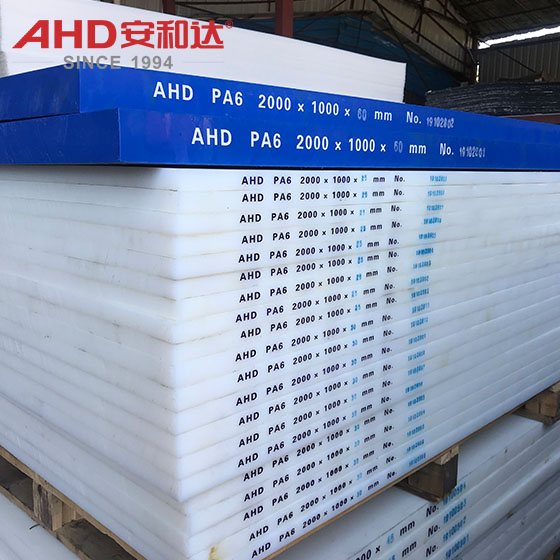
AHD PA6 Nylon Plate
Characteristics and Advantages of PA6 Sheet/ PA6 Nylon Rod
Core Characteristics
Mechanical Properties: Unmodified PA6 has a tensile strength of 60-80 MPa, a notched impact strength of 5-10 kJ/m² (good toughness), and a flexural modulus of 2.5-3.5 GPa (moderate rigidity).
Abrasion Resistance: Good self-lubricating properties (coefficient of friction 0.15-0.3), superior to ordinary plastics.
Chemical Resistance: Resistant to oils and hydrocarbon solvents, but susceptible to corrosion from strong acids and alkalis.
Thermal Properties: Heat distortion temperature approximately 90℃ (can be increased to over 150℃ after glass fiber reinforcement), long-term service temperature up to 85℃.
Disadvantages: Hygroscopicity causes dimensional changes with humidity; requires storage in a dry environment.
Main Advantages
Balanced Overall Performance: Balances strength, toughness, and abrasion resistance, with a wide range of applications.
Easy Processing: Can be extruded, injection molded, and compression molded, suitable for mass production.
Cost Advantage: PA6 is cheaper than high-performance engineering plastics.
Modifiable: Through glass fiber reinforcement, mineral filling, flame retardant modification, etc., strength, heat resistance or flame retardancy can be improved in a targeted manner.
When selecting PA6 raw materials, attention should be paid to molecular weight, impurities, and application compatibility; the core of storage is moisture protection and temperature control; extrusion processing requires strict drying and temperature control; ultimately, PA6 sheets/bars, with their balanced mechanical properties, wear resistance, and cost advantages, have become commonly used structural materials in industry. For higher performance (such as high temperature resistance and low moisture absorption), further optimization can be achieved through modification.
AHD PA6 Nylon Round Bar Stock