PVC (polyvinyl chloride) sheets are widely used in the chemical industry for applications requiring corrosion resistance, insulation, or structural support due to their chemical resistance, low cost, ease of processing, and good insulation properties. The following explains their application areas and processing methods:

I. Main Application Scenarios of PVC Sheet in the Chemical Industry
The core application of PVC sheets in the chemical field leverages their resistance to acids and alkalis (especially non-oxidizing strong acids and alkalis), salt spray resistance, and resistance to most organic solvents (except for highly polar solvents such as tetrahydrofuran and ketones). They are mainly used in the following scenarios:
1. Corrosion-Resistant Equipment and Structural Components
Reaction Vessel/Tower Linings: As the lining material for metal reaction vessels, PVC sheets can directly contact acid, alkali, salt solutions, or corrosive gases, protecting the metal substrate from corrosion.
Small Storage Tanks and Vessels: Used for storing low-concentration acid and alkali solutions (such as 5%~20% sulfuric acid, hydrochloric acid) or neutral liquids, replacing some stainless steel or fiberglass storage tanks and reducing costs (note that the long-term operating temperature of PVC generally does not exceed 60℃).
Pipes and Fittings: PVC sheets can be rolled or molded into corrosion-resistant pipes, elbows, and flanges for transporting corrosive liquids (such as chromium-containing wastewater in electroplating workshops and dilute alkali solutions in chemical workshops), often used in conjunction with PVC pipe fittings.
2. Ventilation and Exhaust Gas Treatment Systems
Corrosion-resistant ducts and fume hoods: For chemical laboratories or workshops where exhaust systems need to transport acidic/alkaline gases (such as HCl, NH₃), PVC ducts (2-5mm thick) can replace metal ducts to prevent corrosion. PVC boards are also commonly used for fume hood countertops and side panels due to their resistance to reagent drip corrosion.
Exhaust gas absorption tower internals: These serve as packing support plates, spray layer baffles, or are directly used with PVC packing to absorb acidic exhaust gases (such as SO₂, NOₓ) or alkaline exhaust gases.
3. Laboratory and Analytical Equipment
Laboratory Benches and Operating Platforms: PVC boards (often combined with epoxy resin or stainless steel frames) are commonly used for work surfaces and reagent racks in chemical laboratories, offering good resistance to reagent splashes and moisture.
Sample Handling Containers: PVC boards can be welded or bonded into small tanks and trays for storing corrosive samples or as electrode separators in electrolysis experiments (avoiding strong oxidizing acids such as concentrated nitric acid).
4. Wastewater Treatment and Environmental Protection Facilities
Sewage Tank Linings and Grilles: In equalization and neutralization tanks for electroplating and chemical wastewater, PVC boards can be used as anti-corrosion linings (3-5mm thick) for concrete tanks; or made into grilles to cover the tank surface to prevent debris from falling in, and are resistant to long-term immersion in wastewater.
Filtration Equipment Components: Used as filter plate sealing gaskets in filter presses or as housings for small filters, resistant to filtrate corrosion (such as acidic catalyst filtrates).

II. Processing and Application Methods of PVC Plate
PVC sheets are thermoplastic materials and can be processed into desired structures through cutting, welding, bonding, and thermoforming. The appropriate process must be selected based on the specific application, and attention must be paid to temperature and chemical compatibility control.
1. Cutting and Pre-treatment
Tool Selection: PVC sheets have medium hardness (Shore hardness approximately 70-80A). Circular saws, laser cutters, or waterjet cutters can be used to cut them, avoiding the burr problems associated with metal cutting.
Edge Treatment: After cutting, the edges should be sanded with sandpaper (80-240 grit) to remove burrs and prevent stress concentration or defects during subsequent processing (such as welding).
2. Welding (for sealing or high-strength connections)
PVC sheets are commonly welded using hot air or high-frequency welding, suitable for manufacturing large storage tanks, pipelines, or structures requiring airtightness:
Hot Air Welding: Use a dedicated PVC welding gun (temperature 200-300℃) to melt the welding rod (with the same composition as the PVC sheet) into the weld seam. Temperature control is necessary: Too low a temperature can lead to poor soldering, while too high a temperature can cause PVC decomposition (producing HCl gas, requiring ventilation).
High-frequency welding: This method heats the PVC sheet using a high-frequency electric field (utilizing molecular friction to generate heat). It is suitable for mass production (e.g., assembling PVC sheets into water tanks), offering high efficiency but also higher equipment costs.
3. Bonding (for non-load-bearing or sealing connections)
PVC sheets commonly use solvent bonding or PVC-specific adhesives:
Solvent bonding: This involves mixing PVC powder with solvents such as chloroform or tetrahydrofuran to create an adhesive solution. This solution is applied to the surfaces to be bonded and pressure is applied until the solvent evaporates (approximately 10-30 minutes). The disadvantage is lower strength, limiting its application to non-load-bearing areas (e.g., laboratory countertop repairs).
Specialty adhesives: Such as neoprene-based or acrylic-based PVC adhesives, these offer high strength after curing (shear strength can reach 3-5 MPa), suitable for ventilation duct flange connections, equipment sealing edges, etc. The surface must be cleaned first (wiping with alcohol) to ensure it is free of oil.
4. Thermoforming (Creating Irregular Structures)
PVC sheets soften when heated to 80-120℃, allowing them to be molded into channels, elbows, or curved structures.
Key Process Points: Uniform heating (using an oven or infrared lamp) is crucial to avoid localized overheating and decomposition; slow cooling after molding (natural or air cooling) is essential to prevent warping.
Application Example: PVC sheets can be thermoformed into 90° elbows and welded with other PVC pipes to create corrosion-resistant fluid transport pipelines.
5. Composites and Reinforcement (Enhancing Performance)
Glass Fiber Reinforced: PVC sheets can be composited with chopped glass fibers (FRP-PVC) to improve strength and temperature resistance (upgrading long-term operating temperature to 80℃), suitable for more demanding chemical structures.
Metal Frame Composites: PVC sheets can be bonded to galvanized steel or aluminum alloy frames to create corrosion-resistant equipment housings (such as small acid and alkali storage cabinets), balancing strength and corrosion resistance.
III. Precautions for Use
Temperature Limitations: The long-term operating temperature of PVC sheets should generally not exceed 60℃, and the short-term operating temperature should not exceed 80℃. High temperatures will cause softening and decomposition; contact with high-temperature media or steam should be avoided.
Chemical Compatibility: Although resistant to most acids and alkalis, strong oxidizing media (such as concentrated nitric acid, concentrated sulfuric acid >90%) and polar organic solvents (such as acetone, dichloromethane) should be avoided, otherwise swelling or dissolution may occur.
UV Protection: When used outdoors, UV stabilizers or a protective coating (such as an acrylic coating) should be added to prevent aging and cracking caused by prolonged exposure to sunlight.
Summary
PVC sheets are mainly used in the chemical industry for corrosion-resistant structural components, ventilation systems, laboratory equipment, and wastewater treatment facilities. Processing primarily involves welding, bonding, and thermoforming. The appropriate process and temperature and chemical compatibility must be selected based on the specific application. Its advantages lie in its low cost and ease of processing, making it suitable for medium-to-low temperature, non-strongly oxidizing corrosive environments.
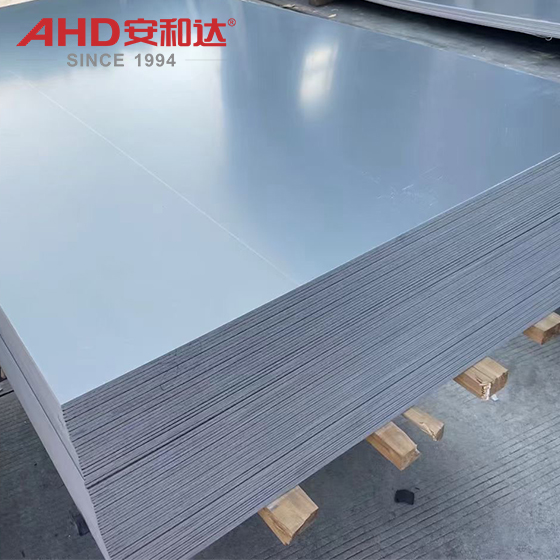
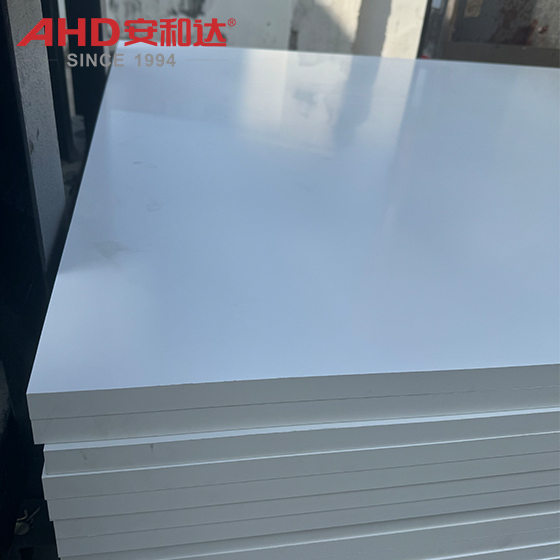
AHD Grey CPVC Sheet & White CPVC Sheet