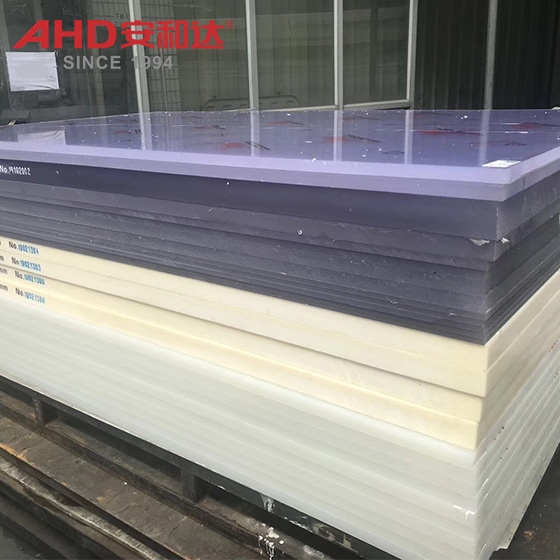
ABS transparent sheets are a relatively common type of engineering plastic sheet with specific applications. Their characteristics combine the basic properties of ABS resin with improved transparency. The following details their commonality, application areas, feasibility of secondary processing, and precautions:

Ⅰ. Commonality of ABS Transparent Sheets
ABS (acrylonitrile-butadiene-styrene copolymer) is typically translucent or opaque, but through formulation optimization (such as reducing the butadiene rubber ratio, adding nucleating agents or transparency modifiers) or special processes (such as controlling crystallinity during injection molding or extrusion), transparent or translucent ABS sheets can be produced. Their commonality falls between general-purpose transparent plastics (such as PS, PMMA) and engineering-grade transparent plastics (such as PC): Less widespread than PS/PMMA: Because ABS itself is slightly more expensive, and its transparency is generally lower than PMMA (acrylic), it has not become the most mainstream transparent sheet.
Superior to PC or POM: In scenarios requiring moderate transparency and high toughness, ABS transparent sheets are more suitable than PC (prone to stress cracking) or POM (opaque), and therefore have a certain presence in specific fields (such as industrial support).
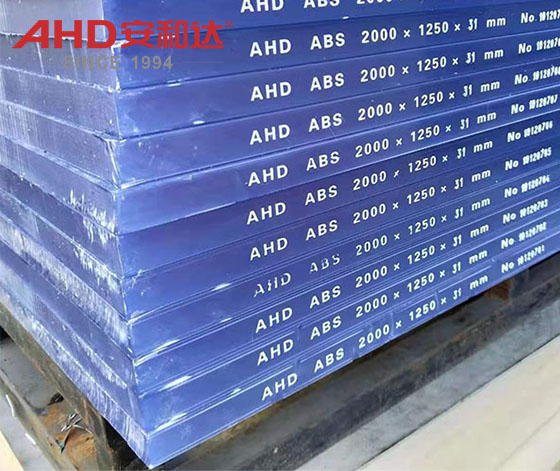
Ⅱ. Feasibility of Secondary Processing
Transparent ABS Plastic Sheet is very suitable for secondary processing, with processing performance close to that of ordinary ABS. However, due to the requirement for transparency, attention must be paid to processing details to avoid affecting the appearance:
1. Common Processing Methods
Cutting/Drilling: Laser cutting (power control is required to avoid edge melting and yellowing), CNC milling, or mechanical cutting (alloy cutters are recommended to avoid burrs).
Hot Bending: Heating to 80-120℃ (specific temperature needs to be tested; avoid exceeding 230℃ to prevent material degradation) allows bending into curved surfaces. Transparency is largely maintained after cooling.
Bonding/Welding: ABS-specific adhesives (such as chloroform, ABS solvent adhesive) or ultrasonic welding can be used. The interface after bonding has high transparency.
Surface Treatment: Printing (UV ink adhesion needs to be tested), spraying (transparent varnish improves scratch resistance), but rough treatments (such as sandblasting) should be avoided as they damage light transmittance.
2. Processing Precautions
Temperature Control: High temperatures easily cause ABS degradation (yellowing, blistering), especially during hot bending or injection molding secondary forming, requiring precise temperature control.
Reduce stress: Avoid local stress concentration during cutting or drilling (which may lead to cracking later). Annealing treatment (baking at 60-80℃ for 2 hours) can be used.

Ⅲ. Key Considerations
1. Material Limitations
Weather Resistance: Transparent ABS Plate have weak UV resistance and will yellow and become brittle with long-term outdoor use (indoor use recommended).
Limited Temperature Resistance: Long-term operating temperature is approximately -40℃ to 80℃. It softens easily at high temperatures (not suitable for proximity to heat sources).
2. Storage and Protection
Avoid direct sunlight (to prevent UV aging). Store in a dry, well-ventilated place (to prevent moisture absorption and deformation; ABS has a moisture absorption rate of approximately 0.2%, requiring drying before processing).
Apply a protective film to the surface (to prevent scratches), especially as micro-cracks are prone to appear at the edges after cutting; these need to be addressed promptly.
3. Alternative Material Comparison
For higher transparency (light transmittance > 92%) or better weather resistance, consider PMMA (acrylic); for higher temperature resistance (above 120℃) or impact resistance, PC can be chosen (but PC is more expensive and more difficult to process). ABS transparent sheets are more suitable for cost-sensitive scenarios with medium performance requirements.
In summary, ABS transparent sheets are a moderately common, cost-effective functional sheet material, mainly used in industrial displays, advertising props, and everyday product models. They support various secondary processing methods, but attention must be paid to controlling processing temperature and weather resistance limitations. When choosing ABS transparent sheets, it is necessary to weigh their combined advantages of transparency, toughness, and cost to match the specific needs of the application scenario.