

Deep in the mine's sluices, ore with its sharp edges is relentlessly eroded day and night; in the pipes of metallurgical workshops, corrosive slurries flow continuously; amidst the roar of ball mills, the collision between grinding media and materials never ceases. Under these extreme conditions, even metal components cannot escape the fate of wear and corrosion. Who would have thought that a type of plastic could shoulder such a heavy protective responsibility, becoming an invisible guardian of heavy industry?
You might wonder: aren't all plastics susceptible to impact, abrasion, and corrosion? But this special plastic defies expectations—its mine sluice linings can withstand the impact and wear of ore year after year, with a lifespan several times longer than ordinary metals; its pipeline linings are fearless against strong acid and alkali slurries, easily resolving even the industry's pain point of frequent material leaks; even more astonishingly, its ball mill liners and flotation machine impellers in mineral processing plants, which must withstand both the high-intensity friction of grinding and the continuous erosion of slurries, can do both, significantly reducing equipment downtime for maintenance.

It lacks the heaviness of metal, has a density only one-eighth that of steel, yet boasts wear resistance far exceeding that of metal—seven times that of carbon steel and ten times that of ordinary plastics. Even at -40°C, it maintains excellent toughness and won't crack under severe impact; requiring no additional lubricant, its coefficient of friction is as low as 0.07, approaching Teflon levels, allowing for smoother material transport and reduced equipment energy consumption. What exactly is this amazing material that combines "lightweight, ultra-wear-resistant, corrosion-resistant, and self-lubricating" properties?
The answer is Ultra High Molecular Weight Polyethylene, commonly known as UPE plastic. This seemingly ordinary engineering plastic, with its exceptional properties, has secured a crucial position in wear-resistant conveying and mineral processing equipment in the mining and metallurgical industries, rewriting people's traditional understanding of "plastics."
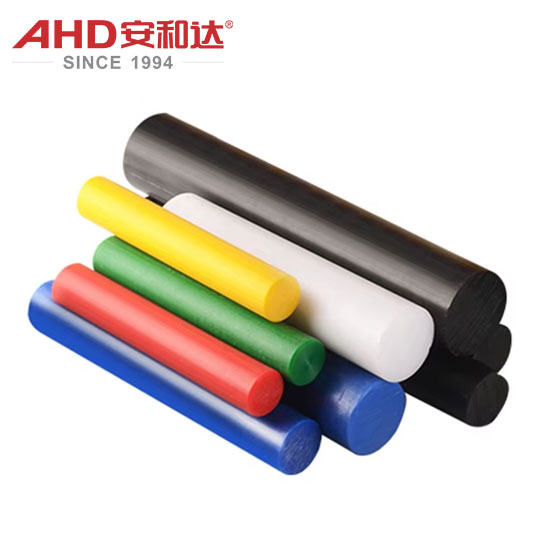
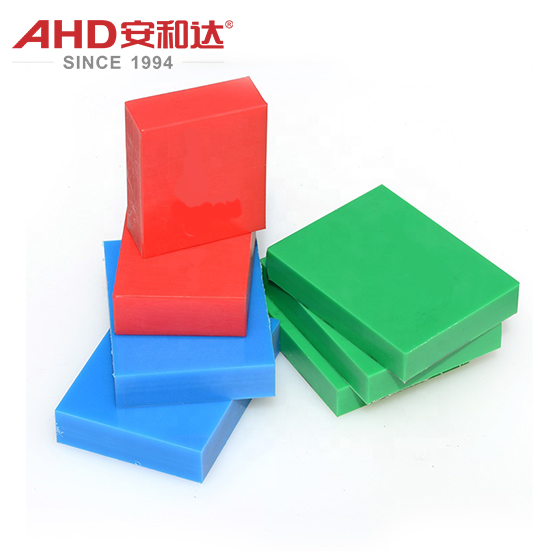
UPE (Ultra High Molecular Weight Polyethylene) is a modified polyethylene (PE) material with an extremely high molecular weight (typically ≥1.5 million, and even reaching 5-10 million). Due to its ultra-long and tightly intertwined molecular chains, it possesses superior properties unmatched by ordinary polyethylene and is widely used in harsh environments requiring high wear resistance and impact resistance.
I. Core Characteristics of UPE Sheet and ROD
The performance of UPE is directly related to its ultra-high molecular weight. Its main characteristics are as follows:
1. Extreme Wear Resistance
UPE's wear resistance is 3-7 times that of steel and 5-10 times that of ordinary polyethylene. In some working conditions, it even surpasses metals such as copper and bronze. This is because its long and tightly intertwined molecular chains result in low surface energy and an extremely low coefficient of friction with contacting materials (dynamic friction coefficient of only 0.07-0.15), making it less prone to adhesive wear.
2. Superior Impact Resistance
Even at temperatures as low as -40℃, UPE maintains extremely high impact strength (notched impact strength ≥150 kJ/m²), more than 5 times that of ordinary polyethylene and far superior to engineering plastics such as PVC and nylon. Its molecular chain flexibility and energy absorption capacity allow it to buffer severe impacts and resist breakage.
3. Low Coefficient of Friction and Self-Lubricating Properties
With a smooth surface (roughness Ra≤0.8μm) and a dynamic friction coefficient close to that of polytetrafluoroethylene (PTFE), it can operate stably in humid and dusty environments without additional lubrication, reducing energy consumption and maintenance costs.
4. Excellent Chemical Corrosion Resistance
Except for strong oxidizing acids such as concentrated nitric acid and concentrated sulfuric acid, it reacts almost entirely with acids, alkalis, salts, and organic solvents (such as alcohols and hydrocarbons). Its chemical resistance is superior to stainless steel and most engineering plastics, making it suitable for corrosive environments such as chemical and electroplating industries.
5. Low Temperature and Aging Resistance
Can be used long-term within a temperature range of -269℃ (liquid helium temperature) to 80℃ (short-term temperature resistance up to 100℃), without brittleness at low temperatures; UV resistance can be further improved by adding additives such as carbon black, suitable for outdoor applications.
6. Hygienic, Non-toxic, and Biocompatible
Non-toxic and odorless, can come into direct contact with food and pharmaceuticals (meets food-grade standards); low cytotoxicity, compatible with human tissues, suitable for orthopedic implants (such as artificial joints).
7. Low Density and Lightweight
Density approximately 0.92-0.96 g/cm³, only 1/8 that of steel and 1/5 that of copper, facilitating processing and installation, reducing equipment load.
II. Core Advantages
Compared to traditional materials, UPE offers significant overall advantages:
High Cost-Effectiveness
Although raw material prices are higher than ordinary plastics, its lifespan is 5-10 times that of steel (reducing replacement frequency), and maintenance costs are low (self-lubricating and maintenance-free), resulting in lower long-term overall costs.
Environmentally Friendly and Safe
Non-toxic and recyclable (in some scenarios), meeting green manufacturing requirements.
Strong Adaptability
Its temperature resistance, corrosion resistance, and impact resistance enable stable operation in extreme environments (such as mines, chemical plants, and low-temperature environments).

Colorful UHMW Polyethylene Sheet
III. Typical Application Scenarios for Plates and Rods
UPE plates and rods are widely used in the following fields due to their ease of processing (cutting, welding, and machining):
1. Mining and Metallurgical Industry
Wear-Resistant Conveying Equipment: Mine chutes, vibrating screen liners, conveying pipeline linings (replacing traditional steel plates, reducing frictional wear from ore and coal).
Mineral Processing Equipment: Ball mill liners, flotation machine impellers (resistant to slurry corrosion and wear).
2. Chemical and Environmental Protection Industries
Corrosion-resistant containers/pipelines: Acid and alkali storage tank linings, sewage pipes (resistant to acid, alkali, and salt corrosion, replacing stainless steel).
Seals and gaskets: Reactor gaskets (resistant to chemical corrosion and aging).
3. Machinery and General Equipment
Low-friction moving parts: Guide rails, sliders, bearing cages (self-lubricating and maintenance-free, used in food machinery and packaging machinery).
Gears and sprockets: Replacement for metal gears (impact-resistant, low noise, suitable for light-load, high-wear applications).
4. Medical and Food Industries
Medical implants: Artificial hip joints, knee joints (biocompatible and wear-resistant, reducing postoperative complications).
Food machinery parts: Conveyor belts, hopper linings (meets food-grade standards, easy to clean).
5. Sports and Leisure Equipment
Skis/surfboards: Board lining (low friction and impact resistance, improving gliding speed).
Sports protective gear: Ski boot linings, boxing glove plates (energy-absorbing and cushioning, protecting athletes).

UHMW Plastic Rod
UPE: A High-Performance All-Round Material with Immense Investment Potential
A deeper understanding of UPE (Ultra-High Molecular Weight Polyethylene) reveals that this groundbreaking plastic is not merely a "hypothetical" product, but a true "all-rounder" boasting multiple robust properties. Its exceptional abrasion resistance sets an industry benchmark, reaching 7 times that of carbon steel and 5 times that of stainless steel, easily handling high-intensity wear scenarios such as ore erosion and material grinding. Its superior impact resistance allows it to remain stable across a wide temperature range of -269℃ to 80℃, with a notched impact strength more than twice that of polycarbonate, making it less prone to brittleness even under severe impact. A low coefficient of friction of 0.07 gives it excellent self-lubricating properties, reducing fluid transport energy consumption by 15%-25% compared to traditional metal pipes, fundamentally reducing equipment wear and maintenance costs.
What's even more astonishing is its "comprehensiveness": its excellent corrosion resistance far exceeds the corrosion resistance limits of metallic materials; its hygienic and non-toxic properties meet international food contact standards such as the FDA, while also possessing good biocompatibility; and its density, far lower than steel, achieves a perfect balance between "high strength and lightweight." These properties are not isolated but synergistic, allowing UPE's application boundaries to continuously exceed expectations.
Beyond core applications such as chute liners and ball mill liners in the mining and metallurgical fields, UPE has quietly penetrated into a wider range of industrial scenarios: corrosion-resistant pipes and valves in the chemical industry, scrapers and guide rails in the machinery field, conveyor accessories in food processing, and even showing significant growth in emerging fields such as environmental engineering, seawater desalination, and hydrogen energy transportation. From a global market perspective, China, as the largest producer, is projected to reach a production capacity of 420,000 tons by 2025, accounting for nearly 50% of the global total. Accelerated domestic substitution is expected to raise the self-sufficiency rate to over 65%, with continuous optimization of the cost structure.
With its superior performance, diverse applications, and broad market prospects, UPE has not only rewritten people's traditional understanding of plastics but also demonstrated strong growth momentum in the wave of green infrastructure and high-end manufacturing upgrades. Such a high-quality material, capable of addressing industry pain points and adapting to the needs of multiple fields, is undoubtedly a new industrial choice with significant investment value.