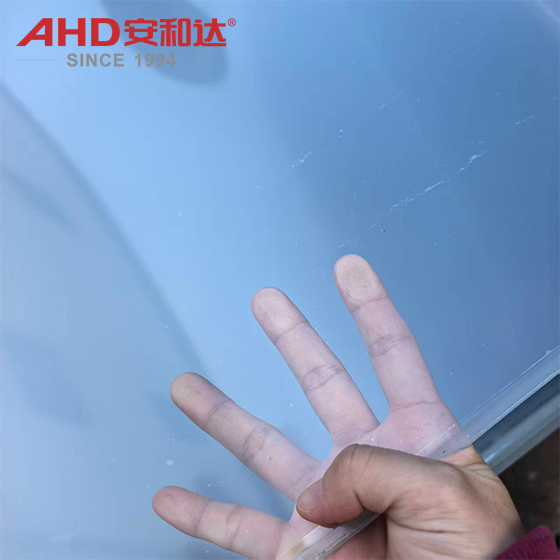
Both antistatic PC (polycarbonate) and antistatic acrylic (PMMA, polymethyl methacrylate) are transparent antistatic plastics, but due to differences in the molecular structure and physicochemical properties of their base resins, they differ significantly in performance and application scenarios. The following is a comparative analysis from key dimensions:
I. Comparison of Basic Material Properties
| Antistatic PC (ESD PC) | Antistatic Acrylic (ESD PMMA) | |
| Chemical Name | Polycarbonate | Polymethyl Methacrylate |
| Molecular Structure | Linear polyester containing benzene rings, with good chain segment flexibility | Rigid chain segments containing methacrylate, with regular molecular arrangement |
| Intrinsic Properties | High toughness, impact resistance ("bulletproof plastic") | High hardness, brittle (easily broken) |
II. Core Performance Differences
1. Mechanical Properties: Impact Resistance vs. Hardness
Antistatic PC Sheet: Its outstanding advantage is its superior impact resistance (notched impact strength approximately 60-100 kJ/m², higher than acrylic). It maintains its toughness even at low temperatures (-40℃) and is not easily broken. Suitable for scenarios requiring drop and impact resistance.
Antistatic Acrylic Sheet: Higher hardness (Rockwell hardness M80-90, higher than PC's M70-80), but more brittle (notched impact strength only 2-3 kJ/m²), easily broken by external forces (such as drops or impacts from sharp objects). Suitable for static displays or scenarios requiring high hardness.
2. Optical Properties: Light Transmittance and Clarity
Antistatic PC: Light transmittance approximately 85%-90%, close to glass, but slightly lower than acrylic; slightly higher haze (approximately 1%-3%), and may yellowing affect transparency after prolonged use (requires the addition of UV stabilizers to improve this). Antistatic Acrylic:
It boasts a light transmittance of 92%-95% (superior to PC) and extremely low haze (<1%), resulting in a clearer and more transparent visual effect, earning it the nickname "plexiglass." However, it has poor UV resistance and is prone to yellowing with prolonged exposure to sunlight without a protective layer.
3. Temperature Resistance: High-Temperature Stability
Antistatic PC: Excellent heat resistance, long-term operating temperature -40℃~120℃ (short-term resistance to 130℃), not easily deformed at high temperatures, suitable for industrial high-temperature environments (such as equipment protective covers, oven observation windows).
Antistatic Acrylic: Poor temperature resistance, long-term operating temperature only 60℃~80℃, easily softens and deforms above 80℃, easily bends or cracks in high-temperature environments, unsuitable for heat load scenarios.
4. Antistatic Performance: Stability and Durability
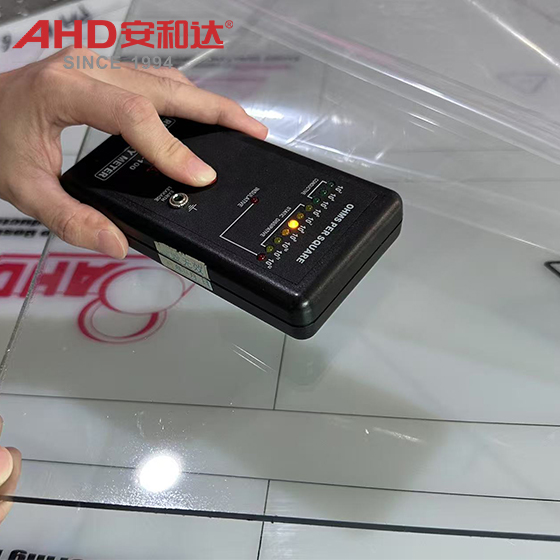
Both achieve antistatic properties by adding conductive fillers or coating the surface with antistatic agents (surface resistance is usually controlled at 10⁶~10⁹Ω), but there are differences in details:
Antistatic PC: Due to its stable molecular structure, antistatic additives (especially filler-type) have good dispersibility, resulting in more durable antistatic performance and less susceptibility to failure due to friction or aging; suitable for long-term dynamic use scenarios.
Antistatic acrylic: The rigid molecular chains make it slightly more difficult to disperse additives. Surface-coated antistatic layers are prone to wear (such as failure after frequent wiping), while filled types are more durable but may affect light transmittance; it is more suitable for static, low-wear scenarios.
5. Processing and Cost
Processing Difficulty: PC has a high melting point, requiring high-temperature equipment for processing, and is prone to cracking due to internal stress (requiring annealing); acrylic has a lower melting point, making it easier to process, but it is more brittle, requiring caution when cutting/drilling (prone to edge chipping).
Cost: In terms of base resin price, PC is generally more expensive than acrylic; after antistatic treatment, the cost difference between the two widens further.

AHD Anti-static Acrylic Plastic Sheet
III. Typical Application Scenarios Differentiation
Based on the performance differences mentioned above, the two types of materials are suited for different scenarios:
Anti-static PC is more suitable for:
Dynamic scenarios requiring impact resistance: Electronics factory turnover pallets, SMT pick-and-place machine protective covers, transparent protective panels for industrial robots (collision protection); High-temperature/harsh environments: Oven observation windows, anti-static panels for automotive dashboards, industrial oven liners; Long-term durability requirements: Outdoor equipment protective panels (UV resistant + weather resistant), logistics transportation buffer barriers (drop resistant).
Anti-static acrylic is more suitable for:
High light transmittance static displays: Luxury goods display cases in shopping malls, protective covers for museum artifacts, display racks for high-end electronic equipment (higher visual transparency); Low-impact precision optical scenarios: Optical instrument observation windows (such as microscope stages), laser equipment protective screens (requiring high definition); Low-cost decorative uses: Anti-static partitions in offices, advertising light box panels (balancing aesthetics and basic anti-static properties).
IV. How to Choose?
Prioritize anti-static PC: If the application requires impact resistance, high temperature resistance, and long-term dynamic use (e.g., industrial protection, transportation).
Prioritize anti-static acrylic: If the application requires extreme light transmittance, high hardness, and low static wear (e.g., high-end displays, optical instruments).
In short: PC is durable and robust, while acrylic is transparent and aesthetically pleasing. Choose based on the "performance priority" of your specific needs.
AHD ESD PMMA Sheet