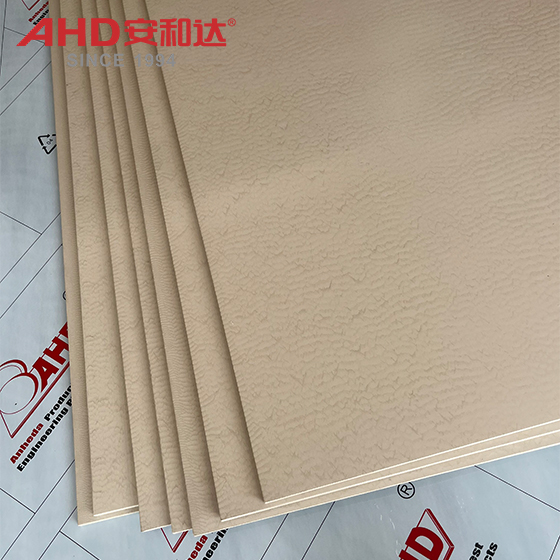
PEEK (polyetheretherketone), as a high-performance specialty engineering plastic, possesses unique comprehensive properties that allow it to enter the circuit board industry in specific scenarios and is gradually being applied to high-end or special-needs circuit boards and peripheral components. The following is a detailed analysis from multiple perspectives:
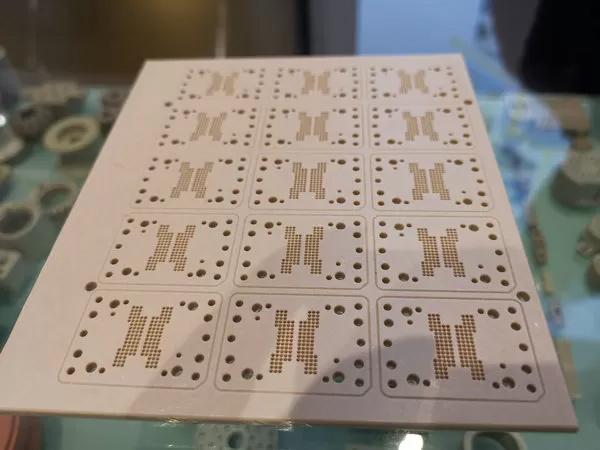
Ⅰ. Can PEEK boards enter the circuit board industry? Do PEEK circuit boards already exist?
Yes, they can, and applications already exist. Traditional circuit boards (PCBs) are mainly based on FR-4 (epoxy resin + glass fiber) and polyimide (PI), but PEEK, due to its excellent properties, can serve as a substitute or supplementary material in special scenarios such as high frequency, high speed, high temperature, and high reliability, forming "PEEK circuit boards." Currently, PEEK circuit boards are mainly used in aerospace, high-frequency communications (such as 5G/6G base stations and satellite communications), semiconductor testing, and other fields with extremely high performance requirements.
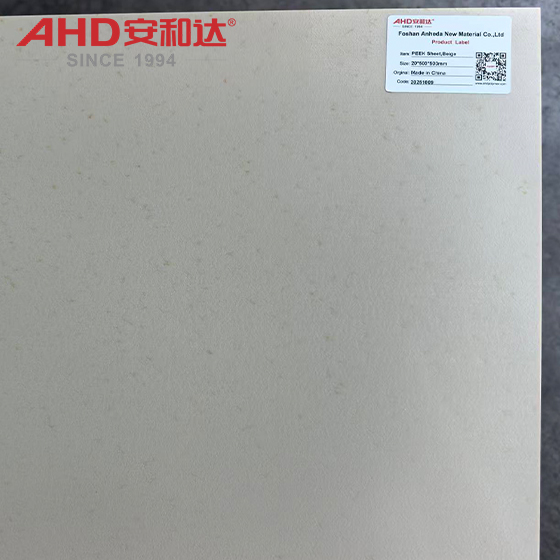
AHD Polyetheretherketone Sheet, thicknesses ranging from 1 to 120mm.
Ⅱ. Characteristics and Advantages of PEEK for Circuit Boards
PEEK's characteristics are highly compatible with the needs of circuit boards (especially in high-end applications). Its core advantages are as follows:
1. High Temperature Resistance
PEEK has a long-term operating temperature of up to 250℃ (short-term 300℃), far exceeding FR-4 (130-150℃) and PI (200-260℃). It is suitable for extreme environments such as engine compartments and spacecraft, preventing substrate deformation or failure due to high temperatures.
2. Low Moisture Absorption and Dimensional Stability
PEEK's moisture absorption is <0.1% (23℃, 24h). Compared to FR4 (0.1-0.3%), which is greatly affected by humidity, and PI (2-3%), PEEK's moisture absorption is significantly higher. This low moisture absorption ensures dimensional stability of the board material in high humidity environments, reducing the risk of trace misalignment and interlayer delamination, making it particularly suitable for precision circuits.
3. Excellent Electrical Insulation Properties
PEEK has a volume resistivity > 10¹⁶ Ω·cm, a breakdown field strength > 190kV/mm, and extremely low and stable dielectric constant (Dk≈3.2-3.3) and dielectric loss (Df≈0.001-0.003) over a wide frequency range (DC to 40GHz). This characteristic makes it suitable for high-frequency, high-speed circuits (such as millimeter-wave radar and satellite communications), with low signal transmission loss and low delay.
4. Chemical Corrosion Resistance
PEEK is resistant to acids, alkalis, and organic solvents (except concentrated sulfuric acid), maintaining its performance in harsh chemical environments. It is suitable for circuit boards in industrial control and chemical equipment.

AHD PEEK Plastic Sheet
Ⅲ. Typical Application Scenarios of PEEK Circuit Boards
High-Frequency Communication: 5G/6G base station antennas, satellite communication payloads, radar TR components (requiring low loss and high stability);
Aerospace/Military: Airborne electronic equipment, missile guidance systems (high temperature resistance and radiation resistance);
Semiconductor Testing: Wafer test probe cards, programmer carrier boards (high precision and temperature resistance);
High-Temperature Industrial Control: Automotive engine control units (ECUs), industrial furnace sensors (oil-resistant/high-temperature resistant).

AHD 1mm PEEK Sheet
Ⅳ. Core differences from ceramic circuit boards
| PEEK circuit board | Ceramic circuit board | |
| Thermal conductivity | Low (≈ 0.25 W/m·K) | High (e.g., alumina ceramics ≈ 20 W/m·K) |
| Weight | Light (approximately 1/3 the weight of ceramic) | Heavy |
| Impact Resistance | Good toughness and impact resistance | Brittle and easily broken |
| Applicable Scenarios | Lightweight, high-frequency signal, corrosion-resistant scenarios (e.g., lightweight aerospace components, internal circuits of medical equipment) | High-power, high-heat-dissipation requirements (e.g., high-power LEDs, new energy electronic controls) |

Ⅴ. PEEK Components Around Circuit Boards
Besides the circuit board itself, PEEK can also be used to manufacture key peripheral components in the circuit board production and assembly process, utilizing its high temperature resistance, wear resistance, and low gas release properties:
| Category | Specific Parts |
| Production and processing tools | Drilling pads (resistant to drill bit friction), laminator templates (resistant to high temperature and pressure), weld resistance mesh (resistant to solvents), laser cutting fixtures (low dust) |
| Assembly and Connection | High-frequency connectors (low loss), IC sockets (molding and unmolding resistant), connector insulators (temperature resistant), FPC reinforcing plates (flexible + high strength) |
| Heat dissipation and support | Chip thermal pads (thermally modified PEEK), PCB support pillars (high rigidity), insulating pads (voltage resistant) |
| Semiconductor Equipment | Wafer transport arms (low gas release, plasma resistant), etching chamber components (corrosion resistant), probe card frames (high precision) |

Ⅵ. Challenges and Limitations
Despite PEEK's excellent performance, its widespread adoption is still limited by:
High cost: PEEK raw material is approximately 10-20 times more expensive than FR-4, and its processing (such as drilling and electroplating) is difficult, limiting its application to high-value-added scenarios;
Processing difficulty: High hardness (Rockwell hardness R122), requiring specialized tools; complex lamination process (requiring temperature/pressure control);
Market awareness: Traditional PCB manufacturers lack sufficient technological expertise in PEEK, necessitating customized development.
PEEK boards have entered the circuit board industry, performing particularly well in high-end applications requiring high frequency, high temperature, and high reliability. Their advantages include high temperature resistance, low loss, dimensional stability, and chemical resistance, making them suitable for manufacturing specialized circuit boards and precision peripheral components. With increasing performance requirements in fields such as 5G/6G and aerospace, PEEK is expected to gradually expand its applications in niche markets.