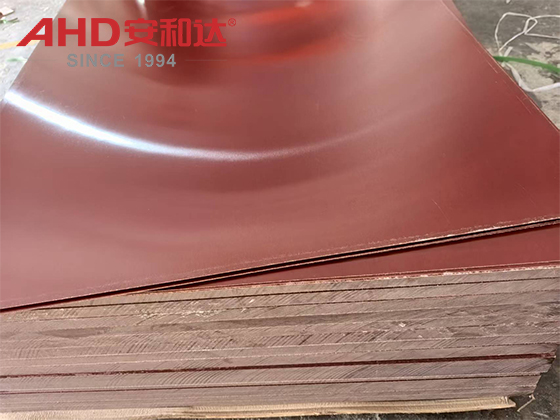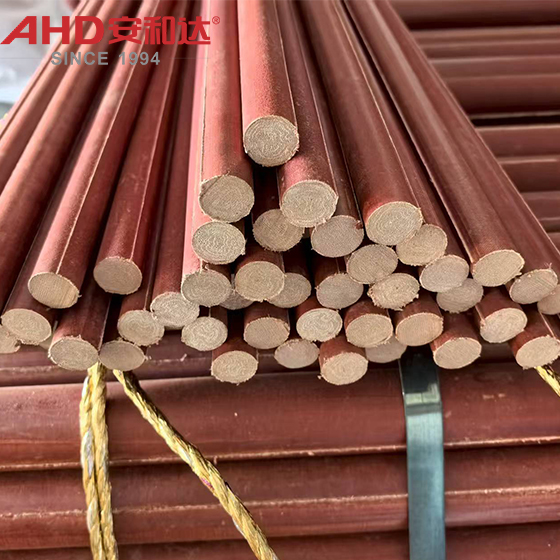
The application of phenolic cotton sheet and rod in the electrical and electronic industries is its core and most mature field, accounting for 60%-70% of its overall market share. This position stems from the precise match of its "high insulation + heat resistance + mechanical strength"—the primary requirement of the electrical and electronic industries for materials is "safe and reliable isolation of current and resistance to high temperatures and vibrations during equipment operation," and phenolic cotton sheet and rod precisely achieve a balance of these three at a low cost.
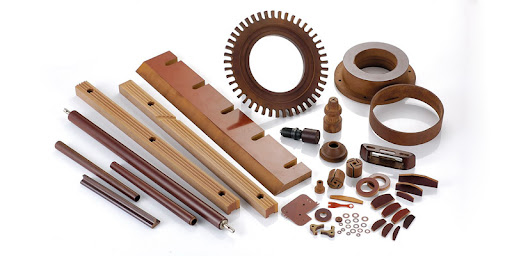
I. Specific Applications in the Electrical and Electronic Industries:
The applications of phenolic cotton sheet and rod in the electrical and electronic fields can be divided into two main categories: "insulation components for high-voltage equipment" (such as motors, transformers, and high-voltage switches) and "auxiliary components for low-voltage/electronic components" (such as relays and PCB fixtures), covering the entire chain from power generation and transmission to power consumption.
1. High-Voltage Electrical Equipment: The "Insulating Skeleton" of Motors and Transformers
Motors and transformers are core equipment in power systems. Their windings, cores, and other components must operate in high-voltage, high-temperature, and high-vibration environments. Phenolic resin cotton sheets and rods are mainly used to support, isolate, and fix live components, specifically including:
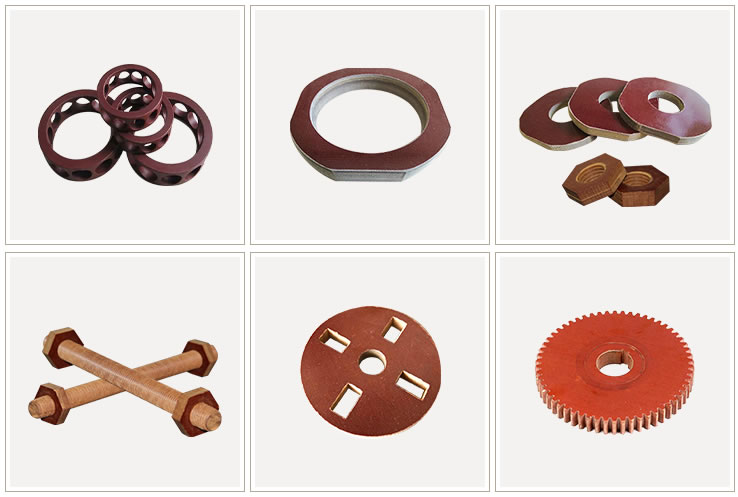
Motor Winding Shaft (Bobbin/Spool)
Function: As the "skeleton" of the motor stator/rotor windings, it fixes the enameled wire windings, ensuring that the windings do not loosen or shift during high-speed rotation, while also isolating the windings from the core (to prevent short circuits).
Performance Requirements: Must withstand the heating of the windings when energized (120-180℃ long-term, up to 200℃ under overload), centrifugal force (tensile stress under high-speed rotation), and electromagnetic vibration (to prevent resonance fracture).
Advantages of Cotton Phenolic Laminate Sheet and Rod: Heat resistance (long-term use at 200℃) prevents deformation at high temperatures; High tensile strength (80-120MPa) withstands centrifugal force; Insulation (volume resistivity ≥10¹²Ω·cm) blocks current leakage between the windings and the core.
Application examples: Industrial asynchronous motors (such as fan and water pump motors), new energy vehicle drive motors (non-core load-bearing components), servo motors (precision control scenarios).
Transformer Insulating Sleeve and Stay Bolt
Function: The sleeve isolates the high-voltage and low-voltage windings of a transformer (e.g., a 10kV/0.4kV distribution transformer). The stay bolt fixes the inter-layer distance of the windings, preventing winding deformation or inter-turn short circuits.
Performance Requirements: Must withstand thousands of kilovolts (e.g., a 10kV transformer must withstand instantaneous voltages above 15kV), winding heat generation (conducted to components at oil temperatures of 80-100℃), and mechanical stress (electrodynamic forces generated by short-circuit currents).
Advantages of Cotton Phenolic Resin Sheet and Rod:High breakdown voltage; low dielectric loss, reducing energy loss; oil resistance, suitable for transformer oil environments.
Application examples: Distribution transformers (residential and factory power supply), power transformers (substation step-up/step-down), special transformers (electric furnace transformers, rectifier transformers).
High-voltage insulating pull rod
Function: In high-voltage switchgear, it connects the operating mechanism and contacts, transmits opening and closing forces, and simultaneously isolates the operating mechanism (low-voltage side) from the contacts (high-voltage side).
Performance requirements: It must simultaneously meet the requirements of mechanical transmission (bending and impact resistance) and high-voltage insulation, and must be flame-retardant.
Advantages of phenolic cotton cloth sheets and rods: Bending strength, able to withstand operational impact forces; self-extinguishing (UL94 V-0 rating), meeting switchgear fire protection standards; dimensional stability, preventing loosening due to temperature and humidity changes.
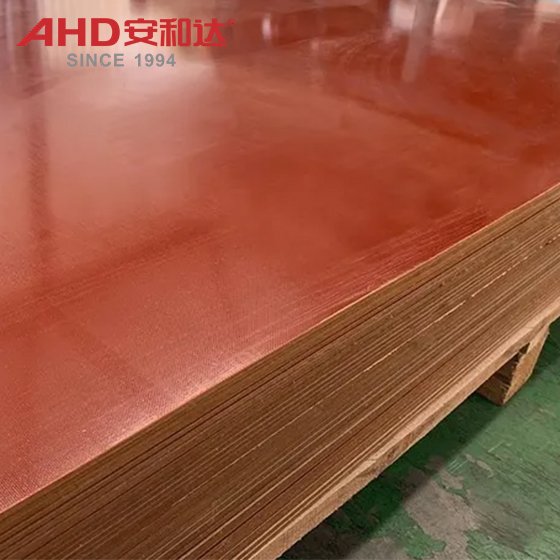
2. High-Voltage Switchgear and Distribution Equipment: An "Insulation Barrier" for Safe Operation
High-voltage switchgear, ring main units, and other equipment directly face power maintenance personnel. The insulation reliability of their operating components is directly related to personal safety. Phenolic cotton sheets and rods are mainly used to isolate live parts from the operating interface:
Disconnecting Switch Static Contact Base
Function: Fixes the static contact of the disconnecting switch, isolating the moving contact (energized during operation) from the cabinet (grounded), preventing accidental electric shock.
Application Advantages: High volume resistivity + corona resistance, avoiding insulation aging under long-term high voltage.
Busbar Support Insulator
Function: Supports high-voltage busbars (e.g., 10kV busbars), isolates the busbar from the cabinet, and withstands the busbar's own weight and short-circuit electrodynamic forces.
Application Advantages: Compressive strength (≥200MPa) withstands busbar pressure; breakdown voltage (≥20kV/mm) adapts to voltage levels of 10kV and above.
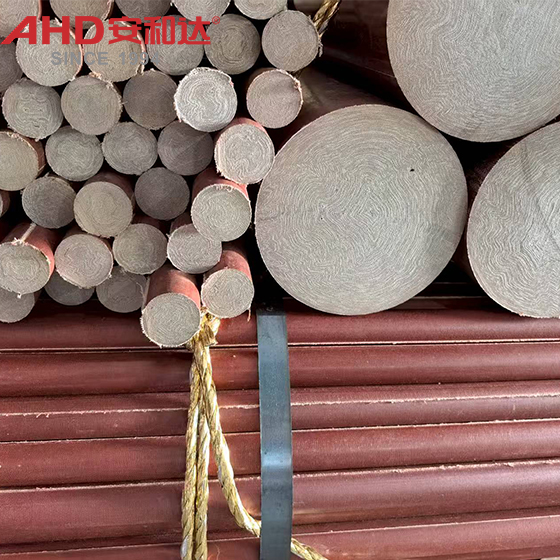
3. Electronic Components and Circuit Boards: Precision Manufacturing's "Auxiliary Skeleton"
In the field of low-voltage electronics, phenolic cotton sheets and rods are used for fixing and insulating electronic components, and for assisting in circuit board processing. Their characteristics include "small size, high precision, and resistance to temperature and humidity":
Relay Base
Function: Fixes relay coils and contacts, isolates coils (low-voltage control circuits) and contacts (high-voltage load circuits), commonly found in automation equipment (such as PLC control systems) and home appliances.
Performance Requirements: Resistant to moisture and frequent switching arcs (sparks generated when contacts open and close).
Advantages: Low water absorption, prevents short circuits due to moisture, and arc resistance.
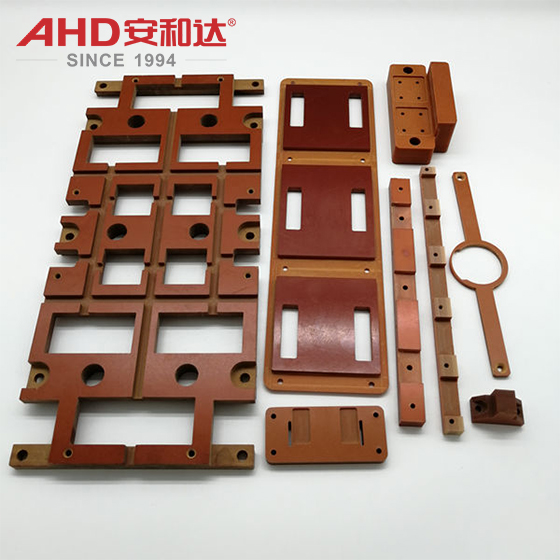
PCB Fixtures
Function: Positioning fixtures for printed circuit board (PCB) soldering (such as wave soldering and reflow soldering) and testing, fixing the PCB to prevent displacement.
Performance Requirements: Withstands high soldering temperatures (locally >200℃), does not deform after repeated clamping, and provides insulation (to prevent short circuits during testing).
Advantages: Thermal stability + ease of machining (can be drilled and milled into complex shapes), adaptable to various PCB fixture customizations.
Coil Bobbin
Function: Winding bobbin for inductors and transformers, such as the high-frequency transformer bobbin in power adapters and chargers.
Advantages: Low dielectric constant, reducing high-frequency signal loss, high dimensional accuracy.
II. Core Advantages
Why is it the "Preferred Insulation Material" in the Electrical and Electronic Industries?
The irreplaceable nature of phenolic cotton sheets and rods in the electrical and electronic industries stems from their precise fulfillment of four core requirements: insulation performance, heat resistance, mechanical properties, and cost. Furthermore, their overall performance surpasses that of other candidate materials:
1. Insulation Performance: "The Bottom Line Guarantee for High-Voltage Insulation"
High breakdown voltage, low dielectric loss, corona resistance and arc resistance
2. Heat Resistance: "A Stable Performer in High-Temperature Environments"
High long-term operating temperature, high high-temperature strength retention, and low coefficient of thermal expansion.
3. Mechanical Properties: "Dual Protection of Insulation and Structure"
Balance of strength and toughness, wear-resistant
4. Cost and Processability: "Comparable Cost-Effectiveness to High-Priced Materials"
Low raw material costs, high processing efficiency, and customizability.
China is a major global producer of phenolic cotton swabs, with its products exported in large quantities to Southeast Asia, the Middle East, and Africa for use in local power infrastructure construction (such as substations and distribution networks).
The core value of phenolic cotton sheets and rods in the electrical and electronics industry lies in "solving moderately difficult insulation problems at the lowest cost"—it may not be the most high-performance material, but it is a balanced choice that offers "sufficient performance, optimal cost, and ease of processing." From household air conditioner motors to urban substation transformers, from industrial PLC relays to high-speed rail traction systems, its "invisible yet crucial" presence permeates the entire electrical and electronics industry chain, becoming the "insulation cornerstone" for ensuring power safety and reliable equipment operation. In the future, with the continued demand for low- and mid-range electrical equipment (such as new energy infrastructure and aging power grid upgrades), its application scale will continue to grow steadily.