

ABS (acrylonitrile-butadiene-styrene copolymer) and PVC (polyvinyl chloride) are two common engineering plastics widely used in industry, construction, and daily necessities. The following compares the differences between the two from multiple perspectives and provides selection advice:
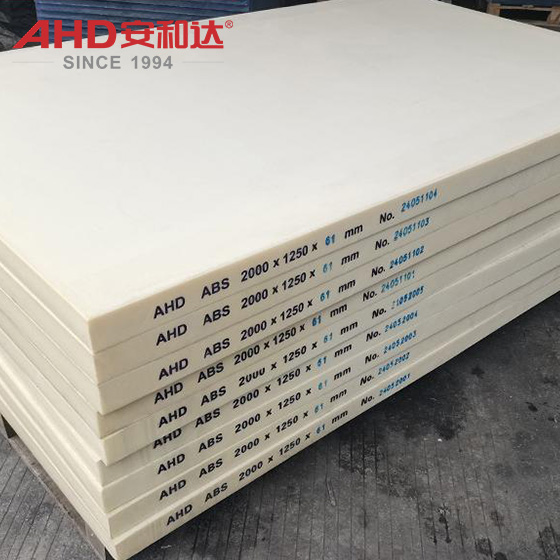
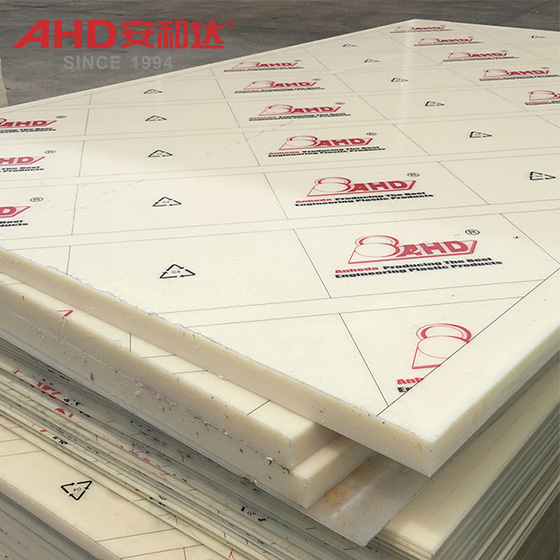
ABS Plastic Sheet
I. Comparison of Basic Features
| ABS Sheet | Rigid PVC Sheet | |
| Chemical Composition | Terpolymer (acrylonitrile A + butadiene B + styrene S), halogen-free. | Made from polyvinyl chloride monomers (containing chlorine, approximately 56% by weight), often with added plasticizers (for flexible PVC), stabilizers, etc. |
| Density | 1.04-1.10 g/cm³ (relatively light). | 1.3-1.45 g/cm³ (rigid PVC is heavier, flexible PVC is slightly lower due to plasticizers). |
| Appearance and Texture | Smooth surface, easy to electroplate/spray, good gloss; common colors include off-white and light gray. | Rigid PVC is mostly white or gray with a rougher surface; flexible PVC can be made into transparent or elastic films. |
| Transparency | Normal opaque (can be transparent with special treatment). | Rigid PVC is generally opaque (can be transparent with special treatment), while flexible PVC (such as film) can be transparent. |
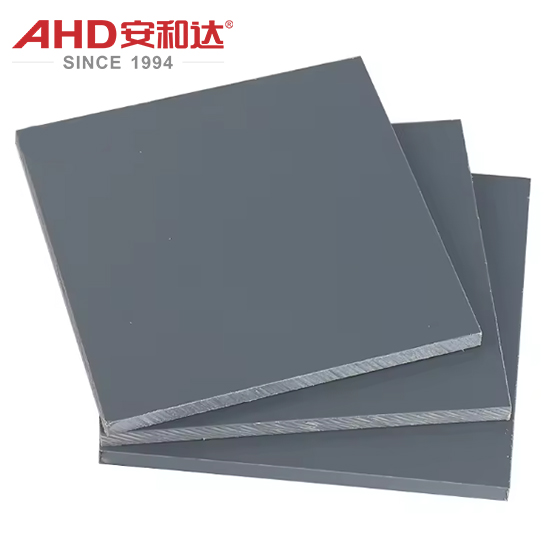
PVC Plate
II. Physical and Mechanical Properties
| ABS | Rigid PVC | |
| Strength and Toughness | Excellent overall performance: Tensile strength 30-50 MPa, notched impact strength (23℃) 10-30 kJ/m² (high toughness, not brittle at low temperatures). | Rigid PVC: Tensile strength 40-60 MPa (higher), but low impact strength (2-10 kJ/m², easily brittle); Flexible PVC has good flexibility but low strength. |
| Hardness | Rockwell hardness R60-115 (medium to hard, good elasticity). | Rigid PVC Rockwell hardness D75-85 (harder); Soft PVC Shore hardness A50-95 (soft). |
| Temperature Resistance | Heat distortion temperature (HDT, 1.8MPa): 75-100℃; Long-term service temperature: -40~70℃. | Rigid PVC (HDT, 1.8MPa): 60-80℃; Long-term service temperature: -15~60℃ (easily softens at high temperatures); Flexible PVC has even lower temperature resistance (<50℃). |
| Weather Resistance | Susceptible to aging due to ultraviolet radiation (UV protectants need to be added); prone to yellowing and cracking with long-term outdoor use. | Also susceptible to UV aging (more pronounced in rigid PVC), but some modified PVCs (such as C-PVC) have improved weather resistance. |

Beige ABS Rod
III. Chemical resistance and environmental adaptability
| ABS | Rigid PVC | |
| Acid/Alkali Resistance | Resistant to weak acids and weak alkalis (such as dilute sulfuric acid and sodium hydroxide), but easily corroded by strong acids (concentrated nitric acid) and strong alkalis (concentrated ammonia). | Rigid PVC exhibits excellent resistance to strong acids (hydrochloric acid, sulfuric acid) and strong alkalis (sodium hydroxide); flexible PVC may swell due to the presence of plasticizers in the solvent. |
| Resistant to organic solvents | Susceptible to ketones (acetone), esters (ethyl acetate), and aromatic hydrocarbons (benzene), leading to stress cracking. | Rigid PVC is resistant to most organic solvents (such as alcohols and oils), but can be dissolved by carbon tetrachloride and cyclohexanone; flexible PVC is easily swollen by oils. |
| Water Resistance | Low water absorption (0.1%), dimensionally stable in long-term humid environments. | Rigid PVC has a water absorption rate of 0.2%, while flexible PVC may absorb a small amount of water due to plasticizers. |
| Flame Retardancy | Unmodified ABS is flammable (UL94 HB rating), burns with black smoke, releases a styrene odor, and produces burning material. | Rigid PVC is self-extinguishing (UL94 V-0 rating), releases HCl gas (toxic) when burning; flexible PVC may be flammable due to plasticizers. |
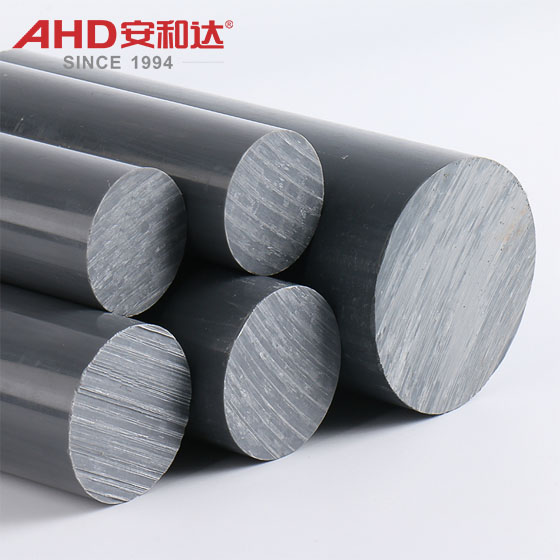
PVC Rod
IV. Processing and Costs
| ABS | Rigid PVC | |
| Processing Technology | Easy to process: Good melt flow, suitable for injection molding, extrusion, and thermoforming; can be welded, bonded, and machined (cutting/drilling). | Rigid PVC requires controlled processing temperature (160-190℃) to avoid decomposition (release of HCl); flexible PVC requires even lower processing temperatures (120-150℃). |
| Surface Treatment | Easy to electroplate, spray, and print, suitable for exterior parts. | High surface polarity; can be directly printed or coated, but pretreatment is required for electroplating. |
| Cost | Raw material prices are higher than those of regular PVC. | Raw material costs are lower; flexible PVC is cheaper due to the presence of plasticizers. |
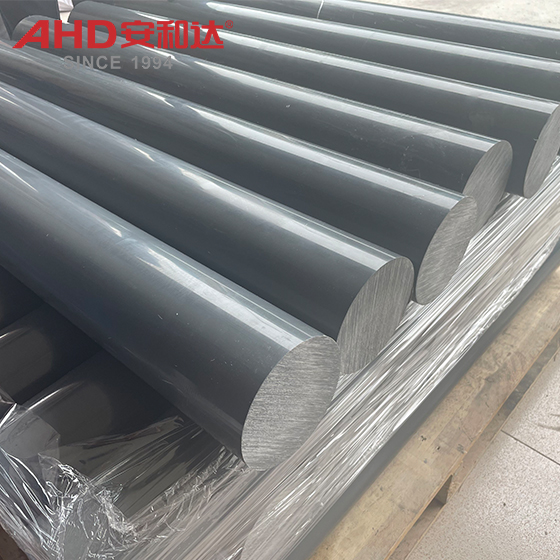
PVC Plastic Rod
V. Application Areas
ABS: Electronic appliance casings (computers/mobile phones/printers), automotive interiors (dashboards), toys (LEGO), tool handles, luggage, 3D printing consumables.
PVC: Building pipes (drainage pipes/conduit pipes), anti-corrosion boards (chemical pool linings), advertising boards (KT boards), wire sheaths, floor coverings, films (packaging), and medical infusion tubing (flexible).
VI. Environmental Protection and Safety
ABS: ABS combustion releases ultrafine particles and volatile organic compounds, including chemicals such as styrene.
PVC: Rigid PVC production may release HCl, and combustion produces toxic dioxins; flexible PVC contains plasticizers (such as phthalates), which may migrate into food/human bodies (prohibited for use in children's toys).

Selection Recommendations
Choose based on priority:
Mechanical Strength and Toughness: Impact resistance required (e.g., equipment housing) → ABS; High rigidity required (e.g., structural support) → Rigid PVC.
Temperature Resistance: Long-term high-temperature environment (>60℃) → ABS; Normal or low temperature (e.g., water pipes) → PVC.
Chemical Corrosion Resistance: Contact with strong acids/alkalis → Rigid PVC; Contact with organic solvents → ABS preferred (avoid ketones).
Appearance and Post-processing: Electroplating/spraying required → ABS; Low-cost sheet material required (billboards) → PVC.
Summary: ABS offers balanced overall performance (strong, tough, and easy to process), suitable for applications requiring high appearance and strength; PVC is low-cost and has good corrosion resistance, suitable for construction/piping and other fields with high requirements for chemical resistance and cost-effectiveness.

