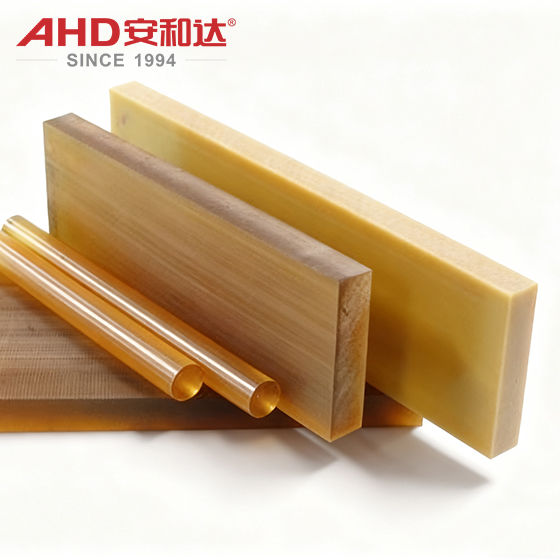
PEI, or polyetherimide, is a high-performance specialty engineering plastic. It is heat-resistant (long-term operation at 170-180℃), has high strength, is resistant to chemical corrosion, achieves UL94 V-0 flame retardancy without additives, and exhibits low moisture absorption and excellent electrical properties. Its common semi-finished product forms are PEI Sheet and PEI Rod. It is widely used in aerospace, medical, and electronics fields, and is the preferred material for precision components in extreme environments.
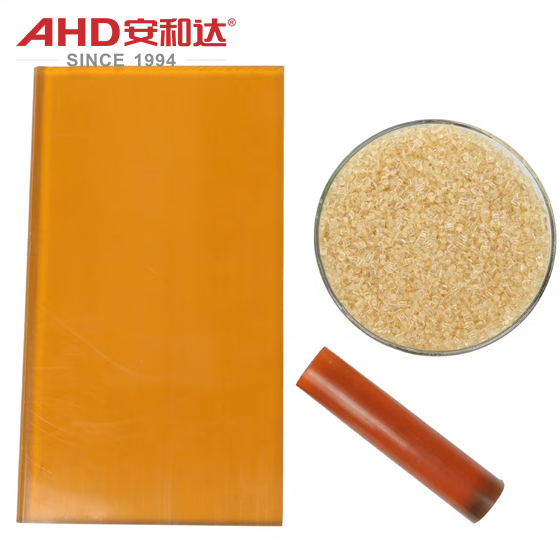
Ⅰ. How to Select High-Quality PEI Raw Materials?
Selecting high-quality PEI (polyetherimide) raw materials requires evaluation based on performance indicators, supplier qualifications, appearance, and consistency.
Key Performance Indicators (Refer to the technical parameter table):
Molecular Weight/Melt Flow Rate (MFR): Higher molecular weight (lower MFR) results in better material strength and temperature resistance, suitable for high-load applications; low MFR is suitable for precision machining.
Thermal Properties: Long-term operating temperature (UL continuous operating temperature ≥170℃), glass transition temperature (Tg≈217℃), heat distortion temperature (HDT, >200℃ at 1.8MPa).
Mechanical Properties: Tensile strength (>100MPa), flexural modulus (>3GPa), impact strength (high toughness).
Chemical Resistance: Resistance to acids, alkalis, and oils (stable to most chemicals except for strong polar solvents such as concentrated sulfuric acid).
Hygroscopicity: Equilibrium moisture absorption <1.5% (23℃/50%RH); low hygroscopicity is beneficial for dimensional stability. Suppliers and Certifications:
Select well-known brands to ensure batch-to-batch stability of raw materials.
Verify Certifications: FDA (food contact), UL (flame retardant V-0), ISO 10993 (medical grade), etc., matching the application scenario.
Appearance and Consistency: Uniform granules, free of impurities (black spots/yellow granules), and consistent color (usually translucent amber).
Virgin materials should be odorless; recycled materials must be clearly labeled (performance may be degraded).
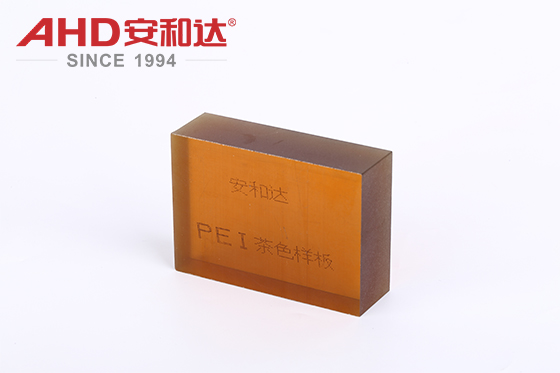
Ⅱ. Storage Methods for PEI Raw Materials
PEI has moderate hygroscopicity (equilibrium moisture absorption rate approximately 1.3%), and is prone to hydrolysis and degradation during processing due to moisture absorption. Storage precautions include:
Environmental Requirements: Store in sealed packaging (original manufacturer's moisture-proof bag is best) in a cool, dry place (temperature 20-25℃, humidity <50%), avoiding direct sunlight or high temperatures.
Opened Raw Materials: Transfer to a dry container (such as a sealed bucket with desiccant), or reseal and vacuum-pack. Use as soon as possible.
Shelf Life: Unopened, typically 1-2 years (subject to manufacturer's instructions). Expired raw materials should be tested for performance before use.
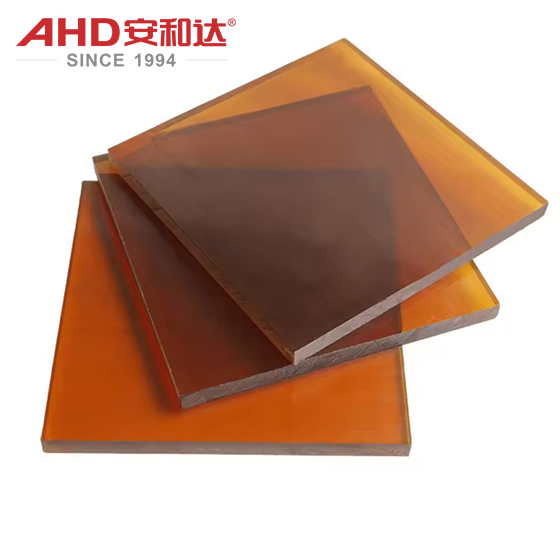
Ⅲ. Processing Technology and Precautions for PEI into Sheets and Rods
PEI processing requires strict control of temperature and humidity. Common methods include extrusion molding (mainly for rods) or compression molding (mainly for sheets).
1. Processing Flow (Sheet as an example):
Raw Material Pretreatment: Drying – Dry in a 120℃ oven for 4-6 hours, ensuring a moisture content <0.02%.
Compression Molding:
Preheat the mold to 180-200℃ and apply a release agent.
Add the dried raw material to the mold, close the mold, and heat to 340-360℃ (close to the melting point). Apply pressure and maintain for 5-10 minutes to allow the melt to flow.
Maintain pressure and cool to below 150℃ before demolding. Cool slowly (to avoid internal stress).
Extrusion Molding (Rods/Sheets):
Single-screw or twin-screw extruder, with segmented barrel temperature settings (feeding section 280-300℃, compression section 320-350℃, homogenization section 350-380℃). 1. Die temperature: 350-370℃. Traction speed should be matched with extrusion rate to avoid stretching deformation.
2. Precautions:
Insufficient drying: This can lead to internal bubbles, silver streaks, and decreased mechanical properties (e.g., a 30% reduction in impact strength).
Temperature control: Temperatures exceeding 400℃ can easily decompose (releasing toxic gases such as CO and phenols); localized overheating must be avoided.
Shear rate: Excessive shear (e.g., excessively high screw speed) can cause molecular chain breakage, reducing molecular weight (this can be mitigated by reducing speed and increasing back pressure).
Post-treatment: Annealing (200-220℃ for 2-4 hours) is recommended after processing to eliminate internal stress and improve dimensional stability.
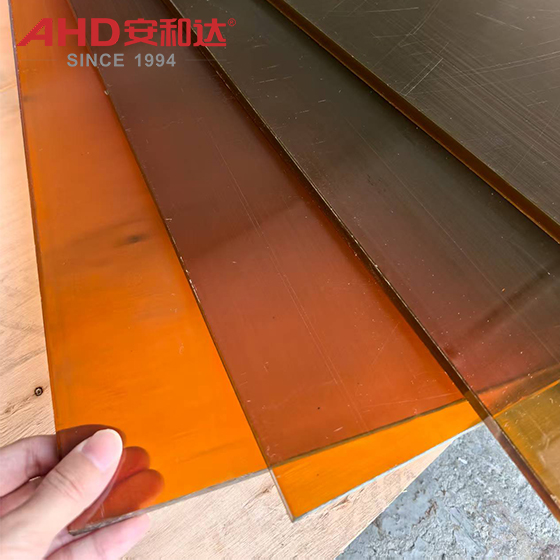
Ⅳ. Storage Method for PEI Rod and Sheet (Polyetherimide Rod and Sheet)
Environment: Dry, well-ventilated, humidity <50%. Avoid contact with acids, alkalis, and organic solvents (such as acetone and dichloromethane).
Packaging: Wrap with moisture-proof film. When stacking, separate with soft partitions (to avoid scratches). Stack height ≤1 meter (to prevent deformation).
Long-term storage: Regularly check for moisture absorption (surface fogging) or aging (brittleness, discoloration). Re-dry if necessary.
In summary, when selecting PEI, attention should be paid to performance parameters and certifications. Storage requires moisture protection and dryness. The key to processing is thorough drying and temperature control. High-quality PEI sheets and bars should possess characteristics such as high temperature resistance, high strength, and low moisture absorption. In practical applications, appropriate grades (such as ULTEM 1000 general-purpose grade, Anheda, etc.) should be selected based on the specific application scenario (e.g., medical, aerospace).

Ⅴ. Characteristics of PEI Sheet and Rod
PEI sheets and rods (polyetherimide sheets/rods) are typical forms of high-performance specialty engineering plastics. Their characteristics and advantages revolve around "comprehensive performance advantages in extreme environments":
High Temperature Resistance: Long-term operating temperature 170-180℃, short-term resistance above 200℃ (heat distortion temperature > 200℃ at 1.8MPa), glass transition temperature (Tg) reaches 217℃, far exceeding ordinary engineering plastics.
High Strength and Toughness: Tensile strength > 100MPa, flexural modulus > 3GPa, excellent notched impact strength, combining rigidity and impact resistance.
Chemical Corrosion Resistance: Resistant to oils, weak acids and alkalis, and most organic solvents (soluble only in highly polar solvents such as concentrated nitric acid), suitable for chemical and medical sterilization environments.
Low Moisture Absorption: Equilibrium water absorption < 1.5% (23℃/50%RH), excellent dimensional stability (annual expansion rate < 0.1%), preventing deformation in humid environments.
Intrinsic Flame Retardancy: Achieves UL94 V-0 rating (0.125mm thickness) without the need for added flame retardants, exhibits low smoke emission, no dripping during combustion, and outstanding safety performance.
Excellent Electrical Properties: Stable dielectric constant at high frequencies (ε≈3.15), volume resistivity >10¹⁶Ω·cm, excellent insulation and arc resistance.
Transparency and Biocompatibility: Some grades are translucent (transmittance >80%), suitable as a glass replacement; medical grade can be used in implants.
Radiation Resistance: Resistant to gamma rays and X-rays, suitable for nuclear industry and aerospace equipment.
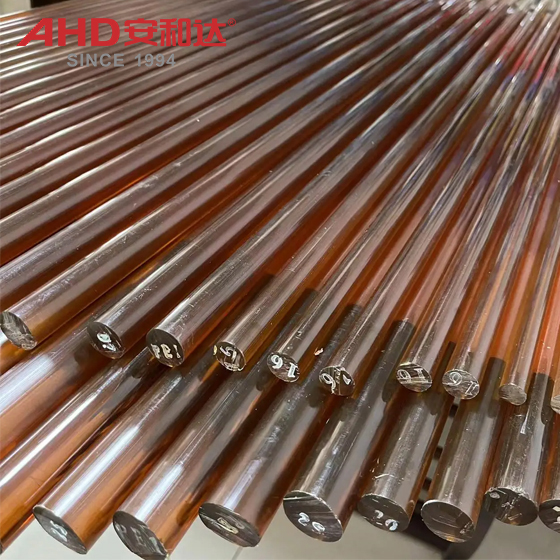
Ⅵ.Key Advantages
All-Round Performer in Extreme Environments: Stable performance in high-temperature, corrosive, and radiation environments, replacing metals (lightweight) and ceramics (easy to process), reducing system weight and cost.
Structurally Reliable and Long-Lasting: High strength and toughness withstand dynamic loads; low moisture absorption and dimensional stability ensure long-term accuracy of precision components (such as aerospace sensor brackets and electronic connectors).
Safe, Compliant, and Easily Integratable: Intrinsically flame-retardant, meeting aerospace and electronic safety standards; transparency, electrical insulation, and biocompatibility allow for integration of optical, insulating, and medical functions, simplifying design.
Highly Adaptable to Processing: Through extrusion/molding, complex cross-section bars and thick plates can be manufactured, balancing efficiency and economy.

Anheda has been deeply involved in the plastic sheet and rod industry for 31 years. As a seasoned domestic manufacturer and a high-quality supplier with many years of foreign trade experience, we consistently serve global customers with a commitment to "quality first, affordability as our foundation."
Our PEI sheets and rods inherit the inherent advantages of the material: high temperature resistance (long-term 170-180℃), high strength (tensile strength > 100MPa), chemical corrosion resistance, low moisture absorption (dimensional stability), intrinsic flame retardancy (UL94 V-0 rating), and transparency and biocompatibility, making them perfectly suited for extreme working conditions in aerospace, medical, and electronics industries.
Leveraging 31 years of production experience, we control everything from raw materials to processes (temperature and humidity control throughout extrusion/molding), and implement rigorous quality inspections (full inspection of dimensions and performance) to ensure that every batch of products meets performance standards and is consistent across batches. At the same time, we achieve "high quality at a reasonable price"—offering more competitive pricing for equivalent quality.
As a long-established foreign trade supplier, we are familiar with international certifications and export standards, and can provide customized specifications (multiple sheet/rod sizes available), professional processing advice, and efficient logistics support. Anheda's 31-year reputation is trustworthy. Choose PEI steel sheets and rods – affordable, high-quality, and with a stable supply, helping you reduce costs and increase efficiency! Welcome to inquire about customization and jointly explore new high-end application scenarios!
In addition to PEI sheets and rods, our company also provides PEI GF sheets and rods(same material like Ultem 2300 Sheet and Ultem 2300 Rod).