

In thermoplastic engineering plastics, PA6 Nylon and POM (polyoxymethylene) are often compared to "twin brothers with similar properties"—both are active in fields such as mechanical transmission and wear-resistant parts due to their high rigidity, abrasion resistance, and ease of processing. Their most common semi-finished products are sheets and rods. However, beneath their seemingly similar appearances, subtle differences in hygroscopicity, the balance of rigidity and toughness, and applicable scenarios are quietly dividing their respective domains. The following will delve into the similarities and differences to analyze the distinctions between these two brothers.
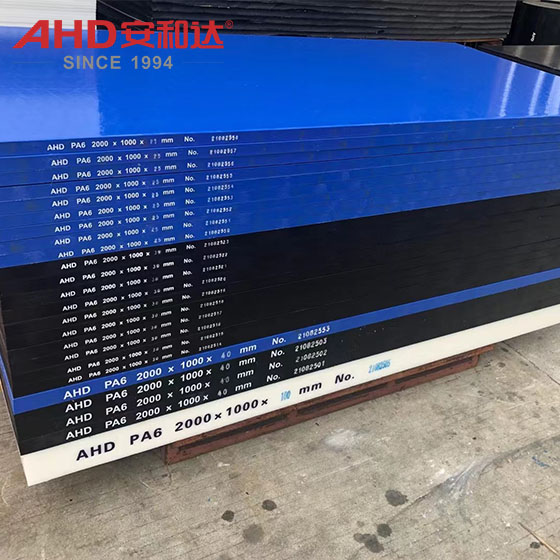
AHD PA6 Nylon Plastic Sheet
Ⅰ.What is PA6 Sheet and Rod? What is POM Sheet and Rod?
PA6 Nylon: A semi-crystalline thermoplastic engineering plastic polymerized from caprolactam, commonly known as Nylon 6. It boasts outstanding toughness, fatigue resistance, and wear resistance, but has high hygroscopicity (it easily swells after absorbing water). It is commonly used in the manufacture of gears, bearings, tool handles, and other parts requiring dynamic loads or oil resistance. It is also used in textile machinery and sporting goods, balancing lightweight and impact resistance requirements.
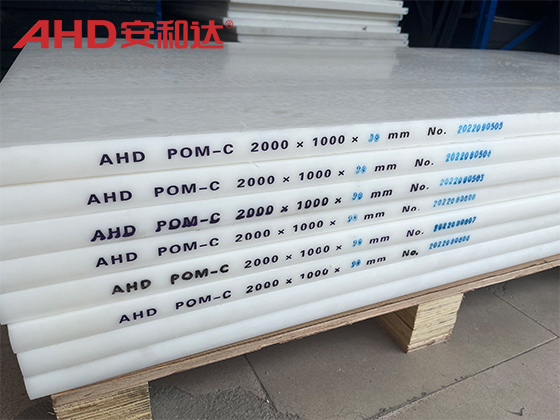
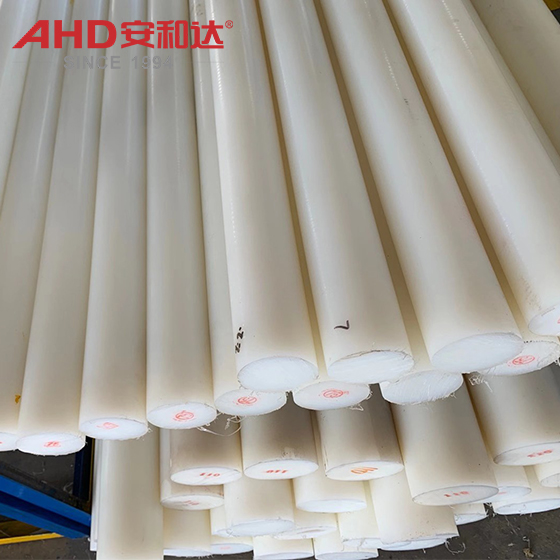
POM (Polyoxymethylene): Also known as acetal, it is a semi-crystalline thermoplastic engineering plastic (divided into homopolymer and copolymer). Its characteristics include low hygroscopicity (dimensional stability), high rigidity, abrasion resistance, and temperature resistance superior to most plastics. It is widely used in precision transmission components (such as watch gears and electronic connectors), bathroom hardware, and wear-resistant parts in humid environments. Due to its high precision and long lifespan, it is a preferred material for precision machinery.
Ⅱ.Comparative Analysis of PA6 Sheet and Rod and POM Sheet and Rod
1. Similarities
Both PA6 (Nylon 6) and POM (Polyoxymethylene) are thermoplastic engineering plastics, possessing the following common characteristics:
Excellent comprehensive mechanical properties: Both exhibit high rigidity, high strength, fatigue resistance, and wear resistance, making them suitable for manufacturing mechanical parts subjected to repetitive stress.
Good self-lubricating properties: Both have low coefficients of friction (PA6 approximately 0.1-0.3, POM approximately 0.1-0.2), making them suitable for friction-reducing transmission components (such as gears and bearings).
Easy to process and mold: Both can be produced into sheets and rods through injection molding, extrusion, and machining, suitable for complex structural parts.
Good chemical resistance: Both have a certain degree of resistance to oils and solvents (but note that POM is not resistant to strong acids and alkalis, and PA6 is not resistant to strong acids).
Ⅲ. Key Differences
The core differences between the two lie in their hygroscopicity, rigidity-toughness balance, dimensional stability, and temperature resistance.
| PA6 (Nylon 6) | POM (Polyoxymethylene) | |
| Hygroscopicity | Higher, easily swells upon absorbing moisture. | Extremely low, good dimensional stability. |
| Stiffness and Toughness | Excellent toughness, moderate stiffness | Higher stiffness, slightly lower toughness |
| Temperature resistance | Long-term operating temperature: approximately 85℃ | Long-term operating temperature: approximately 100℃ |
| Weather Resistance | Susceptible to aging due to UV radiation (requires modification) | Moderate weather resistance (easily degrades under prolonged sunlight) |
| Chemical resistance | Resistant to weak acids and oils, but not resistant to strong acids and alkalis. | Resistant to organic solvents, but not resistant to strong acids and strong oxidizing agents. |
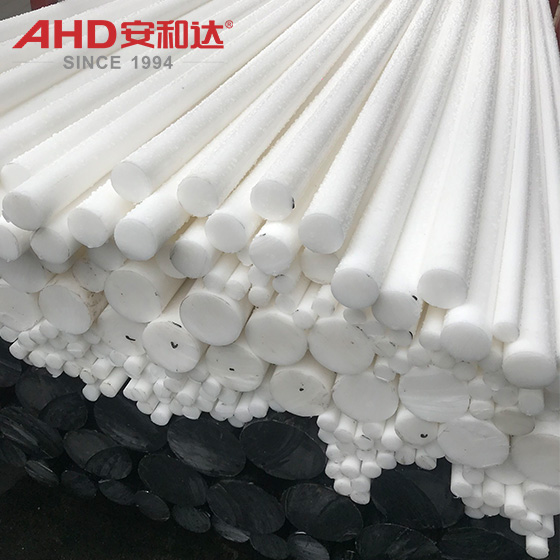 AHD Polyoxymethylene Rod
Ⅳ. Application Areas and Substitutions
1. Overlapping Application Areas (Partial Substitution)
Both can be used to manufacture mechanical transmission components (such as gears, sliders, bearing cages), structural support components (such as pulleys, brackets), and friction-resistant parts. In low humidity and normal temperature environments, they are interchangeable in some scenarios (such as ordinary non-precision gears).
2. Irreplaceable Applications
PA6's unique advantages in certain applications:
High toughness requirements: Environments requiring impact or dynamic loads (e.g., automotive bumper liners, tool handles).
Oil/solvent resistance: Applications involving long-term contact with mineral oils and greases (e.g., oil pipes, seals).
Lightweight and fatigue-resistant: Textile machinery, sporting goods.
POM's unique advantages in certain applications:
Precision dimensional requirements: Environments with low humidity or small temperature variations (e.g., precision instrument gears, electronic connectors), where its low hygroscopicity results in significantly better dimensional stability than PA6.
High rigidity + low friction: Components requiring high-precision transmission (e.g., watch gears, printer paper feed rollers), where POM offers superior rigidity and creep resistance.
Moisture/corrosion resistance: Moist environments (e.g., bathroom hardware, underwater equipment components) or applications involving contact with weak acids and alkalis (e.g., agricultural machinery parts).
Summary
While both PA6 and POM are high-performance engineering plastics, PA6 excels in high toughness, making it suitable for dynamic loads or oil-resistant applications; POM, on the other hand, is superior in low hygroscopicity and high rigidity, making it suitable for precision, humid, or high-precision transmission applications. Neither can completely replace the other; when choosing between them, key considerations include environmental humidity, dimensional accuracy requirements, and load type.
AHD (POM) Polyacetal Sheet with colors
