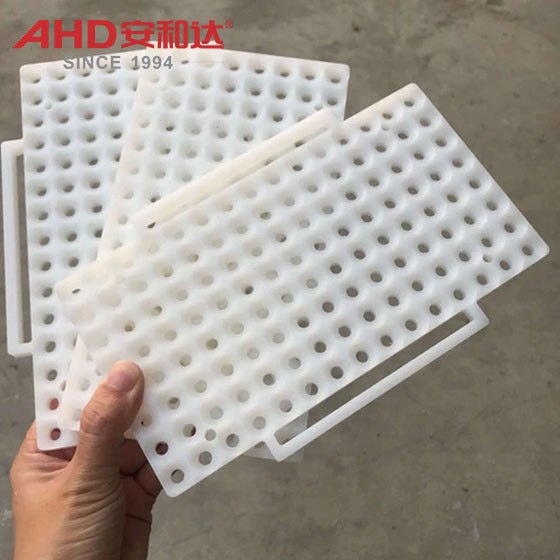
Ⅰ. What is a 2mm HDPE Sheet?
1. Basic Definition of HDPE
High Density Polyethylene (HDPE) is a semi-crystalline thermoplastic resin made from ethylene monomers through a low-pressure polymerization process. Its molecular chains are tightly packed and its crystallinity is high (approximately 70%-80%), thus possessing core characteristics such as high rigidity and excellent resistance to environmental stress cracking. It is one of the world's largest-produced general-purpose engineering plastics.
2. Specifications of a 2mm HDPE Sheet
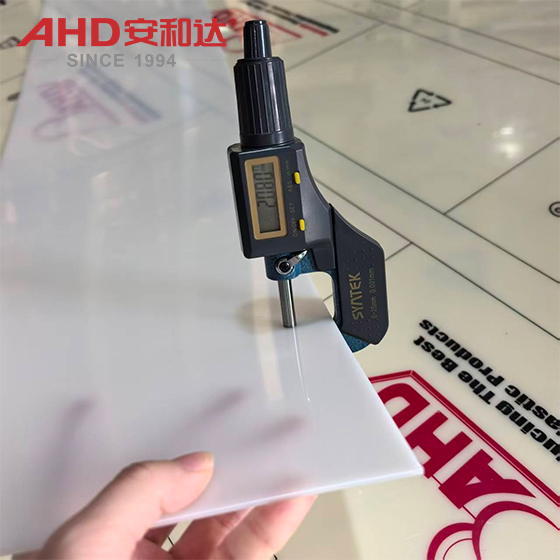
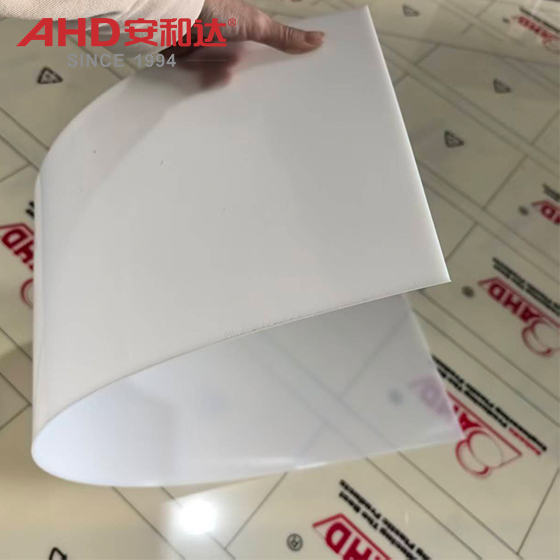
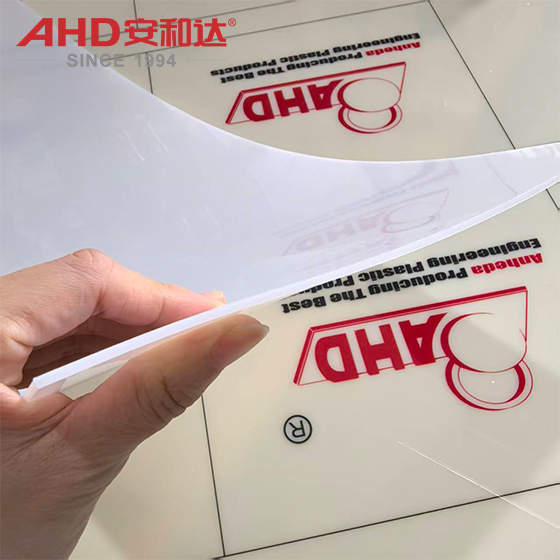
A 2mm HDPE sheet is a thin sheet of HDPE with a thickness of 2 mm, falling into the category of "thin sheet" (generally defined as <3mm). It retains the inherent material properties of HDPE while achieving lightweight and easy processing advantages through reduced thickness, making it suitable for applications with high requirements for weight and flexibility.

Ⅱ. Can Thin Sheets Retain the Original Properties of HDPE?
Conclusion: 2mm HDPE sheets basically retain the core properties of HDPE, with only a slight decrease in some mechanical properties, but this does not affect normal use. Specific analysis is as follows:
1. Retained Core Properties
Chemical Corrosion Resistance: Depends on molecular structure (stable C-H bonds), thickness has no effect—still resistant to acid, alkali, and salt solutions;
Low Water Absorption: <0.01% (ASTM D570), thinner sheets dry more easily and will not deform due to water absorption;
Low Temperature Resistance: Maintains toughness at -40℃ (superior to PP at -20℃), suitable for cold chain packaging;
Insulation: Volume resistivity >10¹⁶ Ω·cm, suitable for electrical insulation gaskets.
2. Slightly Reduced Performance
Impact Strength: The impact strength of a cantilever beam with a 2mm plate is approximately 50-80 J/m (ASTM D256), slightly lower than that of a thicker plate (approximately 100-150 J/m for a 10mm plate);
Stiffness: The flexural modulus is approximately 800-1100 MPa (GB/T 9341-2008), 20%-30% lower than that of a thicker plate, requiring avoidance of heavy loads.
Ⅲ. Characteristics and Advantages of 2mm HDPE Sheets
1. Core Characteristics (Compared to Other Thin Plastics)
| Performance Specifications | 2mm HDPE | 2mm PP (Polypropylene) | 2mm PVC (Polyvinyl chloride) |
| Tensile strength (MPa) | 20-30 | 30-35 | 40-50 |
| Impact strength (J/m) | 50-80 | 40-60 | 20-40 |
| Low temperature resistance (℃) | -40 | -20 | -10 |
| Weather Resistance | Excellent (UV resistant) | Good | Poor (Contains chlorine, easily decomposes) |
2. Unique Advantages
Balance of Lightweight and Strength: Lighter than PVC, more impact-resistant than PP;
Excellent Weather Resistance: With the addition of UV stabilizers, outdoor service life can reach 5-8 years;
Easy Processing: Melting point 130-140℃, more energy-efficient hot bending;
Cost Advantage: Raw material price is lower than PVC.
Ⅳ. Application Scenarios of 2mm HDPE Plastic Sheet
Due to their thin yet strong characteristics, 2mm HDPE sheets are widely used in fields requiring weight reduction, flexibility, and weather resistance, specifically as follows:
Packaging Industry:
Cushioning partitions for electronic components and precision instruments (replaces foam plastics, more environmentally friendly);
Moisture-proof inner trays for food and pharmaceuticals;
Lightweight filler boards for express delivery and logistics (reduces transportation costs).
Advertising and Display:
Temporary display stand panels for shopping malls and exhibitions (can be printed with patterns);
Lightweight lightbox fabric base layer for outdoor advertising (resistant to UV aging).
Construction and Decoration:
Waterproof linings for roofs and basements (easy to install);
Decorative wall panels for interior walls (stain-resistant, easy to clean, suitable for humid environments).
Medical and Hygiene:
Disposable medical trays (such as surgical instrument trays, non-toxic and FDA compliant);
Corrosion-resistant operating mats for laboratories (resistant to acid and alkali reagents).
Agriculture and Horticulture:
Seedling pots and seed trays (breathable and water-permeable, biodegradable HDPE is more environmentally friendly);
Shading panels for greenhouse roofs (adjusts light transmittance).
Ⅴ. How to Use 2mm HDPE Sheets
1. Cutting and Shaping
Cutting: Use a laser cutter, circular saw blade (with fine teeth to avoid chipping), or utility knife (cut along a ruler, suitable for small batches);
Hot Bending: Heat to 120-150℃ (using a heat gun or oven) to bend into arcs (such as curved panels for display stands);
Stamping: Use a punch press with custom molds to create holes or irregular shapes (such as fasteners for packaging).
2. Connecting and Fixing
Adhesive Bonding: Use HDPE-specific adhesive (such as chloroform or acrylic adhesive), apply adhesive and apply pressure for 24 hours;
Hot Welding: Use a hot air welding gun (temperature 200-250℃) to weld edges, suitable for large-area splicing (such as waterproof gaskets);
Mechanical Fixing: Use self-tapping screws (with rubber washers to prevent loosening), rivets, or double-sided tape (choose weather-resistant type).
3. Surface Treatment
Printing: Use UV ink (direct inkjet printing, no pretreatment required) or screen printing (suitable for batch patterns);
Ⅵ. Precautions for use
Storage
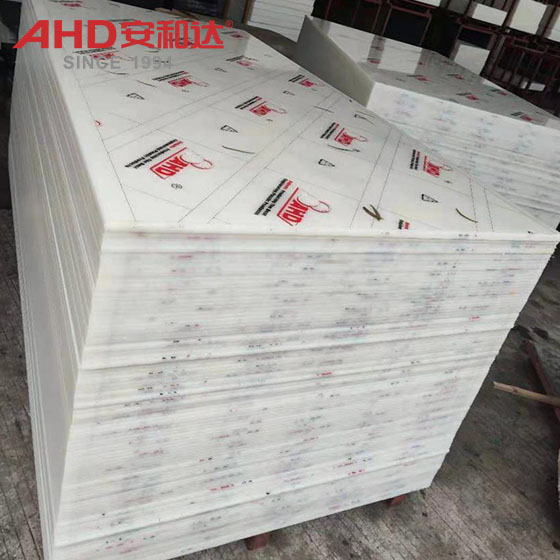
Avoid direct sunlight (to prevent UV aging), keep away from heat sources (will soften at temperatures above 60℃), and separate stacked items with cardboard (to prevent scratches).
Processing
Wear gloves to prevent static electricity (HDPE easily attracts dust), use sharp tools (blunt tools will cause rough edges), avoid forced twisting (it is easy to break).
Applications
Avoid contact with strong oxidizing agents (such as concentrated sulfuric acid and concentrated nitric acid) and aromatic solvents (such as benzene) – these will cause the material to swell; load should not exceed 5 kg/m² (thin profiles have limited compressive strength).
Safety
HDPE itself is non-toxic and odorless, but avoid prolonged contact with oils (as they can penetrate).