

Polybenzimidazole (PBI) is an aromatic heterocyclic high-performance polymer, first synthesized in 1961 by American scientists Vogel and Marvel. Its molecular backbone consists of repeating benzimidazole units (-C₆H₄-NH-C=N-C₆H₄-NH-), and this rigid heterocyclic structure is the underlying source of PBI's extreme properties.

Ⅰ. Why is PBI considered the "most heat-resistant plastic"?
PBI's "most heat-resistant" property is a dual inevitability due to both thermodynamics and molecular structure, primarily reflected in three key indicators:
| Indicators | PBI Parameters | Comparison Reference (PEEK/PI) | Significance |
| Glass transition temperature (Tg) | ~425℃ | PEEK ~143℃ / PI ~360℃ | The critical temperature at which a material transitions from a brittle to a highly elastic state; PBI's Tg is significantly higher than that of conventional engineering plastics. |
| Thermal decomposition temperature (Td, 5% weight loss) | >500℃ | PEEK ~550℃ (but softens at 300℃) / PI ~450℃ | The temperature at which the material begins irreversible degradation; PBI remains stable below 500℃. |
| Long-term operating temperature | 250-300℃ (air) | PEEK ~250℃ / PI ~300℃ | Maximum temperature for continuous operation; PBI exhibits extremely slow mechanical property degradation at high temperatures. |
The fundamental reason is that the strong conjugation effect of the benzimidazole ring significantly increases the molecular bond energy, making it less prone to breakage at high temperatures; at the same time, the amorphous structure avoids thermal melting of the crystalline region, further enhancing thermal stability.
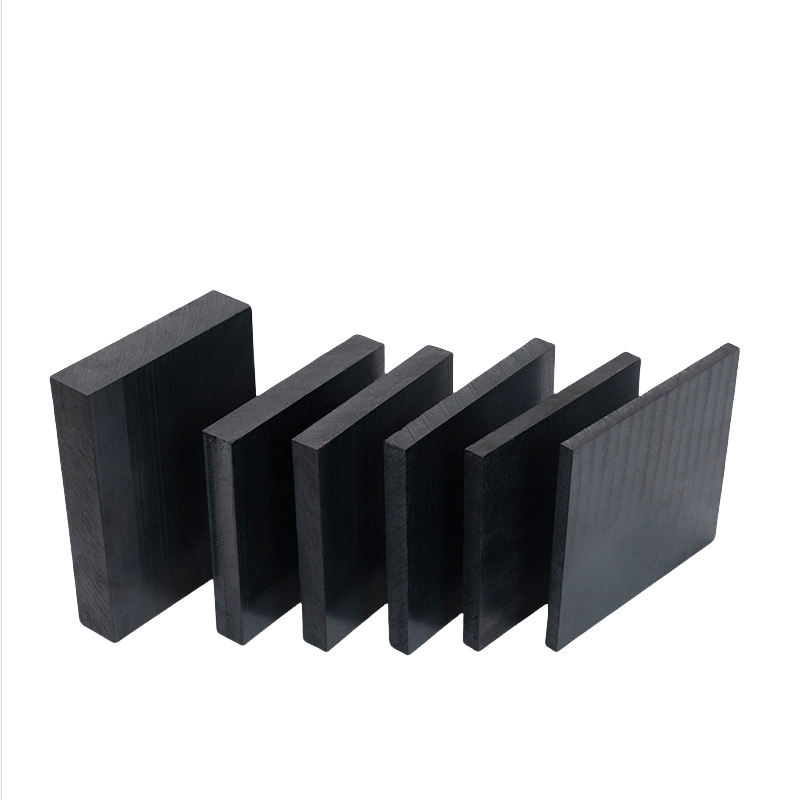
Ⅱ. Core Characteristics of PBI
PBI boasts "all-around" performance. The following are quantitative expressions of its high-value characteristics:
Super Heat Resistance: Retains over 60% of its room temperature tensile strength at 300℃ (PEEK retains only 30%);
High Strength and High Modulus: Room temperature tensile strength ~170MPa, elastic modulus ~5GPa (close to aluminum alloys);
Chemical Corrosion Resistance: Resistant to all organic solvents (acetone, toluene), acids, and alkalis (pH 2-12), except concentrated sulfuric acid/nitric acid;
Low Hygroscopicity: Water absorption <0.3% (23℃/24h), lower than PAI and PEEK;
Electrical Insulation: Volume resistivity >10¹⁶Ω·cm, dielectric constant ~3.0 (1kHz);
Self-Extinguishing Property: Oxygen Index (LOI) ~40, achieving UL94 V-0 rating without flame retardants;
Radiation Resistance: Resistance to gamma ray dose >10⁹Gy (nuclear reactor-grade tolerance).

Ⅲ. Typical Application Scenarios of PBI
Due to its "extreme performance," PBI is used only in irreplaceable high-end fields, categorized by industry as follows:
Aerospace: Engine turbine seals, rocket nose cone heat shields, satellite thermal control structural components;
Semiconductor Manufacturing: Wafer carriers (resistant to plasma corrosion), CMP polishing pad substrates (high flatness);
Defense and Military: Missile nose cones, bulletproof vest inserts (high specific strength + heat resistance), radar radomes;
High-end Machinery: High-temperature bearing cages, compressor valve plates (replacing metal for weight reduction);
Medical Field: Implantable neural electrodes (good biocompatibility), surgical instrument handles (resistant to high-temperature sterilization).
Currently, only manufacturers in the United States, China, Germany, and Japan have the capability to produce this material.
Ⅳ. Performance Comparison of PBI and PEEK
| PBI Sheet | PEEK Sheet | conclusion | |
| Tensile strength retention at 300℃ | >60% | <30% | PBI offers superior high-temperature strength. |
| Water absorption rate (23℃/24h) | <0.3% | ~0.5% | PBI offers better dimensional stability |
| Long-term operating temperature | 250-300℃ | ~250℃ | PBI upper limit: 50℃ |
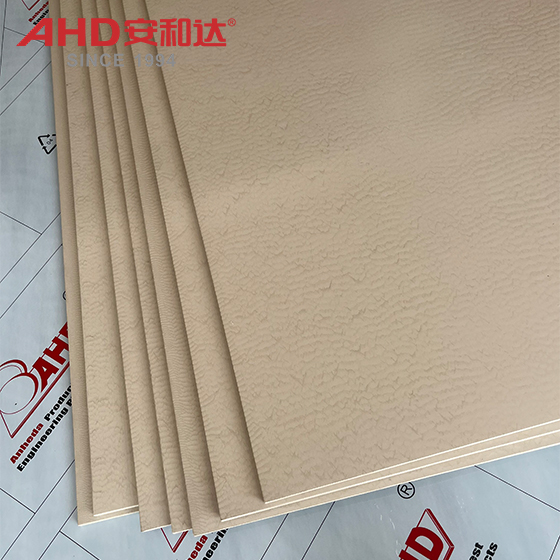
PEEK Plastic Sheet stands for "General Purpose High Temperature Plastics," while PBI stands for "Extreme Environment Plastics."
AHD Polyetheretherketone Sheet (PEEK Sheet)
