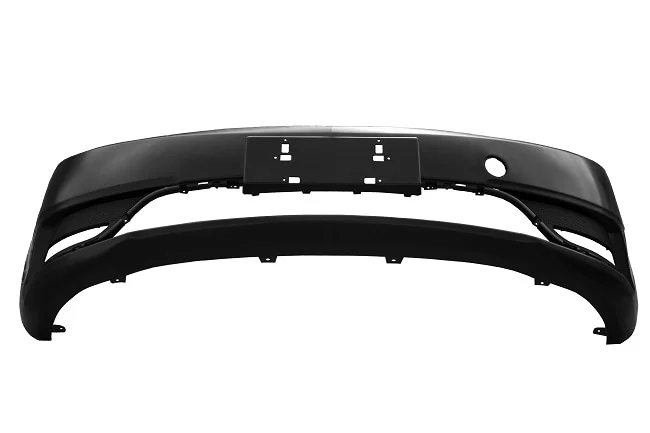
Pure polyphenylene ether (PPO) is an unmodified high-performance engineering plastic, belonging to the non-crystalline thermoplastic resin family, and is the "original form" of the PPO family. Its core characteristics are as follows:
1. Chemical Structure and Synthesis
Monomer: 2,6-Dimethylphenol (DMP) is used as the raw material;
Polymerization Method: A linear polymer is generated through oxidative coupling polymerization (copper-amine catalytic system);
Molecular Structure: The main chain consists of alternating rigid benzene rings and flexible ether bonds (-C₆H₄-O-C₆H₄-), this "combination of rigidity and flexibility" structure endows it with unique comprehensive properties.
2. Difference from PPO Alloys
Most "PPO" products on the market are PPO/polystyrene (PS) alloys, where PS is blended to improve the poor processability of pure PPO. Pure PPO is the core material of the alloy, but it has not undergone blending modification, retaining its most intrinsic properties.
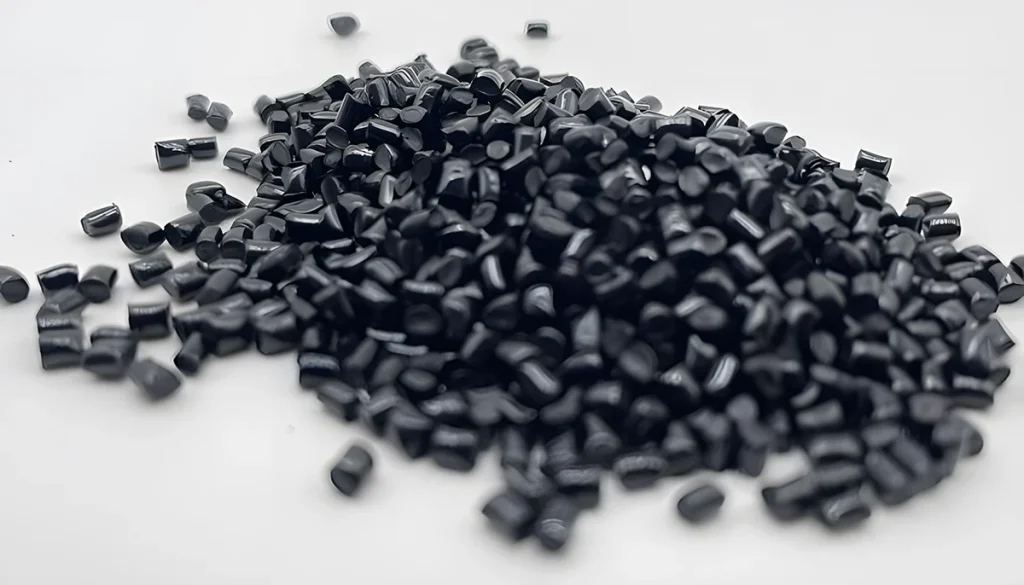
Ⅰ. Core Characteristics and Advantages of Pure PPO
The advantages of pure PPO stem from the rigid-flexible balance of its molecular chains and its amorphous structure. The following is a structured summary of key characteristics and quantitative data (Note: The following data are typical values for pure PPO, distinct from PPO/PS alloys).
High Temperature Resistance
Long-term operating temperature -40~120℃ (short-term resistance up to 150℃); Glass transition temperature (Tg) ≈210℃
Far exceeding that of ordinary engineering plastics (such as ABS -40~80℃), suitable for high-temperature environments (such as automotive engine compartments, industrial oven parts).
Mechanical Properties
Tensile strength ≈ 70 MPa (close to 1/3 of aluminum alloy); Notched impact strength ≈ 80 kJ/m² (superior to PC); Elastic modulus ≈ 2.5 GPa (rigidity close to metal)
Combining high strength and toughness, it can replace light metals for structural components (such as gears and brackets).
Electrical Insulation
At high frequencies (1 GHz), dielectric constant ≈ 2.6, loss factor ≈ 0.0007; volume resistivity > 10¹⁶ Ω·cm
Extremely low high-frequency loss ("low dielectric" characteristic) makes it an ideal insulating material for 5G communications and high-voltage electrical applications.
Chemical Resistance
Resistant to water, oil, weak acids and alkalis (no change after immersion at 25℃ for 30 days); only susceptible to strong oxidizing acids (such as concentrated sulfuric acid) and halogenated hydrocarbons (such as carbon tetrachloride).
Suitable for chemical pipelines and medical sterilization equipment (can withstand steam sterilization at 121℃).
Dimensional stability
Water absorption < 0.07% (25℃, 24h); Coefficient of thermal expansion ≈ 6×10⁻⁵/℃ (close to aluminum's 2.4×10⁻⁵/℃)
Almost non-absorbent and with minimal thermal deformation, suitable for precision instruments (such as optical equipment brackets and electronic component bases).
Lightweight and Flame Retardant
Density ≈ 1.06g/cm³ (only 1/8 the weight of steel and 1/3 the weight of aluminum); UL94V-0 rating (no need to add halogenated flame retardants)
Lightweight is the preferred choice, and it meets environmentally friendly flame retardant requirements (no toxic fumes released).

Ⅱ. Applications of Pure PPO in Profiles
Pure PPO can theoretically be made into sheets and rods, but in practice, it is rarely sold directly or used for profiles. The core reason is its extremely poor processability (due to its strong molecular chain rigidity and extremely high melt viscosity).
1. Processing Pain Points of Pure PPO (Reasons for Inability to Directly Make Sheets and Rods)
The processing defects of pure PPO are as follows:
Extremely high melt viscosity: At 230℃/2.16kg, the melt index (MI) is only 1~5 g/10min (far lower than PP's 10~30 g/10min), resulting in extremely poor flowability;
Narrow molding temperature range: Requires strict control within 300~350℃ (no flow below 300℃, degradation above 350℃);
High melt elasticity: Prone to overflow and flash during injection molding, and prone to melt fracture (rough surface) during extrusion;
High internal stress: Requires annealing treatment during cooling (120~150℃, 2~4 hours), otherwise cracking is likely.
These defects prevent pure PPO from being used to produce sheets and rods using conventional extrusion/injection molding processes. Even if production is attempted, issues such as dimensional instability and surface defects will occur.
2. Practical Profile Applications: Primarily PPO/PS Alloys
The mainstream PPO sheet and rod products on the market are PPO/PS alloys. The processability issues of pure PPO are solved by blending PS (30%~50%) (reducing melt viscosity and widening the molding temperature range). Characteristics of alloy sheets and rods:
Mature production process: Continuous sheets and rods can be produced using extruders;
Uniform performance: No weld lines like in injection molded parts, retaining the inherent advantages of PPO;
Wide range of applications: Used for custom-made machining parts (such as jigs and fixtures), equipment viewing windows (temperature-resistant transparent grade), and electronic component bases.
Therefore, the PPO sold on the market now is actually PPP/PS alloy.

Ⅲ. Mechanism by which PS improves the processability of PPO
The addition of PS solves the processing pain points of pure PPO through complementary molecular structures, transforming it from "difficult to process" to "easy to mold":
1. Reduced melt viscosity and improved flowability
PS is a low-viscosity amorphous resin (MI≈20~30 g/10min at 230℃/2.16kg). Blending it with PPO is equivalent to inserting flexible PS segments into the rigid molecular chains of PPO, significantly reducing the overall melt viscosity.
2. Widened molding temperature range
The glass transition temperature (Tg) of PS is ≈100℃ (far lower than PPO's Tg≈210℃). After blending, the alloy's Tg decreases to 120~150℃, widening the processing temperature range from 300~350℃ for pure PPO to 260~300℃, reducing equipment energy consumption and temperature control difficulty.
3. Suppresses melt elasticity and reduces defects
The flexibility of PS molecular chains can counteract the high elasticity of PPO, reducing overflow and flash during injection molding, as well as melt fracture during extrusion, resulting in more stable product dimensions.
4. Simplifies post-processing procedures
Pure PPO requires annealing (120~150℃, 2~4 hours) after molding to eliminate internal stress, while PPO/PS alloys, due to their low internal stress, do not require annealing, directly reducing production costs.
Therefore, PPO/PS is a more user-friendly version that balances various performance aspects, and it is also the most common version on the market.
If mechanical properties of PPO/PS are required (e.g., structural components), PC Sheet (easy to process but poor chemical resistance) can be selected;
If chemical resistance of PPO/PS is required (e.g., chemical pipelines), PP Sheet (low cost but poor temperature resistance) can be selected;
If temperature resistance of PPO/PS is required (e.g., high-temperature casings), PC (easy to process) or PA66 Nylon Plastic Sheet(better oil resistance) are preferred.