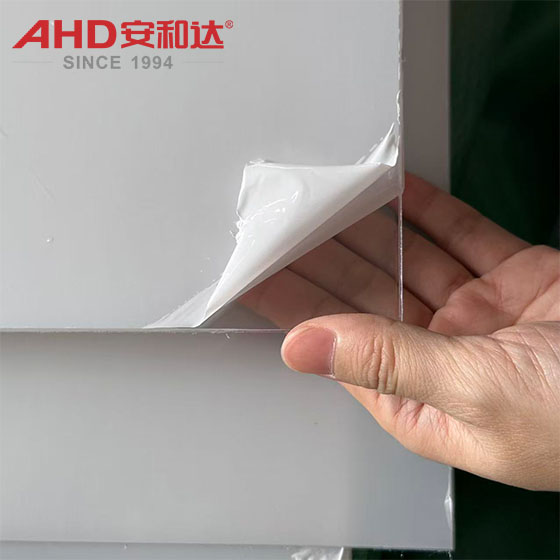
Ⅰ. Core Definition and Classification of GPPS
General Purpose Polystyrene (GPPS), also known as "rigid polystyrene," is unmodified pure polystyrene synthesized from styrene monomers (C₈H₈) through a free radical addition polymerization reaction. Its molecular chain has a linear structure (unbranched or cross-linked). As a basic type of the PS family, GPPS is characterized by high transparency and low cost, differentiating it from modified HIPS (high-impact polystyrene) and EPS (expandable polystyrene).

Ⅱ. Detailed Characteristics of GPPS (Physicochemical + Mechanical + Thermal Properties)
The characteristics of GPPS are determined by its molecular structure (linear, nonpolar). The following details its key properties:
1. Physicochemical Properties
High Transparency (Core Characteristic): GPPS boasts a light transmittance of 88%-92% (close to ordinary glass) and exhibits no birefringence (light does not undergo polarization splitting upon transmission), resulting in superior visual clarity compared to most transparent plastics. This characteristic stems from the regularity of its molecular chains (no conjugated structure), leading to extremely low absorption and scattering of visible light.
Low Moisture Absorption: Water absorption rate <0.05% (25℃, 24h), far lower than nylon, ensuring dimensional stability in humid environments and allowing for processing without pre-drying.
Electrical Insulation: Volume resistivity >10¹⁶ Ω·cm, dielectric constant approximately 2.45 (1kHz), making it suitable for electrical insulation components (such as low-voltage electrical appliance housings).
2. Mechanical Properties
Excellent rigidity: Elastic modulus approximately 3-3.5 GPa (higher than PP and PE), making products stiff and resistant to deformation, suitable for manufacturing parts that need to maintain their shape (such as storage boxes and model frames).
High brittleness (major defect): Notched impact strength is only 10-15 kJ/m² (approximately 1/5 of HIPS), prone to stress cracking upon impact (e.g., easily broken upon drop).
Surface hardness: Rockwell hardness (R scale) approximately 65-80, higher than PP (approximately 50-60), but lower than PMMA (approximately 90-100).
3. Thermal Properties
Non high heat resistance: Heat distortion temperature (HDT, 1.82 MPa) approximately 70-80℃ (lower than HIPS' 80-95℃ and PP's 100-120℃), therefore unsuitable for high-temperature environments (such as microwave oven containers).
Processing Temperature Range: Melting point approximately 180-220℃; barrel temperature during injection molding/extrusion is typically set at 190-210℃. Temperatures exceeding 240℃ may cause thermal degradation (releasing an irritating odor).
Linear Expansion Coefficient: Approximately 6-8 × 10⁻⁵/℃; minimal dimensional change at room temperature.
4. Processing Performance
Easy to Mold: Good flowability (melt flow rate MFR = 1-10 g/10 min, 190℃/5 kg), suitable for injection molding (complex shapes), extrusion (sheets/bars/tubes), thermoforming (thin-walled products), etc.
Easy for Secondary Processing: Can be produced into finished products through solvent bonding (e.g., with toluene, ethyl acetate), thermal welding (120-150℃), and machining (cutting, drilling, grinding), suitable for small-batch customization.

Ⅲ. The core logic of the selection:
The essence of choosing GPPS (General Purpose Polystyrene), PP (Polypropylene), and transparent PET is to match the triple constraints of "performance requirements - cost budget - application scenarios." The core differences among the three stem from their molecular structures (linear vs. crystalline vs. polyester) and modification directions. The following analysis breaks down the selection logic through structural comparison and scenario-based suggestions.
| GPPS (General Purpose Polystyrene) | PP (Polypropylene) | Transparent PET | |
| Transparency | Extremely high (88%-92% light transmittance, no birefringence) | Low (semi-transparent/milky white, light transmittance <50%) | High (89%-91% light transmittance, close to glass) |
| Mechanical Properties | Excellent stiffness (elastic modulus 3-3.5 GPa); High brittleness (notched impact 10-15 kJ/m²) | Excellent toughness (notched impact 50-100 kJ/m²); Medium stiffness (elastic modulus 1.1-1.6 GPa) | High strength (tensile strength 55-75 MPa); Medium toughness (notched impact 20-40 kJ/m²) |
| Thermal Properties | Poor heat resistance (HDT 70-80℃); Processing temperature 180-220℃ | Good heat resistance (HDT 100-120℃); Processing temperature 200-240℃ | Excellent heat resistance (HDT 120-150℃); Processing temperature 260-290℃ |
| Chemical Properties | Resistant to weak acids and alkalis; Not resistant to aromatic hydrocarbons (such as toluene) | Resistant to most acids, alkalis, and oils; Not resistant to strong oxidizing agents | Resistant to oils and fats; Not resistant to strong alkalis (such as NaOH) |
| Cost | Low | Lower | High |
| Processability | Easy (Good flowability, suitable for injection molding/extrusion/thermoforming) | Easy (High crystallinity, requires controlled cooling rate) | Relatively difficult (Requires drying, prone to hydrolysis, suitable for injection molding/blow molding) |
| Weather resistance | Poor (easily ages and yellows) | Medium (requires modification for UV resistance) | Excellent (UV resistant, long-term colorfast) |
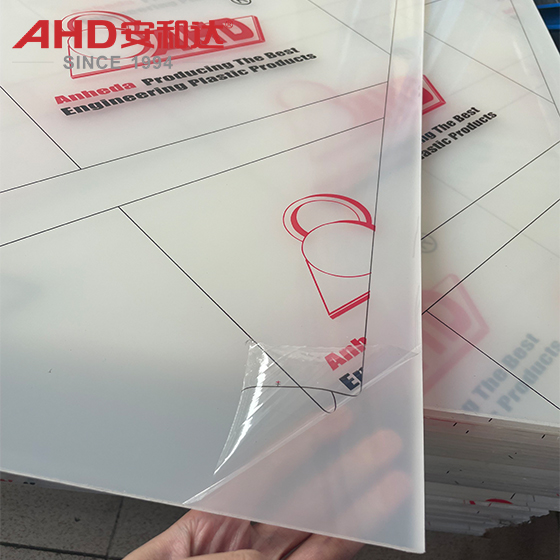
AHD offers PP sheet (Polypropylene Sheet) in thicknesses from 1 to 280 mm, available in natural, gray, and black. Transparent PTE sheet are also available in thicknesses from 8 to 100 mm. For more information on product features and applications, please contact us. Let us provide you with the optimal solution.
Ⅳ. On-Demand Matching: Choosing the Optimal Solution for You
1. Scenarios Prioritizing GPPS: High Transparency + Low Cost + Easy Processing
Core Requirements: Need near-glass transparency, but with a limited budget and no need to withstand impact or high temperatures.
Typical Examples:
Packaging: CD/DVD cases, transparent cosmetic trays, medical blister packs (short-term protection);
Daily Necessities: Transparent storage boxes (lightweight display), model airplane wings (lightweight);
Avoidance: Avoid use in scenarios with high risk of drop or high-temperature environments (such as microwave ovens).
2. Scenarios where PP is preferred: High toughness + temperature resistance + chemical resistance
Core requirements: Daily necessities requiring impact resistance, high temperature resistance, or contact with oils/acids/alkalis.
Typical examples:
Packaging: Takeout containers (temperature resistant up to 120℃), oil-resistant food bags;
Daily necessities: Foldable storage boxes (unbreakable), baby bottles (food-grade PP);
Electronics: Washing machine control panels (moisture resistant), automotive interiors (impact resistant).
Advantage amplified: PP's crystallinity makes it more resistant to repeated folding than GPPS, suitable for "recyclable" products.
3. Scenarios where transparent PET is preferred: High transparency + high strength + long-term durability
Core requirements: High-end transparency, long-term weather resistance, or high strength (e.g., pressure resistance).
Typical examples:
Packaging: Beverage bottles (cola/mineral water, internal pressure resistant), high-end cosmetic bottles (good texture);
Electronics: Mobile phone screen protectors (scratch resistant), LED lampshades (uniform light transmission);
Medical: Infusion bags (transparent and visible, sterilization resistant).
Value proposition: Transparent PET has better barrier properties (oxygen/water barrier) than GPPS/PP, making it suitable for food packaging that requires "freshness preservation".
Choosing the right material in one sentence:
For affordability and transparency → Choose GPPS;
For impact and temperature resistance → Choose PP;
For high-end durability → Choose transparent PET.
AHD Transparent PET Plastic Sheet