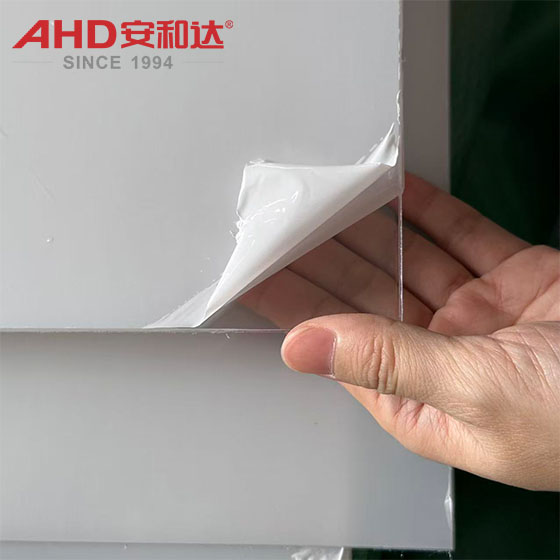
Ⅰ. Definitions and Classifications of GPPS, HIPS, and EPS
Polystyrene (PS) is a thermoplastic general-purpose plastic (one of the five major general-purpose plastics) synthesized from styrene monomers (C₈H₈) through an addition polymerization reaction. Based on the modification method, it is divided into three core categories:

1. General Purpose Polystyrene (GPPS)
Alias: Rigid Polystyrene;
Definition: Unmodified pure polystyrene with a linear molecular chain structure (unbranched/crosslinked);
Key characteristics: High transparency (88%-92% light transmittance), high brittleness (notched impact strength 10-15 kJ/m²), low cost.
2. High Impact Polystyrene (HIPS)
Definition: Polystyrene modified with butadiene rubber (rubber phase dispersed in a PS matrix);
Key characteristics: Significantly improved impact resistance (notched impact strength 50-100 kJ/m², 5-10 times that of GPPS), milky white and opaque, slightly reduced rigidity (elastic modulus 3-3.5 GPa).
3. Expandable Polystyrene (EPS)
Definition: Foamed plastic made by adding a foaming agent (such as pentane) (beads are pre-foamed, cured, and then molded);
Key characteristics: Low density (0.01-0.05 g/cm³), high cushioning (compressive strength 0.1-0.5 MPa), good thermal insulation (thermal conductivity 0.03-0.04 W/(m·K)), opaque.

Ⅱ. Similarities among the three:
Raw material: All are based on styrene monomer and are produced through polymerization/modification;
Thermoplasticity: All can be repeatedly processed by heating and melting, cooling and solidifying (injection molding, extrusion, foaming, etc.);
Electrical insulation: All have good electrical insulation properties (volume resistivity > 10¹⁶ Ω·cm), making them suitable for electrical components.
Ⅲ. The differences between the three
| GPPS (General Purpose Polystyrene) | HIPS (High Impact Polystyrene) | EPS (Expandable Polystyrene) | |
| Modification Methods | Unmodified (Pure PS) | With Butadiene Rubber Added (Toughening) | With Foaming Agent Added (Foaming) |
| Appearance | Colorless and transparent (similar to glass) | Opaque and milky white | White foam (beads/molded blocks) |
| Transparency | Extremely high (88%-92% transmittance, no birefringence) | Extremely low (milky white, transmittance <10%) | Opaque |
| Impact Strength | Low (10-15 kJ/m², highly brittle) | High (50-100 kJ/m², 5-10 times that of GPPS) | Medium (primarily for cushioning, not impact resistant) |
| Density | 1.04-1.06 g/cm³ | 1.04-1.06 g/cm³ (similar to GPPS) | 0.01-0.05 g/cm³ (foam, ultralight) |
| Heat resistance | Poor (heat distortion temperature 70-80℃, 1.82MPa) | Slightly better (heat distortion temperature 80-95℃) | Poor (long-term service temperature <70℃) |
| Core Performance | High transparency, low cost, easy processing | High impact resistance, low temperature resistance, easy molding | High cushioning, thermal insulation, lightweight |
| Typical Forms | Sheets, rods, injection molded parts (transparent) | Sheets, rods, injection molded parts (milky white) | Foam blocks, beads, packaging liners |

Ⅳ. Differences in General Use
The application scenarios for the three are entirely differentiated based on their core performance:
1. GPPS: High Transparency + Low Load Scenarios
Core Requirements: Requires near-glass transparency, but does not need to withstand impact or high temperatures;
Typical Examples:
Packaging: CD/DVD cases, transparent cosmetic trays, pharmaceutical blister packs;
Models: Aircraft model wings, architectural model doors and windows (transparent components);
Daily Necessities: Transparent storage boxes, eyeglass frames (low requirements);
Semi-finished Products: GPPS sheets/rods (for small-batch cutting and thermoforming).
2. HIPS: High Impact Resistance + Everyday Durability
Core Requirements: Resistant to drops and impacts, while maintaining low cost;
Typical Examples: Home Appliances: TV/radio back covers, air conditioner vents, washing machine control panels; Stationery: Pencil cases, folders, toy blocks; Food: Food containers; Automotive: Interior parts.
3. EPS: Cushioning + Insulation
Core Requirements: Lightweight, cushioning, and insulation;
Typical Examples: Packaging: Packaging and transport foam for electronic products; Construction: Exterior wall insulation panels, roof insulation layers; Cold Chain: Insulated boxes for transporting fresh food (in conjunction with ice packs).
Ⅴ. Substitutability Analysis of PP and Transparent PET
1. Substitutability for GPPS Sheet
Transparent PET Sheet: Partial substitution.
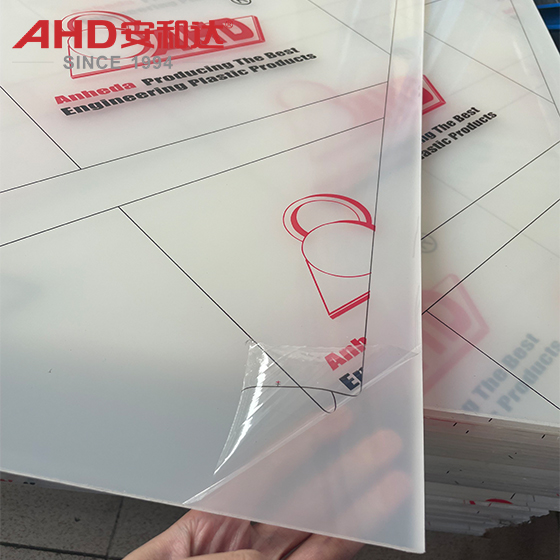
Transparent PET has transparency (89%-91% light transmittance) close to GPPS and higher strength (tensile strength 55-75MPa), but the cost is slightly higher. It can replace GPPS in applications requiring high durability (such as high-end cosmetic bottles and long-term transparent storage boxes). AHD offer Transparent PET Plastic Sheet thickness range from 8 to 100mm. Welcome to contact us for more informations about PET Sheet.
2. Substitutability for HIPS Sheet
PP Sheet: Can be substituted.
Polypropylene its impact resistance (50-100kJ/m²) is comparable to HIPS, its temperature resistance (100-120℃) is better, and its cost is slightly lower than HIPS. It is commonly used in applications previously dominated by HIPS, such as appliance casings, stationery, and automotive interiors (e.g., washing machine control panels, toy building blocks). AHD offer Polypropylene Sheet (PP Sheet) thickness rang from 1 to 280mm. Welcome to contact us for more informations about PP Sheet.
3. Substitutability for EPS
PP: Partial substitution.
PP can be made into PP foam (through a foaming process). Its cushioning properties (compressive strength 0.2-0.6MPa) are close to those of EPS, and its temperature resistance (100-120℃) is better, but its density is slightly higher than EPS, and its cost is also higher. It can only replace EPS in high-temperature cushioning applications.
AHD Polyethylene Terephthalate Sheets