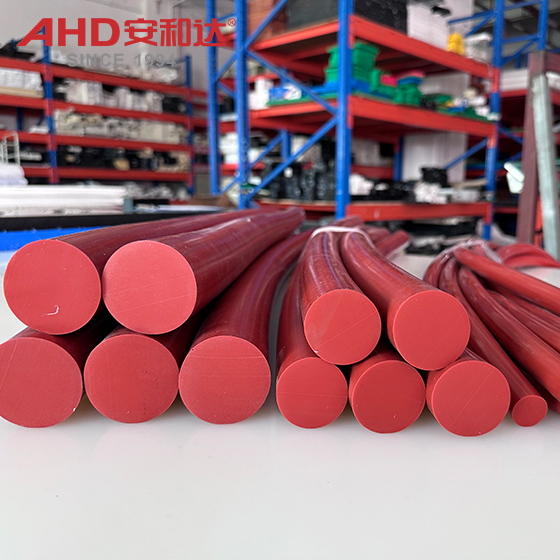
Ⅰ. All are thermosetting elastomers, but with distinct differentiated positioning.
Silicone rubber, FKM, and BR are all thermosetting elastomers, highly elastic polymers formed through vulcanization and crosslinking to create an irreversible three-dimensional network. However, their chemical nature and application positioning are completely different:
Silicone rubber: A synthetic rubber based on polydimethylsiloxane (PDMS), emphasizing "high and low temperature resistance + biocompatibility";
FKM (Fluororubber): A synthetic rubber based on fluorinated monomers (such as VF₂, HFP), emphasizing "extreme temperature resistance + chemical corrosion resistance";
BR (Butadiene rubber): A synthetic rubber based on cis-1,4-polybutadiene, emphasizing "high elasticity + low temperature resistance".
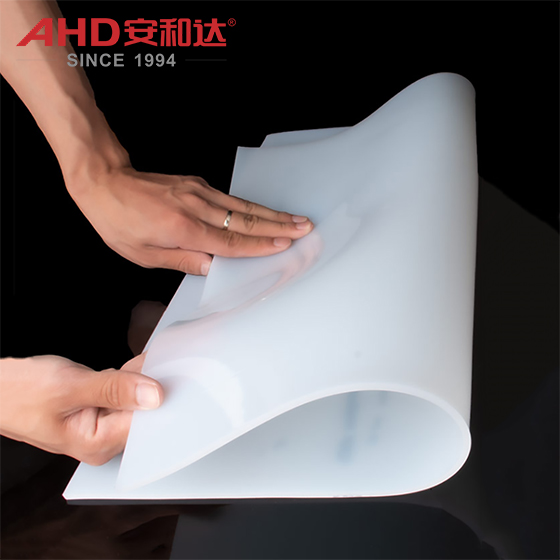
AHD Silicone Rubber Sheet
Ⅱ. In-depth analysis of differences
1. Definition and classification
According to ASTM D1418-20 and ISO 1629:2013, the classification codes and names of the three are clearly distinguished:
| Material | Classification Code (ASTM D1418) | Classification Name (ISO 1629) | Source | Core Category |
| Silicone Rubber | Class Q (Silicone Rubber) | VMQ (Methyl Vinyl Silicone Rubber) | Synthetic (PDMS Substrate) | Synthetic Thermosetting Rubber |
| FKM (Fluororubber) | HK type (Fluoroelastomer) | FKM (Fluororubber) | Artificially synthesized (fluorinated monomer) | Synthetic Thermosetting Rubber |
| BR (Butadiene Rubber) | BR-type (Butadiene Rubber) | BR (Butadiene Rubber) | Synthetic (Butadiene) | Synthetic Thermosetting Rubber |
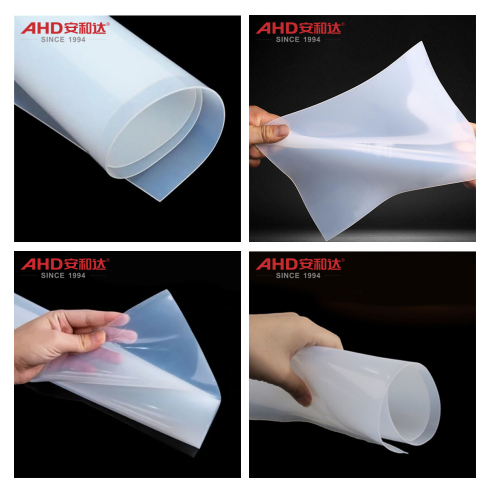
2. Comparison of structural and processing characteristics
| Silicone rubber | FKM (Fluororubber) | BR (Butadiene rubber) | |
| Processing Mechanisms | Compression Molding/Injection Vulcanization (150-200℃, Platinum Catalyst), Non-recyclable after molding | Compression Molding Vulcanization (170-200℃, Bisphenol AF), Non-recyclable after molding | Compression Molding Vulcanization (140-160℃, Sulfur + Accelerator), Non-recyclable after molding |
| Sources of elasticity | Internal rotational flexibility of silicon-oxygen bonds (bond angle 143°, prone to coiling) | Weak internal rotation of fluorine-containing backbone (bond angle 108°, lower elasticity) | Conformal freedom of cis double bonds (molecular chains form random coils) |
| Shore A hardness range: | 10-80 (Liquid silicone rubber LSR: 0-10A; Solid silicone rubber: 20-80A) | 50-90 (High fluorine content results in a harder rubber) | 30-60 (Reinforcing agents are needed to improve strength) |
| Temperature range | -50℃ to 200℃ (short-term 250℃) | -20℃ to 250℃ (short-term 300℃) | -100℃ to 100℃ (good elasticity retention at low temperatures) |
| Key processing challenges: | Vulcanization temperature needs to be controlled (to prevent methyl decomposition). | Strict drying is required (to prevent HF formation). | Reinforcing agents (such as carbon black) need to be added to improve tear resistance. |
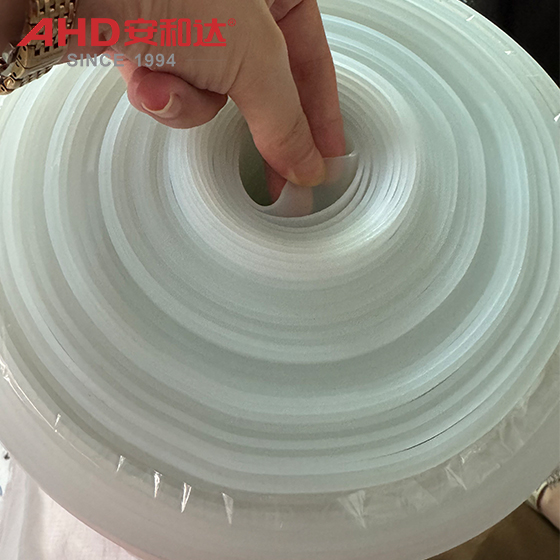
AHD Roll of Silicone Sheet
3. Performance and Application Differences
The performance advantages of these three components directly determine the differences in application scenarios:
Silicone rubber
Core Advantages
① Wide temperature range weather resistance (-50~200℃);
② Biocompatible (non-toxic);
③ Electrical insulation;
④ Resistant to aging (ozone/UV radiation)
Typical Applications
① Medical: Surgical catheters;
② Aerospace: Engine cryogenic seals;
③ Electronics: LED encapsulation adhesive;
④ Daily necessities: Kitchen silicone spatulas
Limitations
① High cost;
② Elasticity slightly lower than BR (rebound ≈ 70%);
③ Not oil-resistant (non-polar side groups are easily swollen by oil).
FKM (Fluororubber)
Core Advantages
① Extremely high temperature resistance (≤250℃);
② Resistant to strong oils/acids/alkalis (C-F bond stability);
③ Resistant to aging (ozone/radiation)
Typical Applications
① Aerospace: High-temperature engine seals, fuel lines;
② Chemical industry: Pump body seals, reactor gaskets;
③ Semiconductor: Wafer processing fixtures;
④ Automotive: Turbocharger hoses
Limitations
① Poor elasticity (rebound ≈40%);
② Difficult to process (requires high-temperature vulcanization);
③ High cost (expensive fluorinated monomers)
BR (Butadiene Rubber)
Core Advantages
① High elasticity (rebound ≈ 80%, superior to natural rubber);
② Low temperature resistance (remains soft at -100℃);
③ Abrasion resistance (molecular chain crystallinity)
Typical Applications
① Tires: Sidewalls (improves low-temperature crack resistance), snow tires;
② Cold-resistant products: Ice pack sealing gaskets, low-temperature pipeline insulation layers;
③ Rubber shoes: Outsoles (improves elasticity)
Limitations
① Poor tear resistance (no sidewall protection);
② Poor aging resistance (double bonds are easily oxidized);
③ Not oil-resistant (non-polar, easily swelled by oil)

Ⅲ. The core information is clear at a glance
| Comparison Items | Silicone Rubber | FKM (Fluororubber) | BR (Butadiene Rubber) |
| Shore A Hardness | 10-80 (LSR: 0-10A) | 50-90 |
30-60
|
| Temperature range | -50℃~200℃ (short-term 250℃) | -20℃~250℃ (short-term 300℃) | -100℃~100℃ |
| Core Advantages | High and low temperature resistance, biocompatible, electrical insulation | High temperature resistance, oil/corrosion resistance | High elasticity, low temperature resistance |
| Typical Applications | Medical implants, aerospace seals, silicone kitchenware | Aero-engine seals, chemical pump seals, semiconductor clamps | Tire sidewalls, snow tires, cold-weather boots |
| Limitations | High cost, slightly lower elasticity, not oil-resistant | Poor elasticity, difficult to process, high cost | Poor tear resistance, poor aging resistance, not oil-resistant |
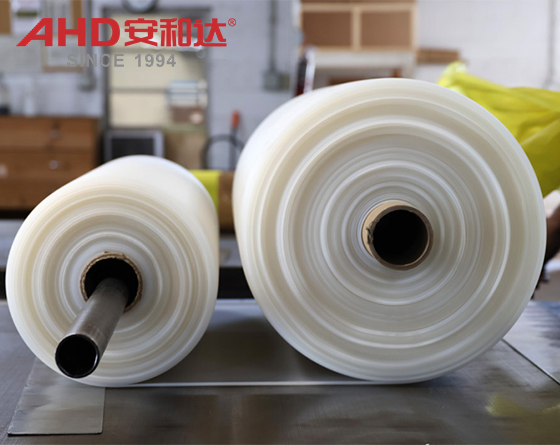
Silicone Rolls
Ⅳ. Key Findings
While silicone rubber, FKM, and BR all belong to the thermosetting elastomer family, they achieve differentiated performance characteristics through molecular design:
Silicone rubber: An "all-rounder" in extreme environments (resistant to high and low temperatures + biocompatibility);
FKM: A "guardian" in corrosive and high-temperature environments (resistant to strong oils/acids + extreme temperature resistance);
BR: An "expert" in meeting low-temperature and elasticity requirements (high elasticity + resistance to -100℃).
AHD high quality Silicone Rubber Rod
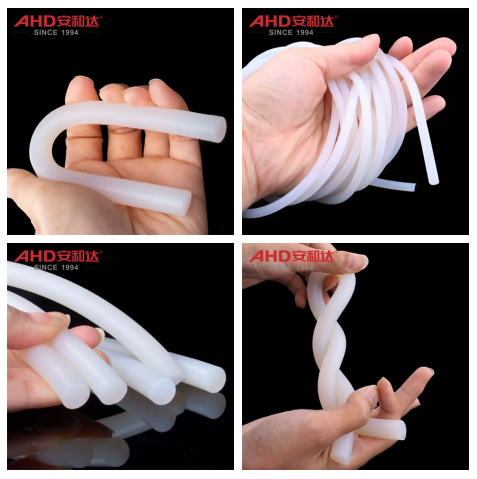
Flexible Silicone Rod
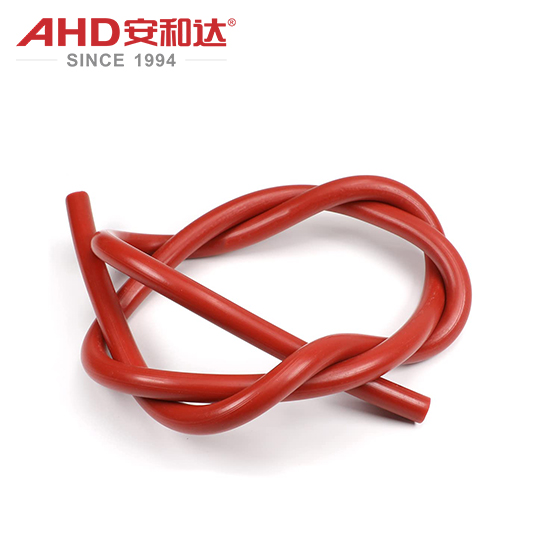
Solid Silicone Rubber Rod