

In the field of industrial materials, polyimide (PI) and polyetheretherketone (PEEK) are considered the "twin stars at the pinnacle of the plastics pyramid."
PI is a high-performance polymer containing imide rings, renowned for its extreme high-temperature resistance (long-term 260-300℃) and ultra-low dielectric constant, making it the "invisible armor" for flexible circuit boards and satellite thermal insulation layers. PEEK, on the other hand, is a semi-crystalline thermoplastic containing ether-ketone bonds, favored for its high strength, chemical resistance, and biocompatibility, making it a preferred material for medical implants and aerospace components.
Although both belong to the category of specialty engineering plastics, their molecular structures lead to different performance peaks—PI excels in "high-temperature insulation and electronic properties," while PEEK is known for its "strength, toughness, and corrosion resistance." When we place these two "industrial luxury goods" on the same coordinate system, we discover their distinct differences in high-temperature resistance, mechanical properties, and application scenarios. This comparison will reveal how high-end plastics are rewriting industry rules through "performance-based pricing."

Ⅰ. Why are these two materials so expensive?
The high price of these products is due to several factors:
1. Complex synthesis process
2. High monomer cost
3. Top-tier performance, difficult to replace
4. Market demand concentrated in the high-end sector
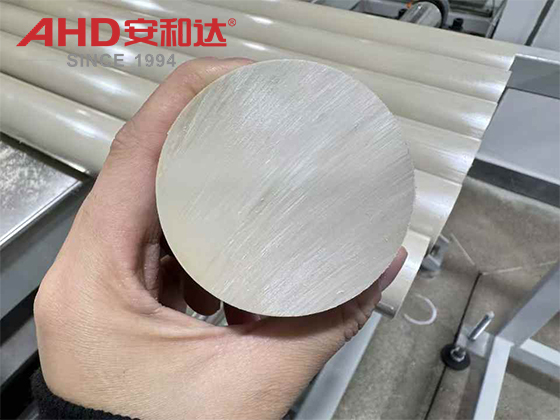
Polyimide (PI) and polyetheretherketone (PEEK) are both high-performance special engineering plastics. They are expensive due to their excellent performance and complex synthesis, but they have significant differences in chemical structure, core properties and application scenarios.
Ⅱ. Chemical Structure and Basic Properties
| Polyimide (PI) | Polyetheretherketone (PEEK) | |
| Molecular Structure | The main chain contains an imide ring (-CO-N-CO-), formed by the condensation polymerization of aromatic dianhydrides (such as pyromellitic dianhydride) and diamines (such as 4,4'-diaminodiphenyl ether), containing numerous conjugated double bonds and rigid rings. | The main chain contains ether bonds (-O-) and ketone bonds (-CO-), formed by the nucleophilic substitution condensation polymerization of 4,4'-difluorobenzophenone and hydroquinone, a semi-crystalline aromatic polymer. |
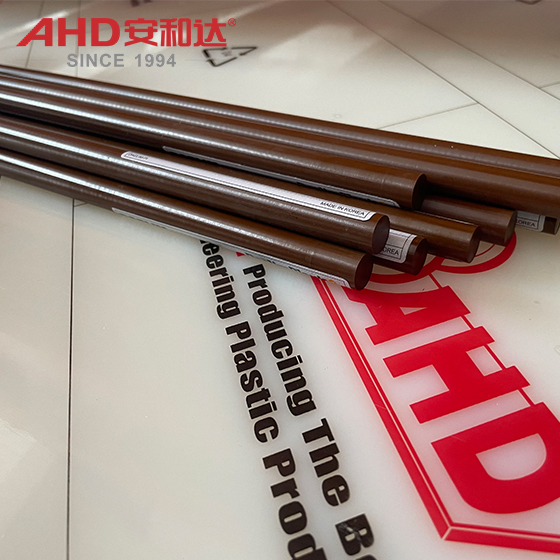
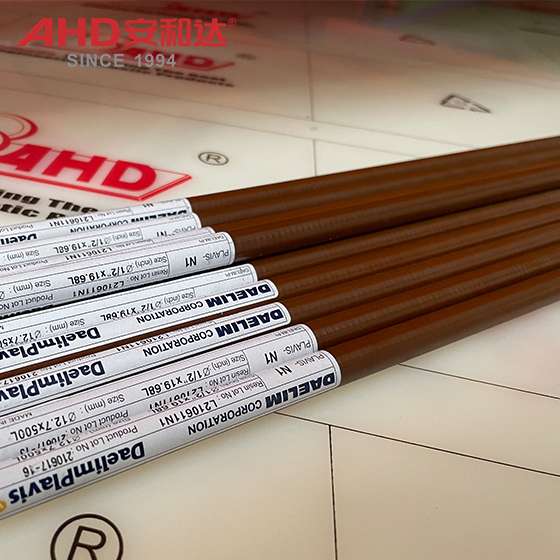
| Appearance and Morphology | It can be made into films, fibers (aramid PI), molding compounds, foams, etc., and is mostly a yellow or amber solid. | It is usually a light beige or light brown granular material, a thermoplastic material, and can be melt-processed (injection molding, extrusion). |
Ⅲ. Core Performance Comparison
1. High Temperature Resistance
PI: Superior. Long-term operating temperature 260-300℃ (some varieties reach 350℃), short-term withstand of 500℃ (e.g., aerospace thermal insulation); glass transition temperature (Tg) typically >300℃, some varieties >400℃.
PEEK: Long-term operating temperature 250℃, short-term withstand of 300℃; Tg approximately 143℃, melting point (Tm) 343℃.
Conclusion: PI exhibits stronger stability in high-temperature environments, making it particularly suitable for extreme thermal environments (e.g., rocket thermal insulation, high-temperature insulation layers).
2. Mechanical Properties
PI: Tensile strength 100-300 MPa (films can reach over 200 MPa), elastic modulus 2-5 GPa, relatively brittle (molding compounds require toughening).
PEEK: Tensile strength 90-100 MPa, elastic modulus 3.6 GPa, elongation at break 30-50% (tougher than PI), strength close to aluminum alloy.
Abrasion Resistance: PEEK contains ether bonds and a crystalline structure, resulting in superior abrasion resistance; commonly used in bearings and gears. PI has moderate abrasion resistance and is mostly used in non-friction applications.
Conclusion: PEEK has a more balanced overall mechanical property (combining strength and toughness), while PI has higher strength but is more brittle.
3. Chemical Corrosion Resistance
PI: Resistant to most organic solvents (such as acetone, DMF), weak acids and bases, but not resistant to strong alkaline solutions (such as concentrated NaOH) and strong oxidizing agents (such as concentrated sulfuric acid).
PEEK: Superior. Insoluble in any common solvents (including concentrated nitric acid and hydrofluoric acid) except concentrated sulfuric acid, its chemical corrosion resistance is close to that of polytetrafluoroethylene (PTFE).
Conclusion: PEEK exhibits greater stability in highly corrosive environments (such as chemical pipelines and semiconductor cleaning equipment).
4. Electrical and Optical Properties
Dielectric Properties: PI has a dielectric constant (Dk) of 2.8-3.5 (low frequency) and a dielectric loss (Df) <0.002, making it an ideal insulating material for high-frequency electronic devices (such as 5G antennas and flexible circuit boards).
PEEK has generally lower dielectric properties (Dk≈3.2, Df≈0.003) and is only used for general insulation.
Light Transmittance: PI films (such as CPI) can be made colorless and transparent (for foldable screen covers), while PEEK is opaque.
Conclusion: PI is the "king of dielectrics" in the electronics field, an advantage PEEK lacks.
5. Biocompatibility
PEEK: Excellent. Medical-grade PEEK can integrate with human bone tissue (elastic modulus close to bone), is non-toxic, and is used in spinal fusion devices and artificial joints.
PI: Poor biocompatibility (some varieties are cytotoxic), rarely used for in vivo implantation.
Conclusion: PEEK is the preferred plastic for medical implants; PI is almost never used.
6. Radiation Resistance
PI: Extremely high. Withstands high-energy radiation such as gamma rays and X-rays (dose > 10⁹ Gy), used in satellites and nuclear reactor components.
PEEK: Moderate radiation resistance (dose < 10⁶ Gy), degrades under long-term radiation.
Ⅳ. Processing and Application Areas
1. Processing Methods
PI Sheet: Complex process. It requires the preparation of a polyamic acid precursor (solution state), followed by casting, molding, and finally high-temperature imidization (300-400℃ dehydration and cyclization); difficult to directly melt process (decomposition temperature is lower than melting temperature).
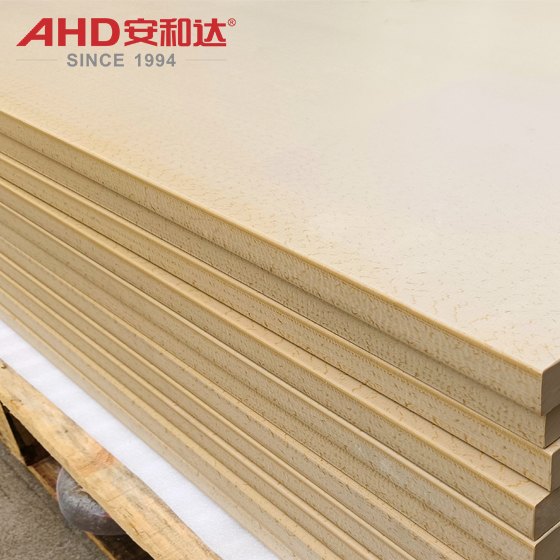
PEEK Sheet: Thermoplastic processing. Can be directly melt-injected, extruded, and machined (turning, milling, planing, grinding); wide processing window (melting point 343℃, decomposition temperature > 500℃), suitable for molding complex parts.
2. Core application scenarios
| Typical applications of PI | Typical applications of PEEK |
| Electronics: Flexible printed circuit board (FPC) base film, OLED foldable screen cover (CPI), chip packaging film, high-frequency antenna. | Medical: Spinal fusion devices, artificial bones, dental implants, surgical instruments. |
| Aerospace: Satellite solar cell substrates, rocket thermal insulation layers, aircraft wiring insulation layers. | Aerospace: Engine components (bearings, seals), fuel line connectors. |
| Industrial applications: High-temperature insulating paper, motor slot wedges, bulletproof fiber (aramid PI). | Semiconductor applications: Wafer fixtures, CMP polishing pads, corrosion-resistant pipes. |
| Military industry: Missile thermal protection layers, radar antenna radomes. | Automotive industry: Transmission gears, oil pump components (lightweight alternatives to metals). |
Ⅴ. Summary: How to choose between PI and PEEK?
| Requirement Scenarios | Prioritize PI | Prioritize PEEK |
| Extreme high temperatures (>300℃) | √ (e.g., rocket insulation, high-temperature insulation layers) | × (Long-term use limit: 250℃) |
| High-frequency electronics/flexible displays | √ (Low dielectric, transparent film) | × (General dielectric properties) |
| Medical Implants/Biocompatibility | × (Biotoxicity) | √ (Osteointegration, Non-toxic) |
| Highly corrosive environments (except concentrated sulfuric acid) | × (Not resistant to strong alkalis/oxidizers) | √ (Resistant to almost all solvents) |
| Complex part molding (injection molding/extrusion) | × (Requires imidization, difficult to melt process) | √ (Thermoplastic, flexible processing) |
| Radiation resistant/Extreme aerospace environment | √ (Extremely high radiation resistance) | × (Moderate radiation resistance) |
PI is the "ceiling of high-temperature insulation and electronic materials", while PEEK is a "tough and corrosion-resistant all-around engineering plastic". Due to their complementary properties, they each monopolize different high-end fields and together constitute the "two giants" of special engineering plastics.
AHD Thin PEEK Sheet
