

The identification of plastic materials generally includes: visual identification, combustion identification, density identification, flotation identification, thermal analysis identification, ultrasonic testing and analysis, X-ray fluorescence identification, and infrared spectroscopy identification.

AHD ABS Plastic Sheet
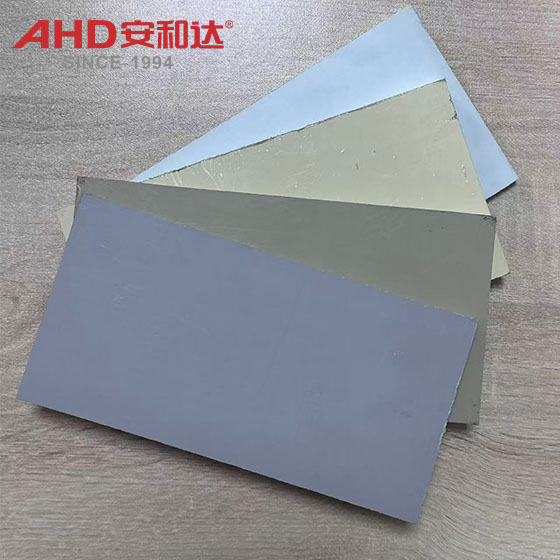
Today, we will mainly introduce the combustion identification method for identifying plastic materials.
| Plastic | Flammability | State After Removal from Flame | Flame Appearance | Changes in Plastic State | Odor |
| Polymethyl methacrylate (PMMA) | Easy to burn | Continues to burn | Light blue with a white tip | Meltes, bubbles | Strong floral and fruity odor, smells like rotting vegetables |
| Polyvinyl chloride (PVC) | Difficult to ignite | Extinguishes immediately upon removal from flame | Yellow, green at the bottom, white smoke | Softens | Irritating acidic smell |
| Polystyrene (PS) | Easy to ignite | Continues to burn | Orange-yellow, thick black smoke and carbon plume | Softens, bubbling | Special styrene monomer smell |
| ABS | Easy to burn | Continues to burn | Yellow, black smoke | Softens, chars | Special styrene monomer smell, rubber odor |
| Polyethylene (PE) | Easy to burn | Continues to burn | Yellow at the top, blue at the bottom | Meltes and drips | Smells like burning paraffin |
| Polypropylene (PP) | Easy to burn | Continues to burn | Yellow at the top, blue at the bottom | Meltes and drips | Petroleum smell |
| Polyamide (PA) | Burns slowly | Slowly extinguishes | Blue at the top, yellow at the bottom | Meltes and drips, bubbles | Special, burnt wool and nail smell |
| Polyoxymethylene (POM) | Easy to burn | Continues to burn | Yellow at the top, blue at the bottom | Meltes and drips | Strong, pungent formaldehyde odor, fishy smell |
| Polycarbonate (PC) | Burns slowly | Slowly extinguishes | Yellow, black smoke/carbon plume | Meltes, bubbles | Special odor, floral/fruity smell |
| Polysulfone (PSU) | Difficult to burn | Extinguishes | Dense black smoke | Melting | Slight rubber burning smell |
| Polyethylene terephthalate (PET) | Easy to extinguish | Slowly extinguish | Orange color, with a small amount of black smoke, slowly extinguishes after removal of flame | Melting | Acidic smell |
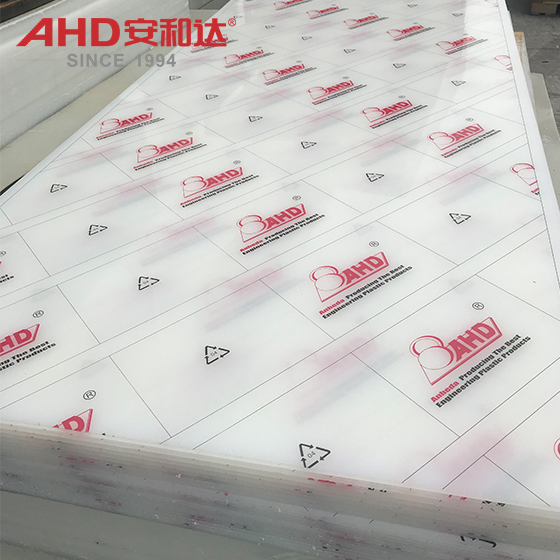
AHD HDPE Sheet
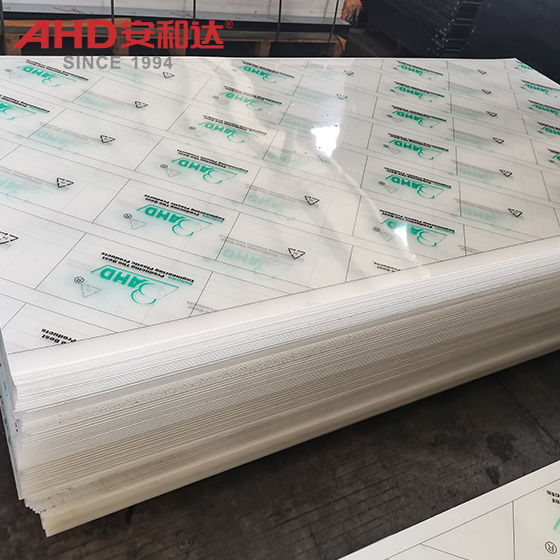
AHD PP Sheet
Besides the combustion method, there are several other simple and quick methods for identifying plastics, but sometimes they are not completely accurate and require cross-verification using multiple methods:
1. Density Method (Float-Sink Method)
This is the simplest identification method, utilizing the density differences between different plastics:
Floating in water: PP (0.90-0.91), PE (0.92-0.96), PS (1.05-1.07)
Suspended in water: ABS (1.05-1.07), PMMA (1.18-1.20)
Sinking in water: PVC (1.35-1.45), PET (1.37-1.45), PC (1.20-1.22)
Procedure: Place the plastic sample in clean water and observe its floating or sinking state. A saturated saline solution (density approximately 1.2) can be used for more precise differentiation.
2. Sound Method: Tap or bend the plastic and listen to its sound characteristics:
PE/PP: Dull, soft sound
PS/ABS: Crisp, loud sound
PC: Relatively crisp sound, flexible
PVC: Relatively hard sound, flexible
3. Touch Method: Feel the texture and hardness of the plastic by touch:
PE/PP: Smooth surface, waxy feel, relatively soft
PS: Relatively hard, easily broken, whitish fracture surface
PVC: Relatively hard, flexible, not easily broken
ABS: Smooth surface, flexible, not easily broken
PC: Smooth surface, high transparency, excellent flexibility
In practical applications, it is recommended to use multiple methods in combination to improve the accuracy of identification. For example, first use the water flotation method for preliminary judgment, and then combine it with characteristics such as touch and sound for confirmation. For occasions requiring precise identification, it is recommended to use professional equipment such as infrared spectrometers.

AHD PC Sheet