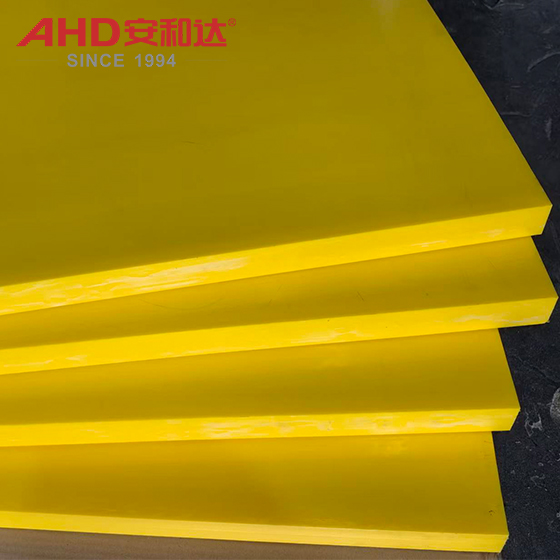
POM is a polymer obtained from formaldehyde and other raw materials. POM-H (polyoxymethylene homopolymer) and POM-C (polyoxymethylene copolymer) are high-density, highly crystalline thermoplastic engineering plastics. They possess good physical, mechanical, and chemical properties, especially excellent abrasion resistance. POM is a crystalline plastic with a distinct melting point; once reached, the melt viscosity decreases rapidly. Decomposition will occur if the temperature exceeds a certain limit or the melt is heated for too long. Copper is a catalyst for POM degradation; copper or copper materials should be avoided in areas in contact with the POM melt.
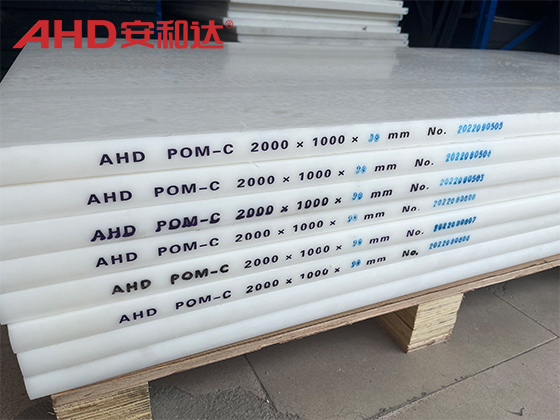
Processing Characteristics of POM
1. The rheological properties of POM melt are non-Newtonian; its viscosity is not sensitive to temperature. For injection molding, improving flow properties can be achieved by increasing the injection rate and reducing the nozzle size.
2. POM has high crystallinity, a narrow melting range, and significant molding shrinkage (up to 3.5%). For thick plastic products, careful pressure holding and material replenishment are crucial to prevent excessive shrinkage cavities and scrapping.
3. POM has poor thermal stability. Excessive temperature or prolonged holding time can cause decomposition; especially above 250 degrees Celsius, the decomposition rate accelerates, releasing formaldehyde gas that strongly irritates the eyes. In severe cases, bubbles or discoloration may occur, and in extreme situations, explosions are possible. Therefore, strict temperature and holding time control are essential. Additionally, antioxidants and formaldehyde absorbers must be added.
4. POM solidifies rapidly, easily causing surface defects such as wrinkles, blemishes, and weld lines. This can be addressed by increasing injection speed and mold temperature.
5. POM products are prone to internal stress and significant post-molding shrinkage, requiring post-processing. Post-treatment conditions are as follows: thickness below 6mm, temperature 100°C, time 0.25~1 hour; hardness below 6mm, temperature 120~130°C, time 4~6 hours.
6. POM has a low water absorption rate, but drying treatment can improve the surface gloss of the product. Drying conditions are: temperature 110~120°C, time 3~5 hours.
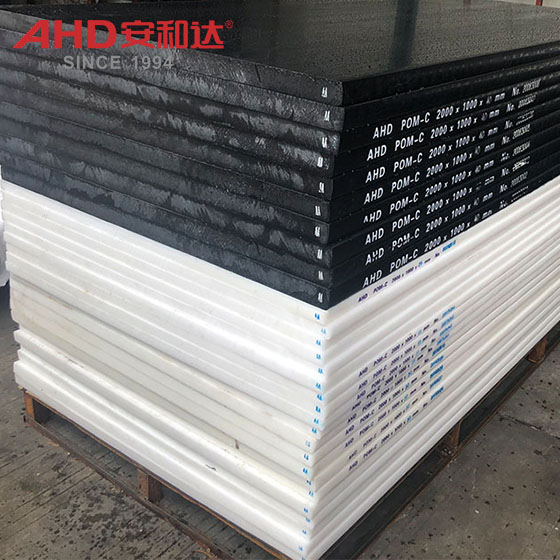
Processing Precautions:
Mold Design Considerations: POM has good flowability, making it suitable for thin-walled products. However, the gate should be designed to be relatively large to avoid jetting during high-speed molten injection. The venting system should be adequately designed to prevent bubbles or scorching caused by the inability to expel decomposition gases.
Injection Molding Process Optimization: Injection pressure is typically controlled between 80-120 MPa, and holding pressure is 60-80% of the injection pressure. Mold temperature is recommended to be controlled between 80-100℃. Too low a mold temperature will result in a rough surface on the product, while too high a mold temperature will prolong the molding cycle.
Material Selection: POM comes in two types: homopolymer and copolymer. Homopolymer POM has higher crystallinity and better mechanical properties, but slightly lower thermal stability; copolymer POM has better thermal stability and a wider processing window, making it suitable for applications with high thermal stability requirements.
Post-treatment Recommendations: In addition to the annealing treatment you mentioned, for products with high dimensional accuracy requirements, it is recommended to allow them to age naturally at room temperature for 24-48 hours to fully release internal stress.
Safety Precautions: The formaldehyde gas produced by the decomposition of POM is irritating. The processing workshop should be well ventilated, and operators should wear protective masks and goggles.
AHD Company has 31 years of experience in the plastic sheet and rod industry. We possess in-depth knowledge of the processing characteristics of POM and other engineering plastics, ensuring superior product quality, stable performance, and highly competitive pricing. With our professional technology and reliable products, we sincerely welcome inquiries from all customers.
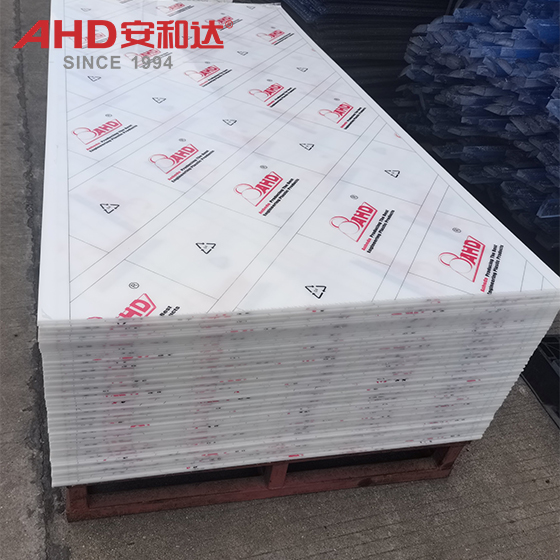
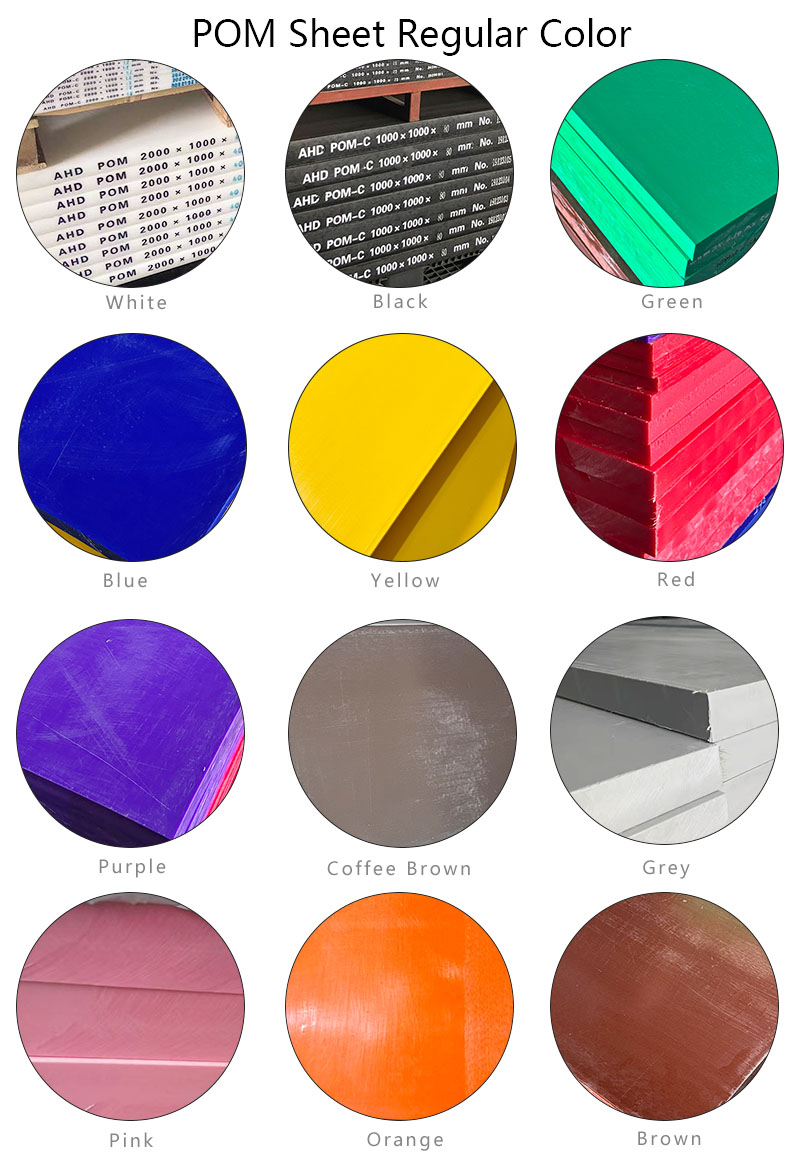
AHD offers POM Sheet in thicknesses ranging from 1 to 250mm
Molding Process
1. Injection Temperature
Polyoxymethylene (POM) is a heat-sensitive, crystalline polymer with a distinct melting point. The injection temperature must be higher than its melting point for the material to maintain its flowability and be suitable for molding. The optimal injection temperature is between 190°C and 200°C. Increasing the injection temperature will have varying degrees of impact on the mechanical properties of POM: Generally, an injection temperature 20°C to 30°C above the melting point not only results in better overall physical and mechanical properties but also produces products with a smooth, flat, and bubble-free surface. For thin-walled products, the temperature can be increased to 210°C. Exceeding this temperature will not improve the flowability of the molten material and may even lead to material decomposition.
Because POM is a plastic with poor thermal stability, the relationship between the temperature and time the material is subjected to is inversely proportional; that is, the higher the temperature, the shorter the time the material needs to withstand. This point must be carefully considered during molding.
2. Injection Pressure
Increasing injection pressure has little effect on the tensile strength of POM (polyoxymethylene), only a slight increase in relative elongation, while significantly improving the drop ball impact strength. Therefore, appropriately increasing the injection pressure not only does not damage the mechanical properties of the product but also improves the material's flowability and appearance. However, excessively high injection pressure can cause mold deformation and burrs on the product.
3. Holding Time
POM experiences significant volume shrinkage due to crystallization, and the melt cooling rate exceeds the melting rate. Therefore, holding time is crucial to prevent shrinkage dents and voids in the product. A longer holding time is beneficial for the product's dimensions and appearance. However, the holding time must be compatible with the gate sealing time to avoid delaying production efficiency.
4. Injection Speed
Increasing the injection speed significantly improves the appearance quality of POM products. This is because as the injection speed increases, the shear rate also increases, which helps reduce the melt viscosity, thereby improving melt flowability. Simultaneously, due to less heat loss within the product and the heat generated by friction, the material temperature is higher than during low-speed injection, resulting in a relatively slower cooling rate and a smoother, flatter product surface. Therefore, except for particularly thick products, a faster injection speed is generally used. Fast filling is particularly ideal for thin-walled products, preventing premature melt solidification and wrinkle formation.
5. Mold Temperature The effects of mold temperature on polyoxymethylene (POM) products are roughly as follows:
A. Crystallinity At higher mold temperatures, the melt cools slowly within the mold cavity, which is beneficial for increasing crystallinity. This is a common characteristic of most crystalline polymers during molding.
However, because POM has a high degree of crystallinity and a fast crystallization rate, changes in mold temperature do not significantly affect crystallinity.
B. Molecular Orientation When the mold temperature is low, the melt near the mold wall experiences greater shear force after entering the mold cavity. Its molecular chains solidify under high stress, resulting in significant molecular orientation and higher internal stress in the product. Increased mold temperature can alleviate stress in the molecular chains, reduce molecular orientation, and result in a smoother product.
C. Shrinkage Rate: Because increased mold temperature increases product shrinkage, it must be strictly controlled during the molding process, especially for products requiring high dimensional precision.
From the perspectives of practical experience, material segmentation, and operational safety, the following important points are added:
Ball Temperature Control: During POM processing, the barrel temperature should be distributed in a stepped manner, higher at the beginning and lower at the end. The nozzle and the front section of the barrel should have a slightly higher temperature to facilitate plasticization and mold filling; the temperature in the middle and rear sections (near the discharge port) should be significantly lower (usually 20-30°C lower than the melting section), forming a "thermal barrier" to prevent the material from being heated too early in the barrel and decomposing due to excessive residence time.
"Residence Time" Management: This is crucial to avoid decomposition. Before shutdown, the barrel must be cleaned with a heat-stable plastic (such as HDPE) to prevent the decomposition of POM remaining in the high-temperature barrel upon restarting. During production, if a pause of more than 15 minutes is required, the barrel temperature should be lowered to below 150°C and maintained at that temperature.
Mold Venting: POM melt has good fluidity, cools quickly, and may release trace amounts of gas; therefore, mold venting must be particularly thorough. Poor venting can easily lead to defects such as scorching, insufficient filling, and obvious weld lines in the finished product. The recommended depth for venting grooves is 0.01-0.02 mm.
Material Type Differences: POM is available in homopolymer and copolymer forms. Generally, homopolymer POM has a higher melting point (~175℃) and higher strength, but a narrower processing temperature range and slightly lower thermal stability. Copolymer POM has a slightly lower melting point (~165℃), but better thermal stability, alkali resistance, and a wider processing window. The material type must be confirmed first when developing a process.
Gate and Runner: Short, wide runners and large-size gates (such as fan-shaped gates) should be designed to reduce flow resistance, minimize shear overheating, and facilitate pressure holding and shrinkage compensation. Submarine gates and spot gates are prone to material decomposition due to high shear and should be used with caution.
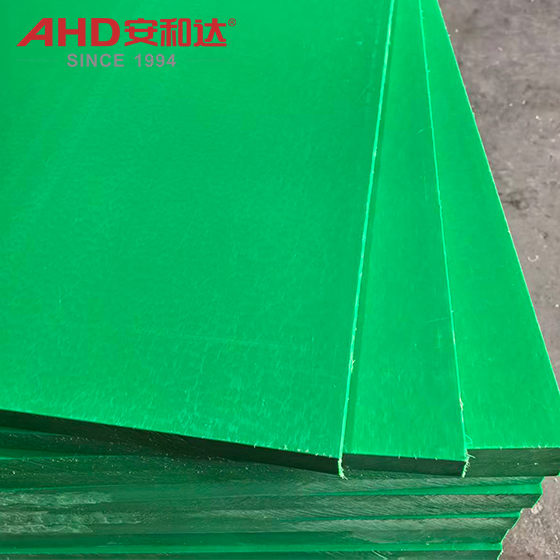
The performance of engineering plastics such as POM highly depends on a deep understanding of the integrated approach of materials, processing, and molding technology. AHD has been deeply involved in the engineering plastics field for over thirty years, accumulating unique process insights across the entire chain, from molecular property analysis and rheological control to precision molding. We are not only adept at the precise balance of temperature, pressure, and mold design, but also excel at optimizing the intrinsic performance and appearance quality of products through process innovation, thereby ensuring stability and reliability from the source.
Based on this foundation, our plastic sheets, rods, and other profiles combine superior performance with excellent cost-effectiveness, truly achieving "high quality at a reasonable price." We sincerely invite partners from all sectors to inquire about cooperation and create value through professionalism.