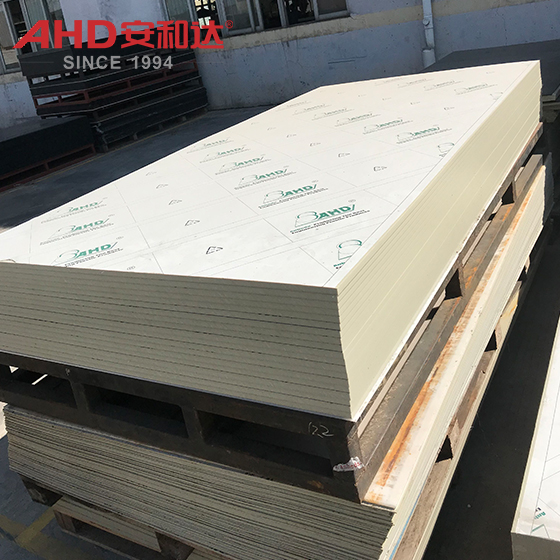
As aquaculture transitions towards factory-style, high-density, and environmentally friendly practices, material upgrades have become crucial for enhancing farming efficiency. PP (polypropylene) sheets, with their core advantages of being non-toxic, environmentally friendly, water-resistant, corrosion-resistant, and easy to process, are gradually replacing traditional materials and becoming the preferred solution for modern aquaculture. From intelligent recirculating aquaculture systems' rearing tanks and tiered filter boxes to fry holding ponds and water purification tanks, PP sheets are adaptable to various scenarios, addressing the pain points of water pollution and equipment aging in traditional aquaculture while also facilitating large-scale development through customized processing. The following section will analyze in detail the core application scenarios, performance advantages, and practical cases of PP sheets in aquaculture, providing a reference for industry upgrades.
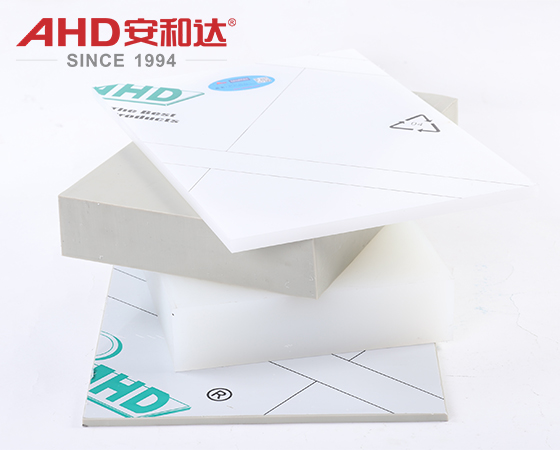
Core Application Scenarios
PP Sheet is a versatile tool in aquaculture, primarily due to their water resistance, corrosion resistance, and ease of processing. Common uses fall into the following categories:
1. Core Components of Filtration Systems
Filter Boxes/Drip Boxes: Layered boxes like the one in your picture, used as sedimentation chambers and filter media chambers (for filter cotton and bio-balls). The layered design improves water purification efficiency.
Filter Tanks/Overflow Tanks: Embedded at the edge of the fishpond, collecting wastewater and directing it to the filtration equipment. The sealing performance of PP sheets prevents leakage.
2. Aquaculture Containers/Facilities
Holding Boxes/Hatching Boxes: Boxes welded from PP sheets with drainage outlets, used for temporary rearing of fry and isolation of sick fish. They are clean and easy to disinfect.
Fishpond Partitions/Baffles: In large ponds, PP sheets are used to divide different areas (such as fry rearing areas and adult fish areas) for easier management.
3. Auxiliary Tools
Drainage pipes/connectors: Replace metal pipes to prevent rusting from prolonged immersion in water;
Escape prevention boards/guardrails: Install PP sheets around the fishpond to prevent fish fry from jumping out, and also withstand sun and rain.
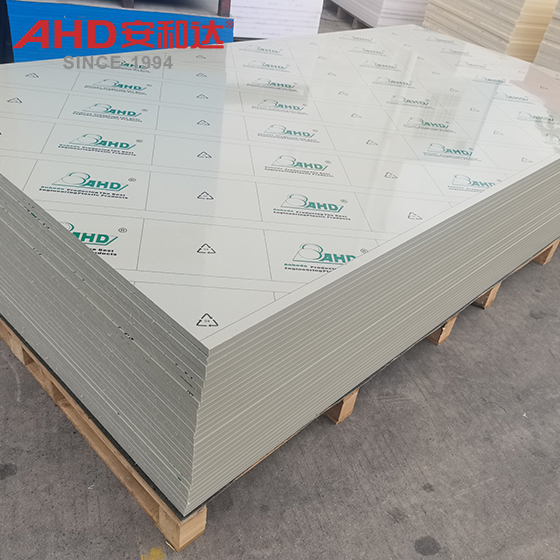
Advantages of PP Sheets
PP sheet (Polypropylene Sheet) offer significant advantages primarily in meeting the core needs of aquaculture applications:
1. Water and Corrosion Resistance
PP sheets are resistant to embrittlement (especially in low-temperature environments) even when submerged in water/aquaculture wastewater for extended periods, and they don't age easily due to prolonged dampness. They are resistant to corrosion from ammonia nitrogen, disinfectants, and other chemicals in aquaculture water, exhibiting stronger chemical resistance than PE.
2. Easy Processing and Maintenance
PP sheets can be welded and cut into any chamber/tank structure (adapting to the layering and perforation requirements of filter boxes), offering greater flexibility than PE (difficult to weld) and rigid PVC (prone to cracking). Their smooth surface prevents dirt accumulation, allowing for easy cleaning with a simple rinse, resulting in low maintenance costs.
3. Safety and Durability
Food-grade PP is non-toxic and harmless, unlike PVC which leach harmful substances, making it suitable for contact with fish fry/edible aquatic products. It boasts strong impact resistance, withstands outdoor sun exposure, and typically has a lifespan of 5-8 years.
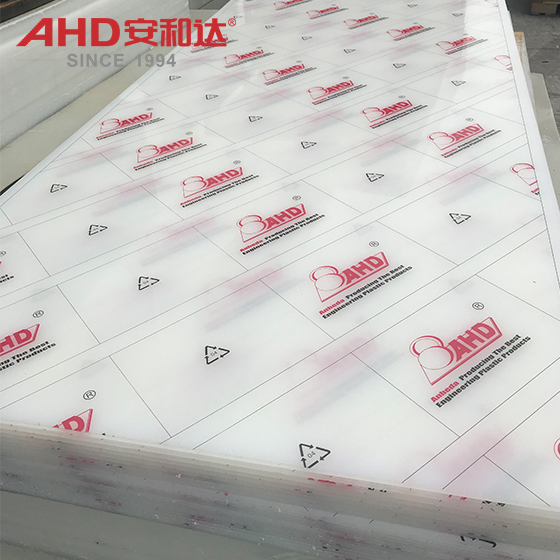
Is HDPE Sheet unsuitable for aquaculture compared to PP sheet?
HDPE sheets aren't "unsuitable" for aquaculture, but they are suitable for fewer applications than PP sheets. Each has its strengths and weaknesses:
1. Disadvantages of HDPE Plastic sheets (relative to PP sheets):
Poor processing flexibility: HDPE is difficult to weld (PP sheets can be welded into any type of chamber/filter box), making complex structures (such as layered filter chambers) more expensive;
Surface prone to contamination: HDPE surfaces are stickier than PP sheets, easily accumulating uneaten feed and algae after prolonged contact with aquaculture wastewater, making cleaning more difficult;
Crispy at low temperatures: In northern winter outdoor environments, HDPE's impact resistance decreases, making it more prone to cracking than PP sheets.
2. Suitable applications for HDPE sheets:
It is more suitable for large, simple tanks (such as temporary storage tanks or coarse filtration sedimentation tanks) – because HDPE has good toughness and puncture resistance, suitable for large-area "container-like" structures, but not for precision filtration equipment.
Therefore, the conclusion is that HDPE is not unusable, but it is not as suitable as PP sheets for core aquaculture equipment such as "filtration systems and complex storage chambers".
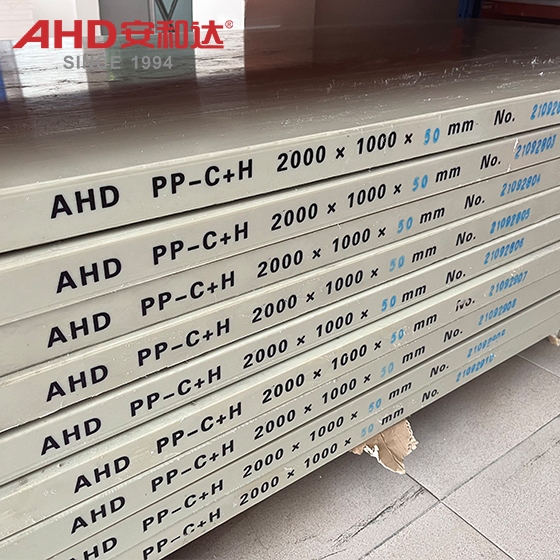
Choosing the right plastic sheets for aquaculture hinges on matching the core needs of the aquaculture scenario (such as equipment type, water environment, and processing requirements) with the specific characteristics of different plastic sheets.
Core Selection Requirements
Water Resistance and Corrosion Resistance: The sheets must withstand long-term immersion in aquaculture water (containing ammonia nitrogen, disinfectants, and salinity) without leaching harmful substances.
Processing Performance: Whether welding, cutting, or drilling is required determines the sheet's adaptability to complex structures.
Safety: For scenarios involving contact with fish fry or edible aquatic products, food-grade materials are necessary to prevent toxin release.
Durability: For outdoor use, the sheets must be resistant to sunlight and low/high temperature aging to extend equipment lifespan.
Cost-Effectiveness: Balancing initial purchase costs with ongoing maintenance costs based on the lifespan of the equipment.

Precautions for Using PP Sheets in Aquaculture
To maximize the performance advantages of PP sheets in aquaculture, it is crucial to control four core aspects: material selection, processing, installation, and maintenance. Specific precautions are as follows:
1. Prioritize Food-Grade New Material
Equipment that comes into contact with fish fry and edible aquatic products (such as holding tanks and hatching tanks) must use food-grade PP sheets to prevent harmful substances from leaching from recycled materials and polluting the water. For outdoor use, choose sheets with added UV protectants to prevent aging and brittleness from prolonged sun exposure.
2. Strictly Control Welding Quality During Processing
Welding is a critical process in the fabrication of filter boxes and water storage tanks using PP sheets. Ensure that welds are full and free of pores, especially at the layered partitions of the filter chamber and the drain outlet interfaces, to prevent leaks due to weak welds. After cutting and opening holes, grind off any burrs to prevent scratching aquatic products or snagging filter media.
3. Installation Adapted to Aquaculture Environment
Large filter boxes require reinforcing braces to prevent deformation due to water pressure. Outdoor PP sheet equipment should have a non-slip mat at the bottom to prevent damage from direct contact with sharp objects. In seawater aquaculture settings, the surface of the filter panels should be inspected regularly, and any attached sea salt crystals should be cleaned promptly.
4. Daily Maintenance Emphasizing Scientific Cleaning
When cleaning, prioritize rinsing with clean water. For stubborn stains, use a neutral detergent. Strong acids and alkalis are strictly prohibited to avoid corroding the filter panels. Idle equipment should be placed in a cool, ventilated area to prevent deformation from direct sunlight or heavy pressure.
In summary, PP sheets, with their performance advantages suitable for all scenarios in aquaculture, have become a core material driving cost reduction and efficiency improvement in the industry. As a manufacturer with 31 years of experience in the plastic sheet and rod field, AHD, relying on its mature production processes and export-quality products, can provide food-grade, UV-resistant, and acid/alkali-resistant PP sheet products, supporting customized sizes and thicknesses to meet diverse subsequent processing needs. AHD PP sheets are one of our best-selling products and have received positive feedback from numerous buyers. Welcome to inquire!