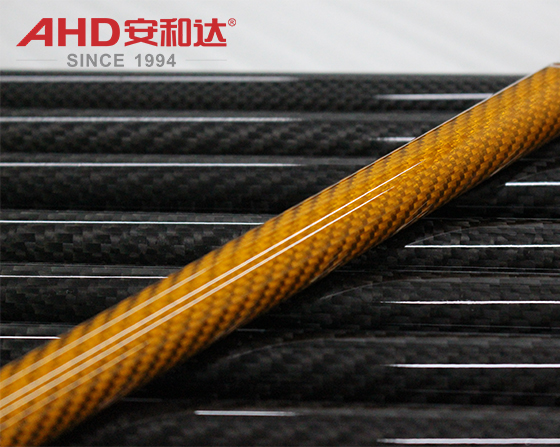
The base material of Carbonfiber Tube is carbon fiber + resin. Carbon fiber itself is black and cannot be directly dyed. Therefore, color effects are achieved entirely through resin color matching, surface coating, and customized prepreg. All processes must be completed during the carbon fiber tube forming/finishing stage, and the process also takes into account the protection of the tube material (such as UV protection and scratch resistance). Below are three mature core processes currently used in the industry, ranked by cost-effectiveness, mass production capability, and degree of customization. These are also the mainstream manufacturing methods used by different manufacturers:
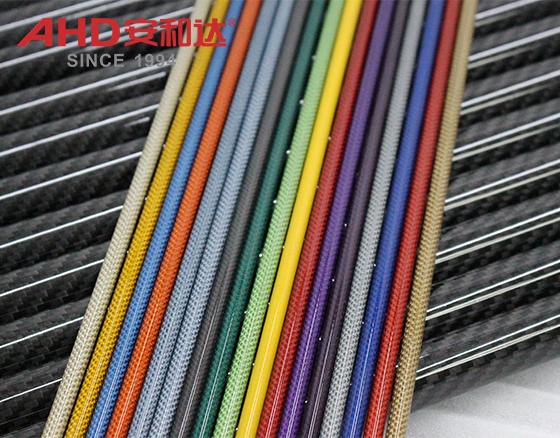
Ⅰ. Basic Process: Resin Color Matching Method (Internal Dyeing)
Most Commonly Used and Most Durable
This is the core basic process for coloring carbon fiber pipe, and the key to ensuring the color does not peel or fade. It's a "from the inside out" color matching method, applicable to all colored carbon fiber tubes.
Process Principle: Before carbon fiber tube molding, color paste/powder is added to a liquid resin matrix (mainly epoxy resin) in a specific ratio. The resin is then mixed evenly to achieve color matching. The colored resin is then laminated with carbon fiber cloth (prepreg) and pultruded/wound to form the carbon fiber tube.
Core Features: The color is integrated into the resin, becoming a unified whole with the tube. It will not fade or delaminate, is scratch-resistant and wear-resistant, and does not easily fade even in outdoor use, while maintaining the mechanical properties of the carbon fiber tube.
Process Advantages: It can achieve solid color and colored carbon fiber texture effects, has high mass production capability, and moderate cost, making it the first choice for color production of industrial and civilian carbon fiber tubes.
Minor Details: The depth of color can be adjusted by adding color paste. Lighter colors (such as white and light blue) require a higher proportion of color paste, which will slightly increase the weight of the tube (negligible). Darker colors (red, blue, and black) have greater compatibility.
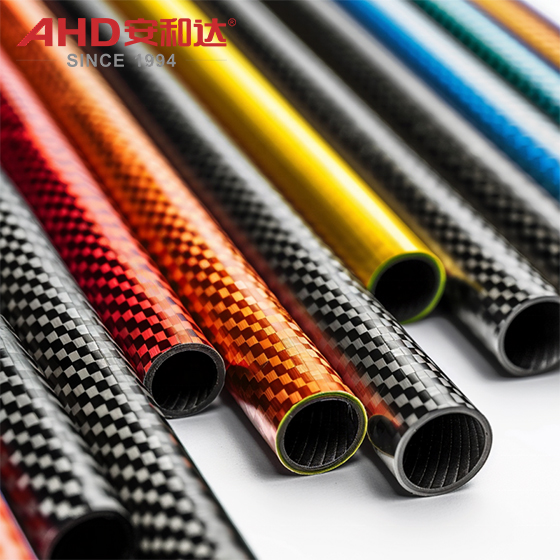
Ⅱ. Conventional Process: Surface Coating Method
External coating, auxiliary color matching/texture enhancement
This process is often used as an auxiliary process to resin color matching, or for post-processing color modification of basic black-textured carbon fiber tubes. It is a "from the outside in" color coating and is suitable for scenarios where color durability is not a high priority when used alone.
Process Principle: A specialized carbon fiber coating (scratch-resistant, UV-resistant polyurethane/epoxy resin paint) is sprayed/rolled onto the surface of the formed carbon fiber tube. The coating can be mixed to any color. After spraying, it undergoes curing to form a colored surface coating.
Sub-types:
Clear Coating: No color matching, only gloss/matte finish, protecting carbon fibers and improving scratch resistance.
Colored Coating: Color matching available, can be solid color or gradient, can cover carbon fibers or apply a thin layer to expose them.
Core Features: Simple process, flexible customization, can quickly achieve any color, low cost; however, the coating is surface-adhesive, and long-term friction and impact may cause paint peeling and scratches, requiring subsequent protection.
Process Optimization: High-end manufacturers will perform a sealing/curing treatment after spraying to improve the coating's adhesion and wear resistance, approaching the durability of resin-based color matching methods.
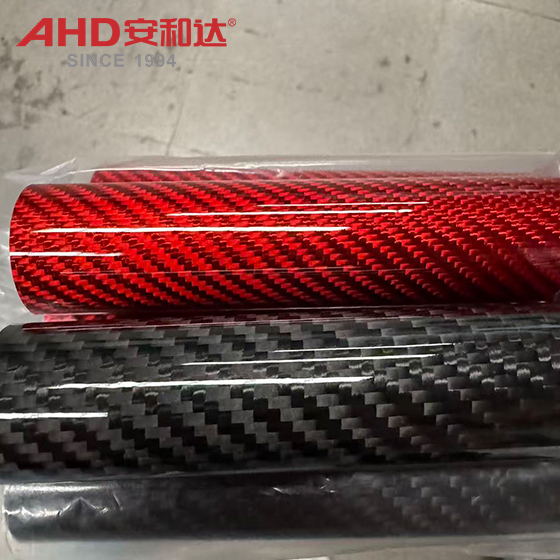
Ⅲ. High-End Process: Customized Colored Prepreg Method
Customized, Highest-End, Most Durable
This is the core process for high-end customized carbon fiber tubes, suitable for scenarios with high requirements for color, texture, and performance. It is also a common process in aerospace and high-end sports equipment.
Process Principle: Customized colored carbon fiber prepregs are directly ordered from carbon fiber cloth manufacturers. During the resin impregnation stage of the carbon fiber cloth, the manufacturer completes resin color matching and carbon fiber treatment (such as metallization). After the colored prepreg is produced, it is then shaped into carbon fiber tubes through winding/pultrusion processes.
Core Features: Extremely high color uniformity, best bonding with carbon fiber cloth, durability and weather resistance far exceeding the previous two processes, capable of achieving complex colored carbon textures and metallic finishes, while fully preserving the mechanical properties of the carbon fiber tube.
Process Advantages: Most exquisite appearance, no risk of delamination or color fading, suitable for high-end customization; Disadvantages: Long customization cycle, high cost, only suitable for small-batch, high-end applications.
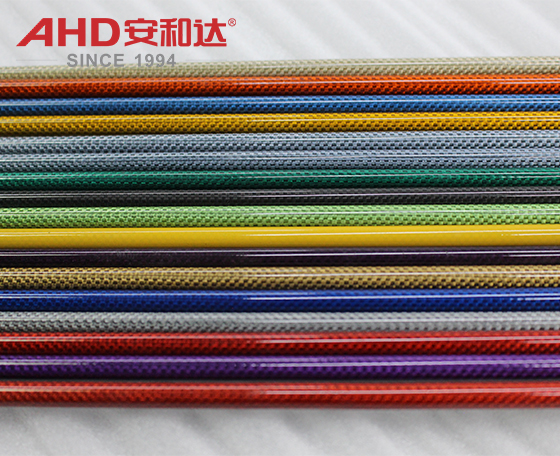
Ⅳ. Additional Information: Special Effects Techniques
Metallic Texture / Gradient
Metallic Texture Achieved: Adding metallic powder (gold, silver, copper powder) to the resin, or spraying a metallic paint + clear varnish onto the surface. The former is an internal dyeing process, offering high durability; the latter is an external coating, resulting in a brighter texture.
Gradient / Color Matching Achieved: Achieved through segmented resin color matching (molding stage) or segmented spraying + masking (surface treatment stage). Gradient effects are mostly custom-made by hand, making mass production difficult and costly.
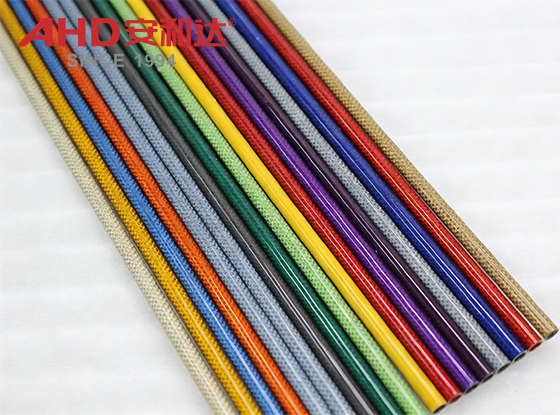
Ⅴ. Comparison of Different Appearance Processes & Purchasing Recommendations
Different manufacturing processes determine the appearance, durability, and cost of carbon fiber tubing. When choosing, you can match the process to your application scenario, batch size, and budget. Below is a clear and easy-to-understand comparison table:
| Manufacturing Process | Advantages | Weaknesses | Cost | Applicable / Mass Production |
| Resin Color Matching Method | Colors do not fade, are wear-resistant, and have high mass production capability, balancing performance and affordability. | Color options are limited by the type of resin used; lighter colors are slightly more expensive. | Medium | Industrial equipment, consumer goods, medium to large batch production. |
| Surface Coating Method | Flexible color matching, any color, simple process, low cost | Prone to scratches and paint peeling with long-term use; adhesion is generally poor | Low | Suitable for short-term use, decorative applications, small batches/color changes |
| Custom-made Colored Prepreg | Uniform color, extremely high durability, and the most refined finish | Long customization cycle, high cost, and significant difficulty in mass production | High | High-end customization, aerospace, high-end sports equipment, small batch production |
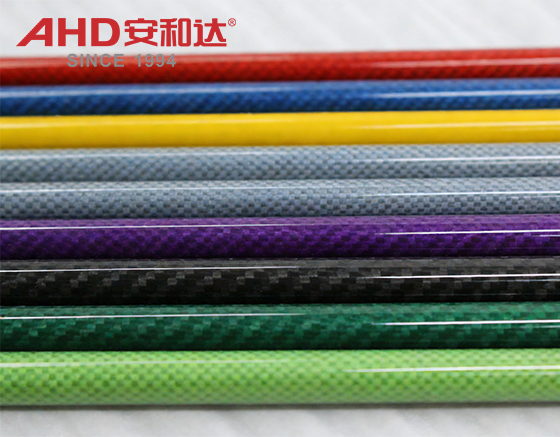
Ⅵ. Additional Considerations for Choosing the Appearance of Carbon Fiber Tubes
For outdoor use, prioritize "internal dyeing": Resin-dyed tubes are UV-resistant and rain-resistant, and will not fade or peel due to outdoor environments. Surface-coated tubes require additional UV-resistant varnish for outdoor use; otherwise, they are prone to aging and paint peeling.
For industrial applications, prioritize "matte carbon fiber texture": Matte finishes are fingerprint-resistant, non-reflective, avoid strong light interference during equipment operation, and are scratch-resistant, making them suitable for long-term use in industrial environments.
For decorative applications, flexible matching is possible: Colored carbon fiber textures and metallic finishes offer good visual effects and can be matched with the overall style of furniture and decoration. Glossy finishes are recommended to enhance the texture.
Avoid "thick-coated colored tubes": Some manufacturers apply a thick coating to the surface of black-textured tubes to achieve color to save costs. Thick coatings increase the weight of the tube and are prone to peeling and cracking, negating the lightweight advantages of carbon fiber tubes.
Customized appearances require confirmation. "Process Details": When customizing colored carbon fiber tubes, it is necessary to clarify with the manufacturer whether it is resin internal dyeing or surface spraying, and request test results on scratch resistance and weather resistance to avoid appearance problems later.