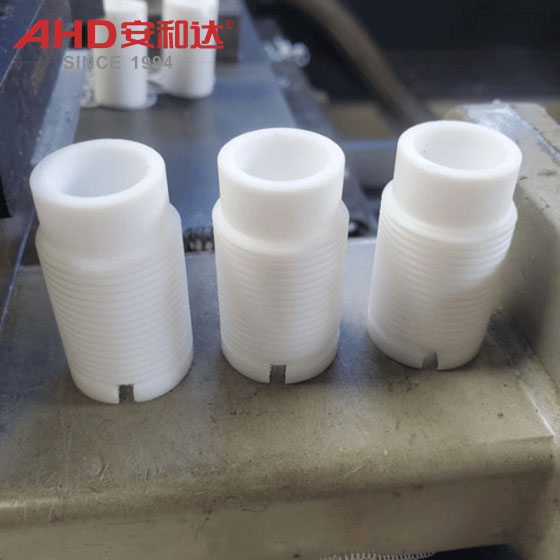
PCTFE is an abbreviation for polychlorotrifluoroethylene, an important high-performance fluoropolymer. It is polymerized from trifluorochloroethylene monomers. This material belongs to the fluoroplastics family and shares similarities with the more well-known PTFE (polytetrafluoroethylene), but differs in chemical structure and properties. PCTFE molecules contain fluorine and chlorine atoms, a unique composition that endows them with distinctive physical and chemical properties.
Compared to other plastics, PCTFE exhibits high chemical stability. It demonstrates good resistance to most strong acids, strong alkalis, organic solvents, and oxidants. At room temperature or moderate temperatures, exposure to these chemicals does not result in significant swelling, softening, or degradation. This characteristic makes it suitable for industrial environments requiring prolonged exposure to corrosive media.

Features and Advantages
1. Unparalleled Barrier Properties
Water Vapor Barrier: This is PCTFE's trump card. Among all plastics, it has the lowest water vapor permeability, more than 1000 times lower than parts form PTFE Sheet and PTFE Rod. This makes it ideal for environments requiring absolute moisture protection.
Gas Barrier: Excellent barrier properties against common gases such as oxygen, nitrogen, and carbon dioxide, second only to EVOH (but EVOH is susceptible to moisture, while PCTFE is unaffected by humidity).
Advantages: Provides near-permanent protection for contents, preventing deterioration, oxidation, moisture absorption, or concentration changes due to moisture or gas penetration.
2. Outstanding Chemical Stability and Purity
Corrosion Resistance: Resistant to almost all strong acids, strong alkalis, oxidants, and halogens, maintaining stability even in extreme media such as aqua regia, fuming sulfuric acid, and liquid oxygen.
High Purity: Inert material, it does not easily release ions, and impurities can be controlled through high-temperature, high-purity processing. This makes it ideal for applications in fields like semiconductors and pharmaceuticals where "zero tolerance" for cleanliness and chemical contamination is required.
3. Wide Temperature Range and Dimensional Stability
Operating Temperature: -200°C to +200°C. It maintains its toughness and prevents brittleness in cryogenic environments such as liquid nitrogen and liquid oxygen, while also operating stably at higher temperatures.
Low Cold Flow: Under long-term stress, its deformation (creep) is much smaller than PTFE, exhibiting excellent dimensional stability, making it suitable for precision structural components.
4. Excellent Optical and Electrical Properties
Optical Transparency: It possesses high transparency across a wide wavelength range from ultraviolet and visible light to infrared, with high light transmittance and does not yellow over time or with environmental changes.
Electrical Insulation: Its dielectric constant and loss factor remain stable over a wide temperature and frequency range, making it an excellent high-frequency insulating material.
5. Unique Mechanical and Processing Properties
High Rigidity and High Strength: Among fluoroplastics, its hardness and compressive strength are outstanding.
Melt-processable: Unlike PTFE Plate or PTFE Round Bar, which is not melt-processable, PCTFE can be injection molded, extruded, and compression molded above its melting point (approximately 210-215°C), enabling the manufacture of complex-shaped and dimensionally precise parts. This is a significant manufacturing advantage over PTFE.
Disadvantages:
High cost: Raw material and processing costs are significantly higher than general-purpose plastics, even exceeding those of PTFE.
Relatively low toughness: More brittle than PTFE and less impact-resistant.
Lower upper limit of temperature resistance than PTFE: Long-term operating temperature is approximately 60°C lower than PTFE.
Specific Application Areas
Based on the above characteristics, PCTFE plays an irreplaceable role in the following high-end fields:
1. Pharmaceutical and Medical Packaging (One of the largest application areas)
Primary Packaging:
Blister Packaging: Used for high-end pharmaceuticals that are highly hygroscopic and prone to deterioration (such as orally disintegrating tablets, certain biological agents), ensuring absolute dryness during the shelf life.
Syringe Barrels/Plugs: Used for pre-filling syringes, especially for containing moisture-sensitive biological drugs (such as protein drugs, vaccines). Its excellent barrier properties and biocompatibility make it a perfect alternative to glass.
Vials and Stoppers: Used for sealing high-value pharmaceuticals.
Medical Devices: Transparent windows for surgical instruments, components resistant to disinfectant corrosion.
2. Semiconductor and Electronics Industry (Highest Purity Requirements)
Wafer Manufacturing and Transportation:
Wafer Carrier/Cassette: Used for holding and transporting silicon wafers. PCTFE's ultra-high purity, extremely low gas release, and antistatic properties prevent particulate and molecular contamination, protecting invaluable wafers.
Wet Process Components: Used as linings or seals in storage tanks, pipelines, and valves for corrosive chemicals (such as hydrofluoric acid and sulfuric acid).
High-Precision Electronics: High-frequency circuit substrates, microwave components.
3. Chemical and Industrial Applications
Seals: Gaskets and packing rings for pumps, valves, and compressors, especially suitable for highly corrosive media environments.
Sight Glasses and Windows: Transparent observation windows on reactors and pipelines, corrosion-resistant and transparent.
Metrology Devices: Precision components for flow meters and level gauges.
4. Aerospace and Defense
Cryogenic Seals: Seals and gaskets for liquid oxygen and liquid hydrogen rocket fuel systems. PCTFE is one of the few materials that exhibits good toughness and is non-flammable in liquid oxygen.
Aerospace Electronic Equipment: High-reliability connectors and terminals.
Optical windows: Transparent covers for missile seekers and detection equipment, combining light transmission, weather resistance, and scratch resistance.
5. Optics and Specialized Fields
Optical components: Ultraviolet lamp covers, infrared spectrometer windows, and laser equipment lenses.
Metrological standards: Weights used in high-precision balances, due to their dimensional stability and non-hygroscopic nature.

Comparison with PTFE (polytetrafluoroethylene)
| Properties | PCTFE | PTFE (Polytetrafluoroethylene) |
| Barrier properties | Higher (better against water vapor/gases) | Slightly lower |
| Processability | Melt-processable (injection molding, extrusion) | Requires sintering, more difficult to process |
| Hardness/Rigidity | Higher | Softer |
| Temperature Resistance | Slightly lower (long-term 200°C) | Higher (long-term 260°C) |
| Cost | Higher | Relatively lower |
PCTFE, with its extreme barrier properties, chemical inertness, low-temperature resistance, and high transparency, is irreplaceable in high-end fields such as semiconductors, pharmaceutical packaging, and aerospace. Despite its higher cost, its unique properties make it a key choice for harsh environments.
PTFE Hollow Rod manufacturing parts