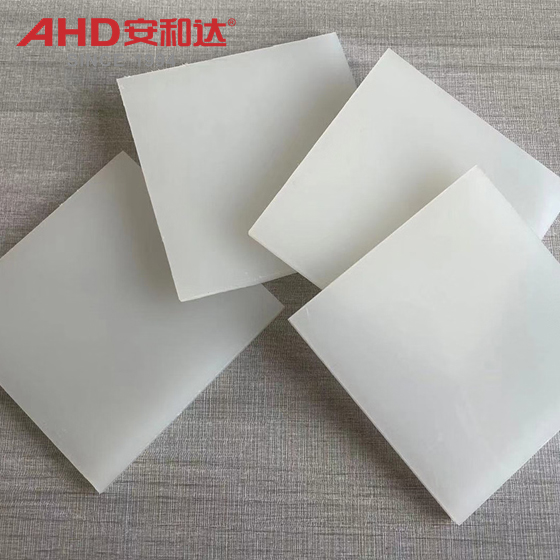
Choosing the right fluorinated polymer material hinges on meeting actual operating requirements and matching the material's core performance characteristics, while also considering processability, cost, and supply stability. Fluorinated materials are diverse (PTFE, PCTFE, FEP, PFA, PVDF, ETFE, etc.), each with its own strengths and weaknesses; there is no "one-size-fits-all" material. Selection must be based on a three-step process: prioritizing operating conditions, considering performance criteria, and assessing feasibility. Below is a practical selection method, along with a comparison of core materials and scenario-based decision-making logic:

Step 1: Define Core Operating Requirements and Prioritize Performance
First, identify six key operating conditions and prioritize them according to "Must Meet > Prioritize > Compromise." This is the foundation for selection and avoids blindly pursuing all performance aspects, which could increase costs:
Temperature Range: Long-term operating temperature (core), short-term peak temperature, and whether there are alternating high and low temperatures (affecting dimensional stability);
Chemical Media: Acids and alkalis in contact (concentration/oxidizing power), solvents, halogenated hydrocarbons, high-purity chemicals, etc., and whether it is a "highly corrosive/ultra-pure operating condition";
Mechanical Requirements: Whether load-bearing/impact resistance is required, whether there are cold flow/creep limitations (critical for sealing/structural components), and friction coefficient requirements;
Functional Requirements: Whether gas/water vapor barrier properties, electrical insulation (high frequency/high voltage), non-stick properties, light transmittance, and flame retardancy are required;
Processing Technology: Whether injection molding/extrusion of complex parts, machining, welding, coating molding, and part precision requirements are required;
Additional Requirements for Application Scenarios: Food-grade/ Medical-grade certification, high semiconductor purity (low metal ions), outdoor weather resistance, radiation resistance, etc.
Example: Seals for high-purity semiconductor chemicals → Priority: Low gas permeability > Strong corrosion resistance > Low metal precipitation > Dimensional stability > Processability;
Example: Seals for high-temperature chemical reactors → Priority: Long-term temperature resistance > Chemical inertness > Low creep > Cost.
Step 2: Match mainstream fluorinated materials according to the core performance screening manual
The core performance boundaries of mainstream commercial fluorinated polymers are crucial for selection. Below are the core performance values and applicable limitations of the 6 most commonly used material categories. Incompatible materials can be quickly eliminated based on the priority established in Step 1:
| Fluorine-containing materials | Abbreviation | Long-term operating temperature | Advantages | Weaknesses | Cost level (PTFE=1) |
| Polytetrafluoroethylene | PTFE | -180℃~260℃ | Highest chemical inertness (resistant to aqua regia), low friction, excellent temperature resistance | Low mechanical strength, high creep, difficult to process (requires sintering) | 1 (Standard) |
| Polychlorotrifluoroethylene | PCTFE | -240℃~175℃ | High strength, low cold flow, excellent gas barrier properties, good low-temperature toughness | PTFE has a lower upper temperature limit and slightly lower chemical stability. | 3~4 |
| Fluorinated ethylene propylene copolymer | FEP | -200℃~200℃ | Melt extrusion/injection molding possible, non-stick, excellent electrical insulation | Moderate mechanical strength, slightly higher creep ratio than PTFE | 2~2.5 |
| Perfluoroalkoxy resin | PFA | -200℃~260℃ | Melt-processable, temperature resistance comparable to PTFE, good weldability, high purity | High cost, moderate mechanical strength | 4~5 |
| Polyvinylidene fluoride | PVDF | -40℃~150℃ | High strength, high toughness, excellent weather resistance, injection moldable/coated | Low temperature resistance, poor resistance to strong oxidizing acids (such as concentrated nitric acid) | 0.8~1 |
| Ethylene-Tetrafluoroethylene Copolymer | ETFE | -40℃~155℃ | High impact resistance, radiation resistance, good light transmittance, lightweight |
Low temperature resistance, moderate chemical stability
|
2~3 |
Step 3: Feasibility Verification to Narrow Down the Final Selection
After performance screening, a second feasibility verification is needed for the remaining 1-2 candidate materials to avoid "performance matching but unfeasible implementation." Focus on three key points:
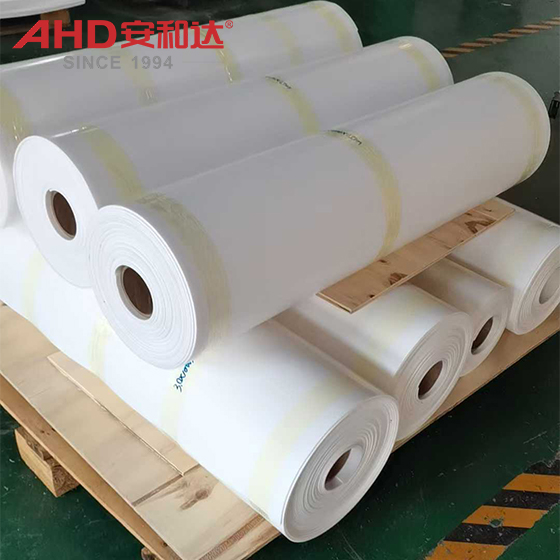
Processing Feasibility: Match the processing capabilities of your own/outsourced suppliers. For example, if there is no sintering process, exclude pure PTFE Sheet; if precision injection molding is required, prioritize PFA/FEP over PTFE.
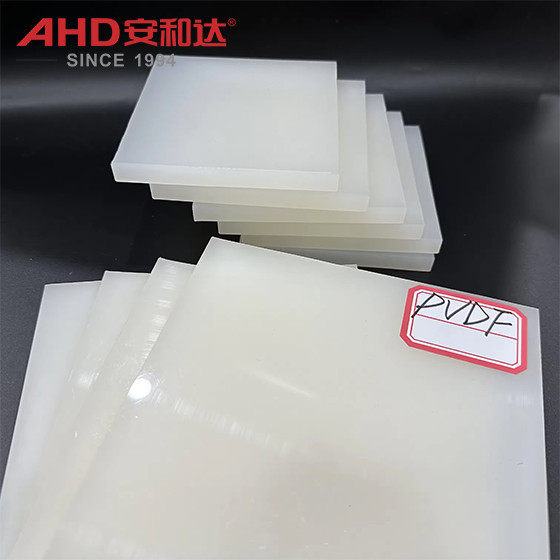
Cost and Cost-Effectiveness: Avoid "over-matching performance." For example, PVDF Sheet is sufficient for room temperature and weak acid conditions; PTFE/PCTFE is unnecessary. For small batches of precision parts, higher costs (PCTFE/PFA) are acceptable; for large batches of general-purpose parts, lower costs (PTFE/PVDF) are preferred.
Supply and Molding Capabilities: Some high-end materials (such as high-purity PCTFE) have long supply cycles; delivery dates need to be confirmed. For parts with complex structures (such as irregular seals), it is necessary to confirm whether the material can be welded/reprocessed.
Step 4: Scenario-Based Precise Material Selection
Based on mainstream industrial application scenarios, we have compiled material recommendations for high-frequency scenarios, covering core areas such as chemical, semiconductor, aerospace, electrical, food, and medical industries. These can be directly matched:
1. Chemical Corrosion Protection/Sealing Scenarios
High-temperature (>200℃) strong corrosion (aqua regia/concentrated acid) sealing/gaskets → PTFE (cost-effective) / PFA (requires complex machining);
Medium-temperature (≤175℃) high-pressure sealing, low creep requirements → PCTFE (high strength / low cold flow);
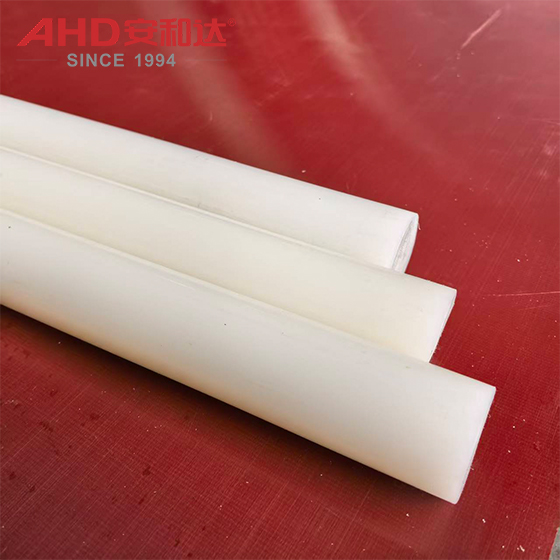
Normal/Medium-temperature (≤150℃) weak acid/alkali, large-volume pipeline/valve linings → PVDF Rod(low cost / high strength);
Chemical pipeline extrusion/welding → FEP (easy to machine) / PFA (high-temperature welding).
2. Semiconductor/Microelectronics Applications
High-purity chemical transport/sealing, low gas permeability → PCTFE (core recommendation, best barrier properties);
Wafer processing equipment components, low metal ion deposition → high-purity PFA/PTFE;
Semiconductor equipment housings/structural components, radiation resistance → ETFE (high impact resistance/radiation resistance).
3. Aerospace/Cryogenic Applications
Liquid nitrogen/liquid oxygen and other ultra-low temperature (<-180℃) sealing/components → PCTFE (low temperature toughness, no brittleness);
Aero-engine high temperature (200-260℃) insulation/sealing → PTFE/PFA;
Aerospace lightweight structural components, weather resistance/radiation resistance → ETFE.
4. Electrical Insulation Scenarios
High-frequency/high-voltage cable sheaths, wide-temperature-range insulation → PTFE (optimal high-frequency performance);
Wire and cable extrusion molding, mass production → FEP (easily melt-extruded, replacing PTFE);
New energy high-voltage equipment insulation, weather resistance → PVDF/ETFE.
5. Food/Medical/Daily-use Scenarios
Non-stick cookware/mold coatings, non-stick requirements → PTFE/FEP (food-grade certification);
Medical infusion tubing/implants, resistance to body fluids + sterilization → PFA/high-purity PTFE Rod;
Food packaging barrier layers, low-temperature resistance → PCTFE (superior barrier properties).
6. Outdoor/Construction/New Energy Scenarios
Photovoltaic backsheets, weather resistance/UV resistance → PVDF Plastic Sheet (mainstream);
Architectural membrane structures, light transmission/impact resistance/lightweighting → ETFE (core material for air cushion membranes);
Lithium-ion battery adhesives/separator coatings → Polyvinylidene Fluoride Sheet (industry standard).
Key Considerations for Selecting and Avoiding Pitfalls
Avoid Blindly Pursuing "Perfluorinated Materials": Perfluorinated materials (PTFE/PCTFE/PFA/FEP) offer superior performance but are expensive. For non-corrosive/high-temperature applications, prioritize semi-fluorinated materials (PVDF/ETFE).
Cold Flow/Creep: Hidden Pitfalls for Seals: PTFE exhibits significant creep. For medium- and high-pressure seals, if PTFE is chosen, it requires modification with glass fiber/carbon fiber fillers, or PCTFE can be selected directly.
Processing Technology Determines Material Limitations: Pure PTFE cannot be melt-molded. For precision injection molding of irregularly shaped parts, exclude pure PTFE and select PFA/FEP/PCTFE.
Modified Fluorinated Materials Can Fill Gaps: When conventional materials are insufficient, consider modified versions (such as glass fiber-filled PTFE (for increased strength), antistatic PTFE, and wear-resistant PCTFE). Modification allows for adaptation to a wider range of applications.