Anheda's Professional Analysis: Core Factors Affecting the Dimensional Stability of PA Nylon Sheets
The dimensional stability of PA6 Sheet refers to the sheet's ability to resist shrinkage, expansion, deformation, and warping caused by changes in the external environment or its own structure during processing, storage, and use. It is a core indicator for selection in applications such as precision machinery, high-precision fixtures, and sealing components.
Based on Anheda's 31 years of experience in PA Nylon Plastic Sheet production and application, the factors affecting its dimensional stability can be divided into four core dimensions: raw materials and the material itself, production and processing technology, external usage environment, and post-processing and installation. These factors are interconnected. Water absorption is the most fundamental inherent factor affecting the dimensional instability of PA nylon sheets, while processing technology and environment are key to amplifying or mitigating this problem.
The following is a detailed breakdown of the influencing factors in each dimension, along with Anheda's targeted dimensional stability optimization solutions, suitable for reference throughout the entire process of production, procurement, and use.
I. Raw Materials and Material Characteristics: Inherent Determinants of Dimensional Stability
The molecular structure and raw material properties of PA nylon are fundamental to its dimensional stability. Differences in dimensional stability between nylon sheets of different types, raw material purity, and modification methods are determined from the source. This is an inherent factor that cannot be completely eliminated through later methods; it can only be optimized.
1. Basic Material Types (Most Core Inherent Factor)
The molecular structure determined by the PA suffix directly affects water absorption and molding shrinkage. These two indicators are the core quantitative basis for dimensional stability. A higher number indicates more carbon atoms, lower water absorption, smaller molding shrinkage, and better dimensional stability. Comparison of core types:
| Base Material | Water Absorption (23℃, 24h, %) | Molding Shrinkage (%) | Dimensional Stability Grade | Core Principles |
| PA6 | Approximately 3.5~4.0 | 1.5~2.5 | general | Industrial general-purpose version: Highest water absorption, worst dimensional stability |
| PA66 | Approximately 2.5~3.0 | 1.2~2.0 | better | Superior to PA6, mainstream choice for high-temperature applications |
| PA610/PA612 | Approximately 1.0~1.5 | 0.8~1.5 | Good | Low water absorption version: Preferred for high-precision applications |
| PA11/PA12 | Approximately 0.5~0.8 | 0.5~1.0 | Excellent | Extremely low water absorption: Dedicated for ultra-precision applications, high cost |
| PA1010 | Approximately 2.0~2.5 | 1.0~1.8 | Fair | Alkali-resistant version: Dimensional stability better than PA6, slightly inferior to PA66 |
Key takeaway: If high dimensional stability is required, prioritizing material selection rather than relying solely on post-processing is the most effective solution.
2. Raw Material Purity and Formulation
Virgin Material vs. Recycled Material: Virgin materials have complete and uniformly distributed molecular chains, resulting in low internal stress and good dimensional stability after molding. Recycled materials have broken molecular chains and contain more impurities, making them prone to uneven shrinkage after molding. Furthermore, water absorption increases due to the increased impurities, leading to large dimensional fluctuations. All Anheda PA nylon sheets are produced using virgin materials, rejecting recycled materials and ensuring basic dimensional stability from the source.
Plasticizer/Additive Addition: Some small manufacturers add excessive amounts of plasticizers and lubricants to reduce processing difficulty. While this improves processability, it can lead to plastic migration in the later stages of sheet production, causing secondary shrinkage/deformation. Especially at high temperatures, the volatilization of additives exacerbates dimensional changes.
3. Modification Methods and Modifying Components
Modification can specifically improve dimensional stability, but improper modification can be counterproductive. Different modification types have significantly different effects on dimensional stability:
Positive Modification (Improves Stability): Adding glass fiber (GF15/30/50) or mineral fillers (talc/calcium carbonate) can reduce water absorption, decrease molding shrinkage, and improve rigidity. The higher the glass fiber filler content, the better the dimensional stability (e.g., the molding shrinkage of GF30 PA6 can be reduced to 0.3~0.8%).
Neutral Modification (No Significant Effect): Adding molybdenum disulfide (MoS2) or graphite (only improves wear resistance) has no significant change in water absorption and shrinkage; dimensional stability is basically the same as the original material.
Modifications Requiring Control (Prone to Uneven Distribution): Antistatic/Conductive Modification (Adding carbon black, metal fibers). If the modifying components are not dispersed evenly, it will lead to localized shrinkage/expansion differences in the board, causing warping. Precise control of the addition ratio and dispersion process is required.
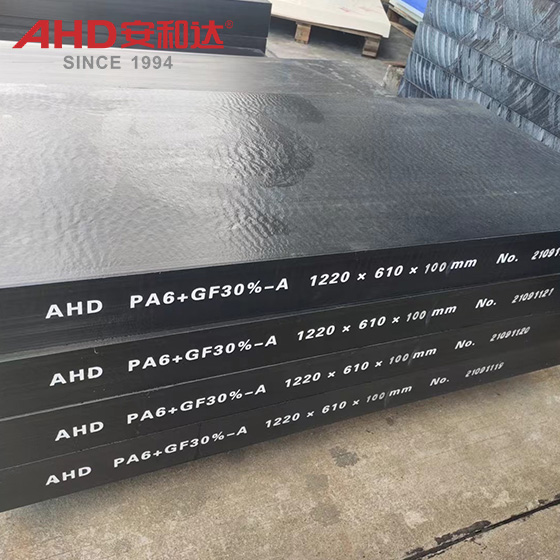
II. Manufacturing Process: The Core Acquired Control Factor for Dimensional Stability
Even with the same material, the precision control of the manufacturing process directly determines the initial dimensional accuracy, internal stress, and density uniformity of the sheet at the time of manufacture. This is a key acquired factor affecting dimensional stability and a core difference between reputable manufacturers and small workshops. Anheda, through 31 years of process accumulation, has developed precise extrusion/casting process parameters to minimize dimensional fluctuations from the production end.
1. Molding Process Types (Extrusion/Casting)
PA nylon sheets are mainly produced using two processes: extrusion molding and casting molding. The impact of these two processes on dimensional stability differs significantly:
Extrusion Molding: Continuous and fast process, easy control of sheet thickness/length and width accuracy, uniform molding shrinkage, but prone to internal stress due to mismatch between extrusion speed and cooling rate;
Casting Molding: Slower process, more uniform cooling, lower internal stress, suitable for producing thick sheets (≥50mm), but slightly larger molding shrinkage and prone to localized unevenness, requiring strict control of casting temperature and demolding time.
Key Point: Regardless of the process, uniform cooling rate is crucial. Excessively fast or slow cooling in certain areas leads to inconsistent shrinkage between the inner and outer layers of the sheet, directly causing warping and deformation.
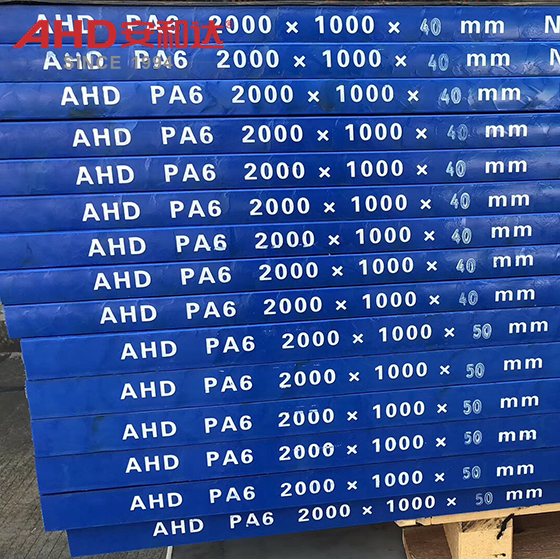
2. Production Process Parameter Control
Precise control of temperature, speed, and pressure during extrusion/casting is key to avoiding process defects and reducing internal stress. Fluctuations in any parameter will affect dimensional stability:
Processing Temperature: Too low a temperature results in insufficient plasticization of the raw material, disordered molecular chain arrangement, and easy post-shrinkage after molding; too high a temperature leads to easy degradation of the raw material, molecular chain breakage, decreased sheet strength, and increased shrinkage rate.
Extrusion/Casting Speed: Too high a speed results in uneven flow of the raw material within the mold, inconsistent molecular chain orientation, and directional shrinkage after molding due to orientation relaxation (e.g., large differences in longitudinal/transverse shrinkage rates).
Holding Pressure and Demolding: Insufficient holding pressure during casting easily creates pores inside the sheet. These pores shrink during later use, causing dimensional changes; premature demolding prevents the sheet from fully cooling and allows it to continue shrinking and deforming at room temperature.
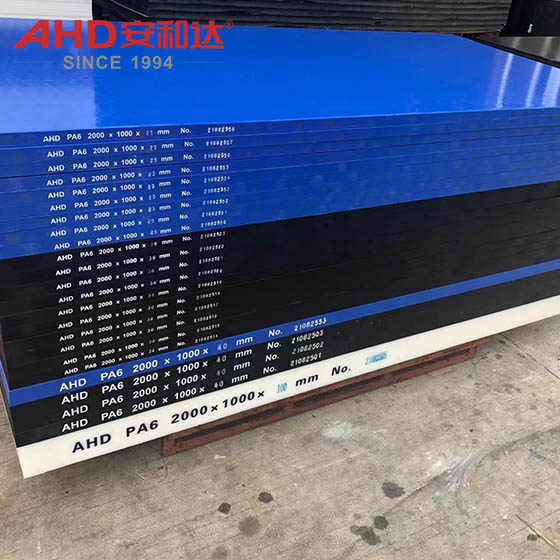
3. Post-Production Shaping and Processing
Reputable manufacturers perform professional shaping treatments on the molded PA nylon sheets. This is a crucial step in improving dimensional stability upon delivery. Smaller manufacturers often omit this step, leading to significant dimensional fluctuations in the later stages:
Aging Shaping: The molded sheets are placed in a constant temperature (23±2℃) and constant humidity (50±5% RH) environment for 7-15 days to allow the sheets to naturally shrink, releasing internal stress and preventing further shrinkage during later use.
Humidity Conditioning: For highly absorbent PA6 Sheet/PA Nylon66 Sheet, precise humidity conditioning is performed as needed to allow the sheets to reach moisture balance in advance, preventing rapid expansion due to water absorption during use.
Cutting and Precision Grinding: CNC cutting and precision grinding are used to ensure the accuracy of the sheet's length, width, and thickness, avoiding dimensional deviations and stress concentrations associated with manual cutting.
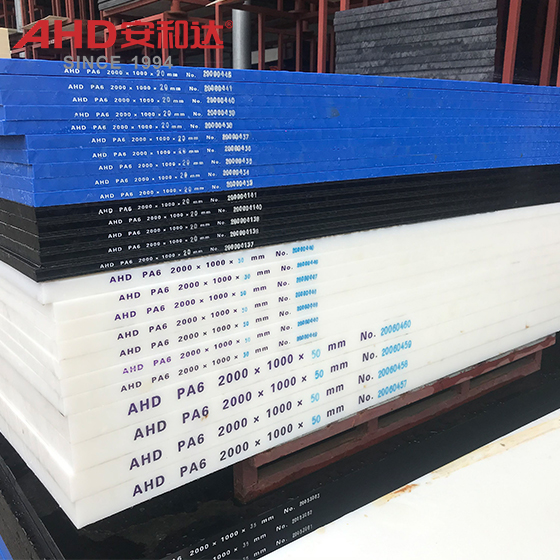
4. Sheet Material Structure and Specifications
The thickness, aspect ratio, and shape of the sheet material also affect dimensional stability. Controlling the thickness and irregular shape of thick and irregularly shaped sheets is far more difficult than controlling the thickness and standard shape of thin sheets:
Thick sheets (≥50mm): Significant differences in internal and external cooling rates easily generate internal stress and density gradients, leading to slow stress release and deformation later on;
Thin sheets with excessively large aspect ratios (e.g., 1000*2000mm): Prone to warping due to their own weight or changes in ambient temperature and humidity;
Irregularly shaped sheets/non-standard parts: Different parts have different thicknesses and shapes, resulting in inconsistent shrinkage rates and a tendency for localized deformation. Customized molding and shaping processes are required.