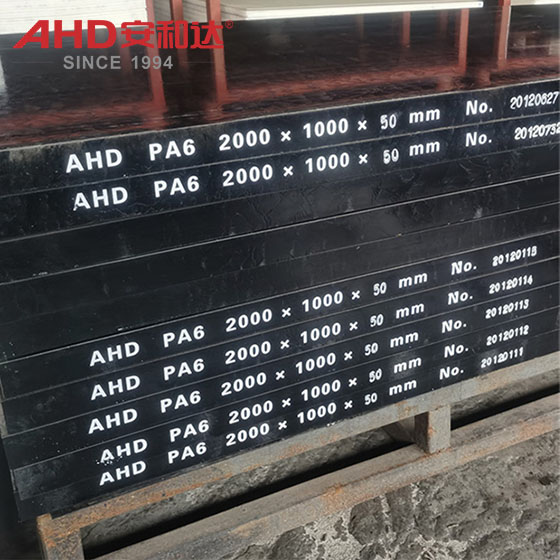
In addition to controlling the dimensional stability of PA nylon sheets and bars in terms of raw materials, materials, and production processes, we can also improve the dimensional stability of PA nylon in terms of external usage environment and processing and installation.
Ⅰ.External Usage Environment: The Main Cause of Dimensional Fluctuations During Use
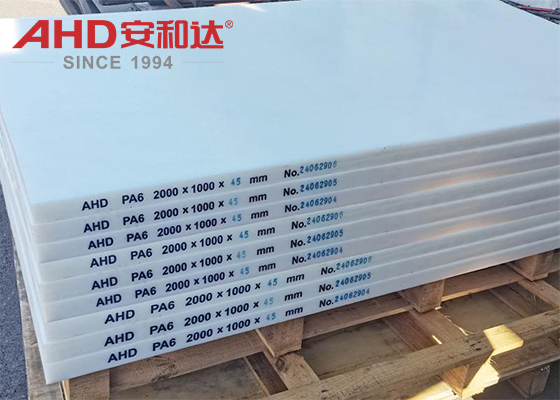
After PA nylon sheets (like PA6 Nylon Plastic Sheet) leave the factory, the external environment during storage, transportation, and use is the direct cause of dimensional changes. Temperature and humidity are the core factors, and environmental factors have a much greater impact on the highly absorbent PA6 Sheet /PA Nylon66 Sheet than on the less absorbent PA610/PA12.
1. Environmental Humidity (The Most Critical Factor)
PA nylon is a hydrophilic polymer material with numerous amide bonds in its molecular chain. It easily forms hydrogen bonds with water molecules, causing the sheets to expand upon moisture absorption and shrink upon desiccation. The higher the water absorption rate, the more pronounced the dimensional changes:
When the ambient humidity increases from 30% RH to 80% RH, the dimensional expansion rate of PA6 sheets will be relatively high, while that of PA12 sheets will be much smaller.
If the sheets are used in a humid environment and then transferred to a dry environment, they will shrink due to desiccation. Repeated changes in temperature and humidity will cause repeated dimensional fluctuations in the sheets, eventually leading to permanent deformation.
2. Ambient Temperature
Temperature not only directly affects the molecular chain movement of PA nylon, but also exacerbates the impact of water absorption on dimensions. Higher temperatures result in stronger molecular chain activity, greater speed and extent of moisture absorption/desorption, and more pronounced dimensional changes:
Room Temperature (-20℃~80℃): Temperature has a relatively small direct impact on dimensions, primarily affecting indirectly through humidity;
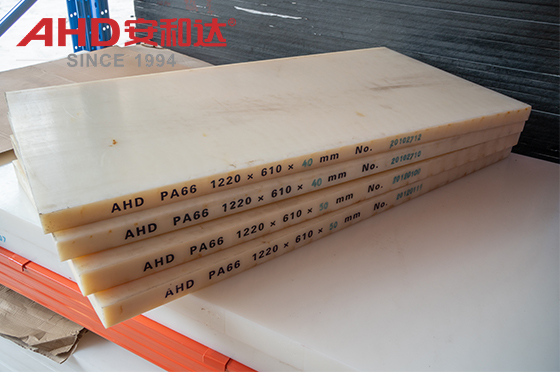
High Temperature (>80℃): When the temperature approaches the heat distortion temperature of PA nylon (approximately 65℃ for PA6 and 85℃ for PA66), the sheet will experience thermal expansion, and high temperatures will accelerate the release of internal stress, leading to deformation;
Low Temperature (<-20℃): Molecular chain movement slows down, increasing the sheet's brittleness. Although dimensional shrinkage is not significant, if subjected to external force at this temperature, brittle deformation is likely to occur, leading to permanent dimensional changes.
3. Media Contact and Aging
The media encountered during use and long-term aging can affect the dimensional stability of the sheet material by altering its molecular structure or physical state:
Contact with oils/solvents/acids and alkalis: Low-absorption PA610/PA12 is oil and solvent resistant with minimal dimensional change; however, PA6/PA66 will swell slightly upon contact with oils and undergo slight hydrolysis upon contact with weak acids and alkalis, leading to dimensional expansion and decreased strength.
UV/Oxidative Aging: When used outdoors without protection, UV radiation damages the molecular chains of PA nylon, causing the sheet to become brittle, shrink, and warp. Oxidation further increases water absorption, further reducing dimensional stability.
Long-term Stress: If the sheet material is subjected to static loads for extended periods, creep (slow plastic deformation) will occur, especially in high-temperature and humid environments, where creep will accelerate, leading to permanent dimensional changes.
4. Storage and Transportation Conditions
Improper storage and transportation can cause dimensional changes in the boards before use, creating potential problems for later use:
Large fluctuations in temperature and humidity during storage (e.g., proximity to heat/water sources) can cause the boards to absorb moisture and expand prematurely or contract due to heat;
Heavy pressure and collisions during transportation can cause plastic deformation or stress concentration in the boards, leading to warping during stress release in later use;
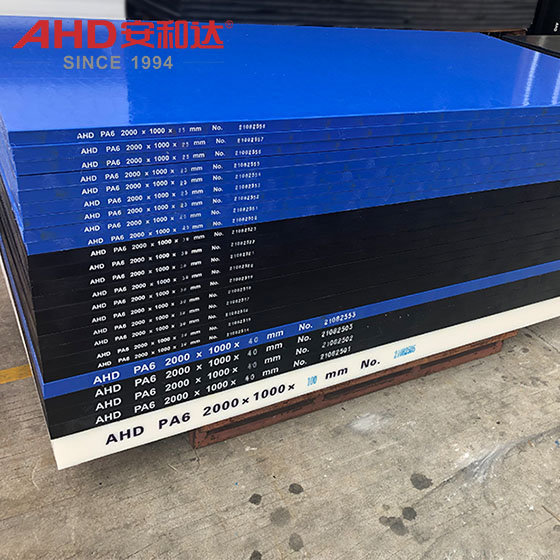
Improper stacking of boards (e.g., stacking too high) can cause bending deformation due to their own weight, and prolonged stacking can prevent the release of internal stress.
Ⅱ. Post-processing and Installation: Dimensional Deviations Due to Human Factors
Even if the board itself has excellent dimensional stability, human operation during post-processing, cutting, and installation can directly lead to dimensional deviations and even secondary deformation. This is the most easily overlooked influencing factor and is crucial for controlling dimensional stability at the user end.
1. Processing Technology and Equipment Precision
Cutting/Drilling: Using ordinary hand saws and drills results in low precision (tolerance ≥1mm). Localized high temperatures during processing cause the board to expand upon heating and shrink upon cooling, leading to dimensional deviations. Excessive tool speed can cause surface charring and stress release, resulting in localized deformation.
Bending/Thermoforming: When bending PA6 boards, uneven heating or excessive bending speed can cause localized shrinkage/warping. Fiberglass-reinforced nylon boards cannot be thermoformed; forced processing will directly cause cracking and permanent dimensional defects.
2. Lack of Stress Relief After Processing
After machining such as cutting, drilling, and carving, the residual internal stress in the board material will be released due to structural damage. If stress relief treatment is not performed in a timely manner, the board material will slowly deform during subsequent storage/use, leading to dimensional deviations.
3. Installation Methods and Assembly Precision
Interference Fit/Forced Installation: Forcibly inserting the nylon sheet into the metal parts or using an interference fit during installation will cause plastic deformation of the sheet. This deformation is irreversible over long-term use and will accelerate creep.
Uneven Fixing Points: Excessive screw spacing and uneven force during fixing will cause the sheet to warp and deform, especially when temperature and humidity change, as areas with uneven force will become focal points for dimensional changes.
Jointing with Materials with Different Expansion Coefficients: The coefficient of thermal expansion of PA nylon (approximately 8×10⁻⁵/℃) is much higher than that of metal (steel approximately 1.2×10⁻⁵/℃). If directly and rigidly joined with metal, the difference in expansion/contraction between the two materials during temperature changes will cause the nylon sheet to be stretched/compressed, leading to deformation and cracking.
Ⅲ. Anheda's 31 Years of Experience: PA Nylon Sheet Dimensional Stability Optimization Solution
Addressing the aforementioned influencing factors, Anheda has developed a complete dimensional stability optimization solution encompassing four dimensions: material selection, production process, customized modification, and usage guidance. This solution can minimize dimensional fluctuations based on the customer's specific needs:
Precise Material Selection: For high-precision applications, low-absorption materials (PA610/PA612/PA11/PA12) are directly recommended to replace conventional PA6/PA66, reducing dimensional fluctuations from the source.
Modification Optimization: For general applications requiring improved dimensional stability, glass fiber/mineral filler modification (GF15/30) is used. Adding GF30 to PA6 reduces water absorption by over 50% and molding shrinkage to 0.3~0.8%.
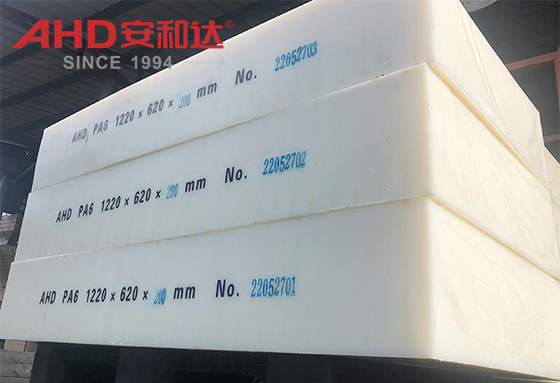
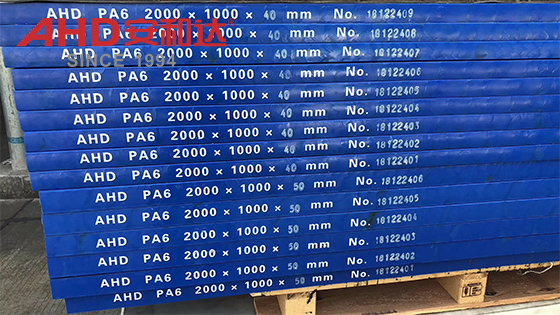
Production Shaping: All sheets undergo 7~15 days of constant temperature and humidity aging. Thicker sheets undergo additional slow cooling to release internal stress.
Usage Guidance: Storage and usage guidance is provided to customers to avoid dimensional deviations caused by human error.
Ⅳ. Key Summary
The factors affecting the dimensional stability of PA nylon sheets are a combination of inherent material properties and subsequent processing, environment, and operation. Water absorption (material type) is the core issue, production and shaping processes are key control measures before shipment, temperature and humidity in the usage environment are major contributing factors during use, and post-processing and installation are often overlooked human factors.
To ensure the dimensional stability of PA Nylon Plate, prioritize material selection (choose low-absorption types for high requirements), then select manufacturers with mature processes (ensuring production shaping and precision), and finally, ensure proper temperature and humidity control and standardized processing and installation at the user end. Combining these three aspects will control dimensional fluctuations within the required usage range.