Polyoxymethylene (POM), as an engineering plastic with excellent comprehensive performance, is widely used in the manufacture of precision parts due to its high mechanical strength, good dimensional stability, and fatigue resistance. However, whether POM sheet or POM rod, operators often encounter a challenging technical problem during machining operations, such as turning, milling, and drilling—work hardening. This phenomenon not only leads to an abnormally high hardness on the machined surface of the POM sheet (Polyoxymethylene Sheet) or POM rod (Polyetheretherketone Rod) but also causes accelerated tool wear, workpiece chipping, and even dimensional deviations, severely impacting the final product's yield. Understanding the causes of work hardening in Polyacetal Sheet and Polyacetal Rod and mastering effective suppression strategies are crucial prerequisites for ensuring efficient and high-quality machining of this material.
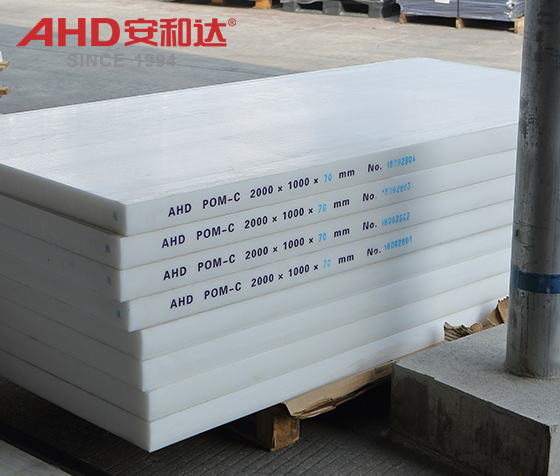
POM (Polyoxymethylene) is an engineering plastic with excellent mechanical properties, but it is indeed prone to "work hardening" during processing. Below is a detailed explanation of its causes and solutions.
Ⅰ. What is POM "Work Hardening"?
In machining processes (such as turning, milling, drilling, and tapping), under the cutting force, compression, and frictional heat of the cutting tool, the molecular chains in localized areas of POM material will realign and become more tightly packed, even undergoing localized changes in crystallinity. This leads to increased hardness and brittleness in those areas, while decreasing toughness.
This phenomenon is similar to work hardening in metals, causing difficulties in subsequent machining, such as:
Increased tool wear: The hardened area is "harder," wearing down the tool edge.
Decreased surface quality: Chipping, microcracks, or surface roughness may occur during machining.
Lack of dimensional accuracy: Uneven stress release in the material leads to deformation.
Risk of tool breakage: Especially during tapping or deep hole machining, poor chip removal exacerbates the hardening phenomenon.
Ⅱ. How Does Work Hardening Occur?
The core reason for POM work hardening is the coupling effect of "heat" and "force," which can be summarized as follows:
Frictional Heat Accumulation:
POM has poor thermal conductivity. The frictional heat generated during cutting cannot dissipate quickly and accumulates at the contact point between the tool and the material.
This localized temperature increase causes POM to soften. However, under the continuous pressure of the tool and cooling (whether natural or air cooling), the softened material rapidly "quenches," recrystallizing and forming a harder, more brittle microstructure. This is the primary reason.
Tool Compression and Grinding:
If the tool is not sharp enough or the feed rate is too high, the "compression" and "ploughing" effects of the tool on the material will be greater than the "cutting" effects.
This intense plastic deformation forces the POM molecular chains to be highly oriented in the stress direction, resulting in a more regular arrangement and significantly increasing the hardness and strength of that region.
Poor chip removal:
During drilling or tapping, if chips cannot be effectively removed, they accumulate inside the hole, constantly rubbing against the hole wall and the cutting tool, generating a large amount of heat and continuously grinding against the machined surface, leading to severe hardening of the hole wall.
Material properties:
POM is a highly crystalline plastic with inherently high hardness and a certain degree of toughness. Its molecular structure makes it prone to orientation hardening under shear and tensile stress.
Ⅲ. How to Solve the Work Hardening Problem of POM?
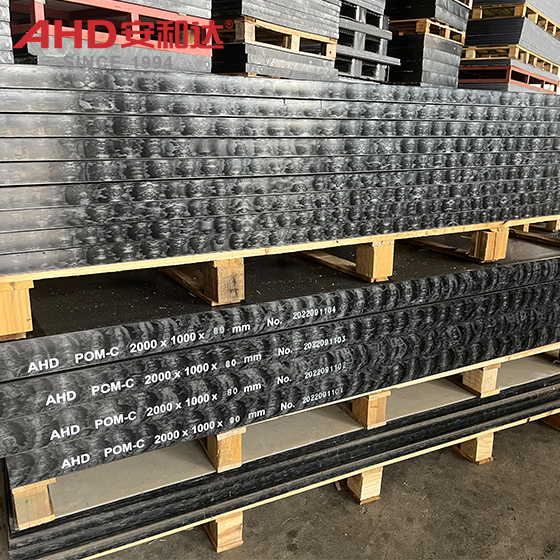
The main solutions revolve around "reducing heat generation," "timely heat dissipation," "maintaining tool sharpness," and "optimizing machining parameters."
1. Tool Selection and Maintenance (Most Critical)
Sharpness: New, extremely sharp tools must be used. POM is very sensitive to tool wear; even a slight dulling of the tool will immediately lead to work hardening due to extrusion.
Material: Carbide (tungsten carbide) tools are recommended. High-speed steel (HSS) tools can also be used, but their sharpness is shorter-lived.
Geometric Angles: Select tools with a large rake angle and finely ground cutting edges to ensure smooth cutting and reduce extrusion.
Coatings: Certain coatings (such as diamond coatings) can significantly reduce the coefficient of friction and reduce heat generation.
2. Optimization of Machining Parameters
High Spin Speed, Small Tool Size, Fast Feed:
High Spin Speed: Increasing the cutting speed allows more cutting heat to be carried away by the chips rather than transferred to the workpiece.
Small depth of cut: Reduces cutting resistance and minimizes plastic deformation.
Rapid feed: Prevents the tool from rubbing in the same spot for too long. However, the feed should not be too slow, otherwise it will become "grinding" instead of "cutting," generating heat instead.
Avoid pauses: During machining, especially drilling and milling, the tool should ideally not pause inside the material, otherwise heat will accumulate rapidly, causing hardening at that point.
3. Cooling and Chip Removal
Air Cooling (Recommended): Use compressed air for cooling. This removes heat and helps remove chips, preventing secondary friction. Never use oil-based cutting fluids, as most POMs are not resistant to mineral oils and may cause material swelling or performance degradation. If liquids must be used, water or alcohol can be used, but ensure thorough drying after machining.
Forced Chip Removal: In deep hole machining and tapping, design machining paths that allow the tool to periodically retract to remove chips (called "pecking" or "chip breaking").
4. Other Techniques
Step-by-Step Machining: For parts requiring high precision, rough machining (leaving allowance) can be performed first to release some stress in the material, followed by finishing after cooling.
Material Selection: Some modified POMs (such as oil-containing POMs or internally lubricated POMs) may show slight improvements in machinability, but the core principle remains the same.
The essence of POM work hardening is "thermal recrystallization" and "stress orientation." The key to solving this problem lies in:
Sharpness of the cutting tool: An extremely sharp carbide cutting tool is a prerequisite.
Speed of operation: Employ a high-speed, high-feed strategy to reduce contact time.
Frequent air cooling: Good air cooling and chip removal are essential to prevent heat buildup.
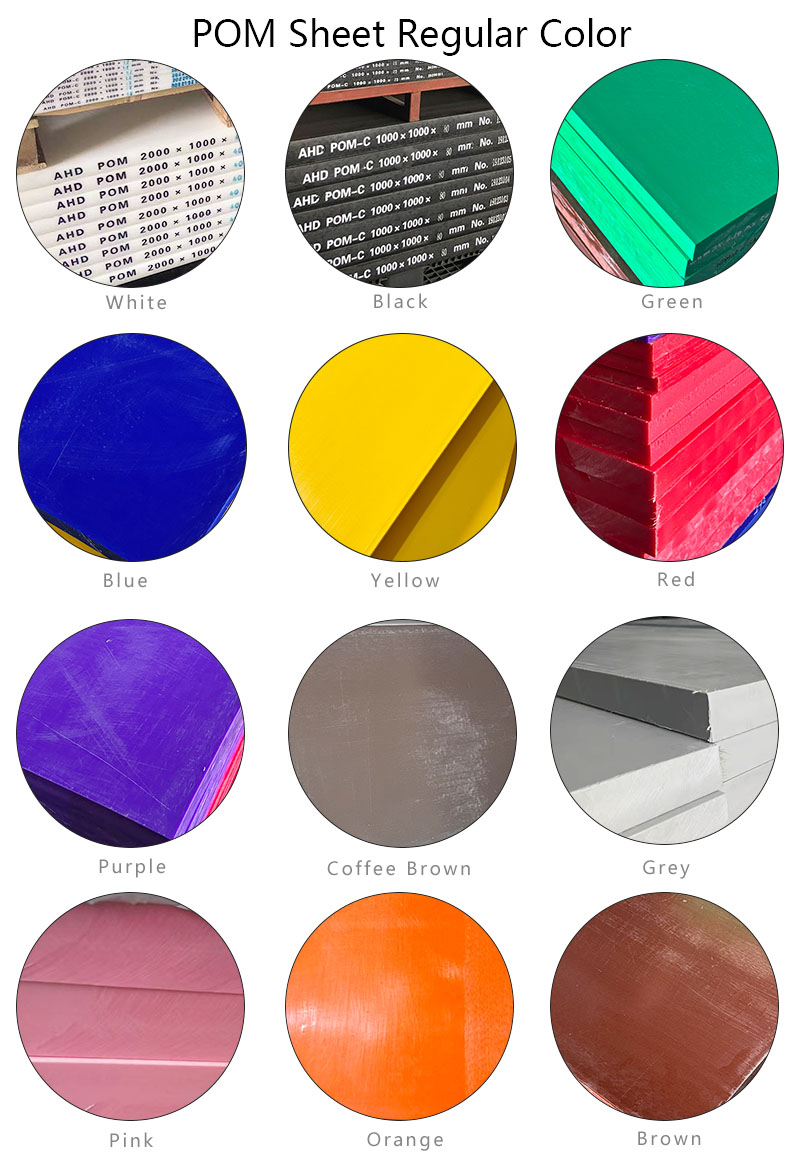
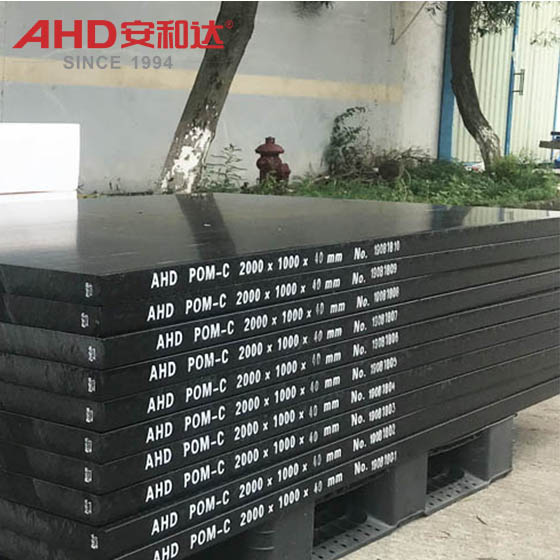
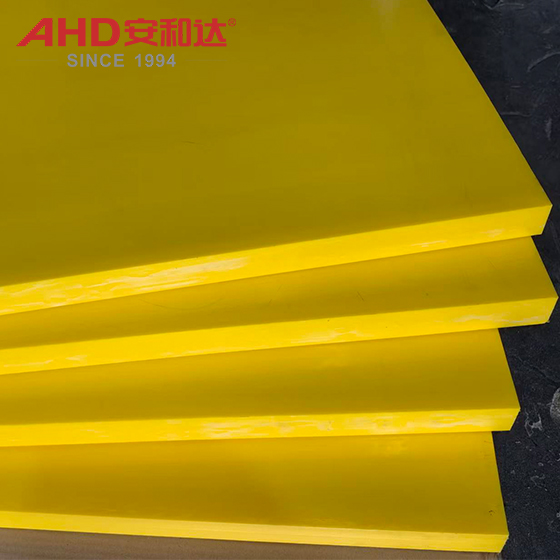
AHD have 31 years of experience in POM sheet and rod production. We offer not only standard black and white, but also a wide variety of colors such as red, yellow, blue, green, purple, gray, brown, orange, pink, and coffee. Sheet thicknesses range from 1 to 250mm, and rod diameters from 8 to 500mm. We also provide various materials, including anti-static POM and conductive POM. Contact us now and let us open up new markets for you!