What is PEBA?
PEBA is an abbreviation for polyether block amide, a high-performance thermoplastic elastomer (a type of TPAE). It is made by block copolymerization of rigid polyamide (nylon) segments and flexible polyether segments. This unique structure gives it the strength and chemical resistance of nylon and the flexibility and elasticity of polyether. It is easy to process and offers balanced performance.
Processing methods: Compatible with injection molding, extrusion, 3D printing (FDM), blow molding, etc. It can be reprocessed, and the scraps can be recycled, making it suitable for large-scale production.

Key Characteristics of PEBA
High Elasticity: Excellent resilience, approaching the softness of rubber, but with superior processability.
Lightweight: Low density (approximately 1.0-1.2 g/cm³), lighter than many engineering plastics.
Low-Temperature Toughness: Maintains flexibility and impact resistance at extremely low temperatures (down to -40°C or even lower).
Abrasion and Fatigue Resistance: Superior abrasion resistance compared to many elastomers, suitable for dynamic applications.
Chemical Resistance: Good resistance to oils, greases, alcohols, and other chemicals, but moderate resistance to strong acids and alkalis.
Easy Processing: Can be molded using conventional plastic processing methods such as injection molding and extrusion, without vulcanization.
Dyeable/Transparent: Can be made transparent or in various colors, offering flexible design options.

Although both PU (polyurethane) and PEBA (polyether block amide) belong to the elastomer family, they are two completely different tracks in terms of structure, performance, cost, and application scenarios. Simply put: PU is an "all-around cost-effective player," while PEBA is the "high-end performance ceiling."
Core Definitions and Structural Differences
| Items | PU (Polyurethane) | PEBA (Polyether Block Amide) |
| Essence | Thermoplastic/Thermosetting Elastomer (TPU is thermoplastic PU) | Thermoplastic Elastomer (TPAE type, nylon + polyether block) |
| Structure | Hard segment (isocyanate + chain extender) + soft segment (polyol) | Hard segment (PA6/PA11/PA12) + soft segment (polyether PTMG/PPG) |
| Processing methods | Injection molding, extrusion(PU Sheet, PU Rod), blow molding, casting, foaming, spraying | Injection molding, extrusion, blow molding, 3D printing (FDM), recyclable |
| Cost | Low-medium to high-medium (Standard TPU is very cheap, high-performance versions are expensive) | High (High-end materials, typically 2-5 times the price of standard TPU) |
Key Performance Comparison
1. Density & Lightweight
PU (TPU): Density approximately 1.10–1.25 g/cm³
PEBA: Density approximately 1.00–1.01 g/cm³, close to water, lighter than TPU
2. Low Temperature Resistance (Key Difference)
PU (TPU):
Regular TPU: Begins to harden and become brittle around -20℃
High-performance TPU: Can withstand -30℃ to -40℃, but cost is close to PEBA
PEBA:
Common grades: Maintain high elasticity and do not crack at -40℃
Some grades: Remain resilient at -50℃ to -60℃
3. Rebound & Dynamic Fatigue
PU (TPU):
Rebound rate: 50%–60%
Fatigue resistance: Good, but prone to permanent deformation and thermal aging under long-term high-frequency bending/impact.
PEBA:
Rebound rate: 65%–70% (close to rubber)
Creep resistance, resistance to repeated bending, and dynamic performance are far superior to TPU; less deformation and longer lifespan with long-term use.
4. Chemical & Oil Resistance
PU (TPU):
General oil and solvent resistance; not resistant to strong acids, alkalis, esters, and ketones.
Hydrolytic stability: Poor for polyester-type TPU, better for polyether-type TPU.
PEBA:
Inherits nylon characteristics; stronger oil, solvent, and chemical resistance.
Better hydrolysis resistance, weather resistance, and UV resistance (especially PA12-based PEBA).
5. Hardness Range & Hand Feel
PU (TPU):
Wide hardness range: Shore A 60–D 75
Hand feel: Slightly... "Gel-like" feel, the softer version is closer to rubber
PEBA:
Hardness: Shore A 70–D 70 (slightly medium to high hardness)
Feel: More "dry, smooth, and non-sticky," with a premium surface texture
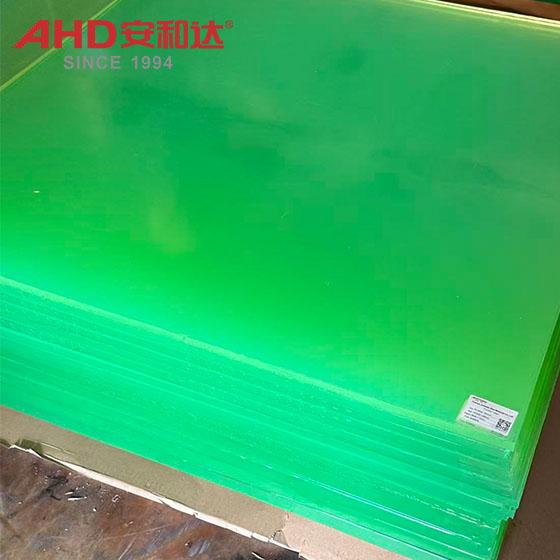
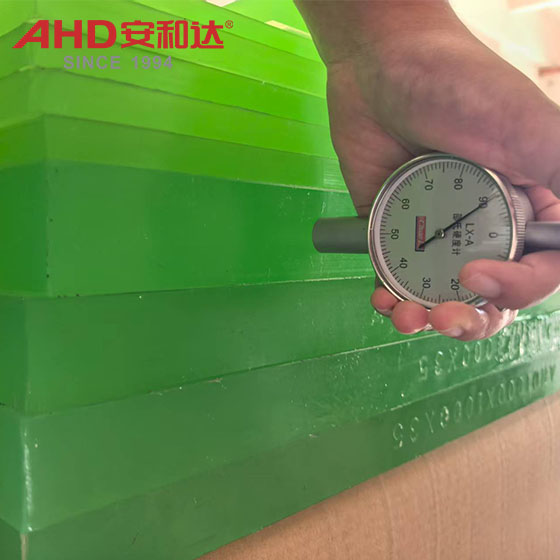
AHD offers PU Plastic Sheet and PU Plastic Rod with hardness levels of A70, A80, and A90.
For those seeking cost-effectiveness, soft elasticity, and suitability for foaming/coatings/adhesives: Choose PU (TPU/thermosetting PU)
For those prioritizing lightweight, low-temperature resistance, high resilience, fatigue resistance, premium feel, and 3D printing: Choose PEBA
For those with a limited budget but requiring high performance: Choose high-performance polyether TPU (close to PEBA but still inferior)
For those with a sufficient budget and stringent performance requirements: Go straight for PEBA.
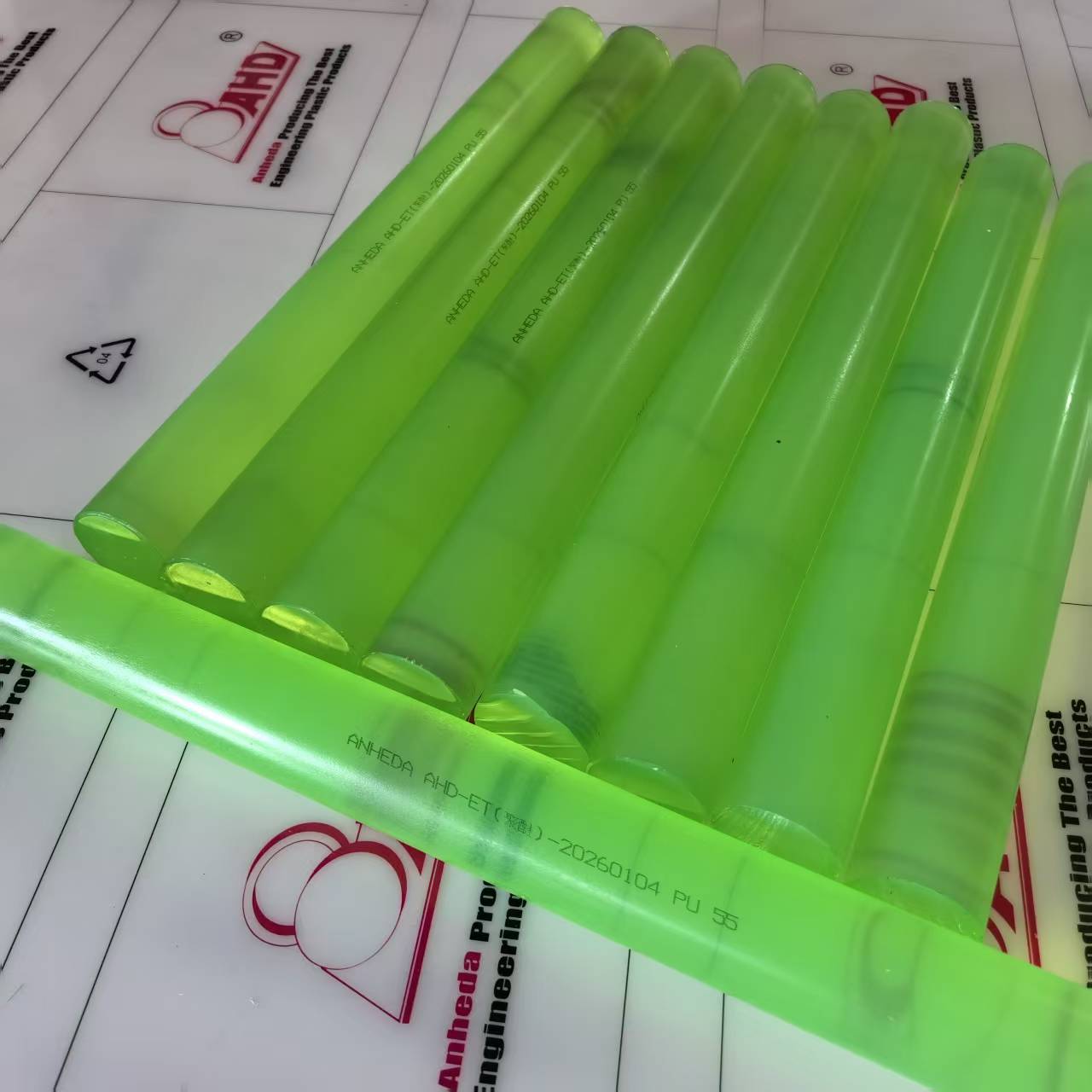
AHD Polyurethane Rod