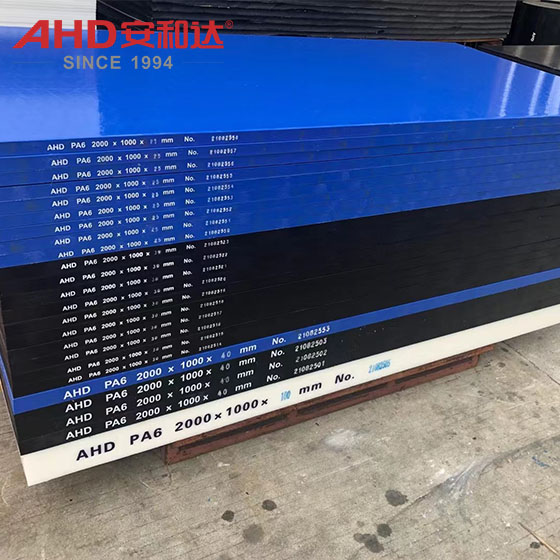
Reducing the water absorption rate of PA (nylon) sheets is a common engineering requirement because nylon is a polar material, and its amide bonds (-CO-NH-) readily form hydrogen bonds with water molecules, resulting in high water absorption. High water absorption affects dimensional stability, mechanical strength (e.g., decreased rigidity), and electrical properties.
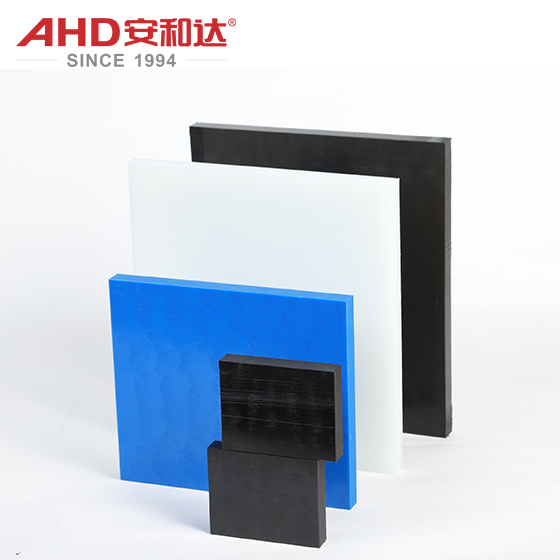
AHD PA6 Nylon Plate
The following are some of the main methods for reducing the water absorption rate of PA Nylon Plastic Sheet, covering everything from material modification to processing technology:
1. Physical Blending Modification (Adding Modifiers)
This is the most common and economical method in industry. By blending with other low-absorbency materials, the continuous phase of nylon is broken, reducing the diffusion path of water molecules.
Blending with Polyolefins: Such as PP (polypropylene) and PE (polyethylene). Polyolefins are non-polar materials and absorb almost no water. Melt-blending a certain proportion of polyolefins with PA can significantly reduce the overall water absorption rate. However, compatibility issues need to be considered, and compatibility agents are usually required.
Blending with low-absorption engineering plastics: such as PC (polycarbonate) and PPS (polyphenylene sulfide). Although more expensive, it improves water absorption while maintaining mechanical properties.
2. Chemical modification (altering molecular structure)
By altering the structure of the nylon molecular chains, the number of hydrophilic groups is reduced or their activity is decreased.
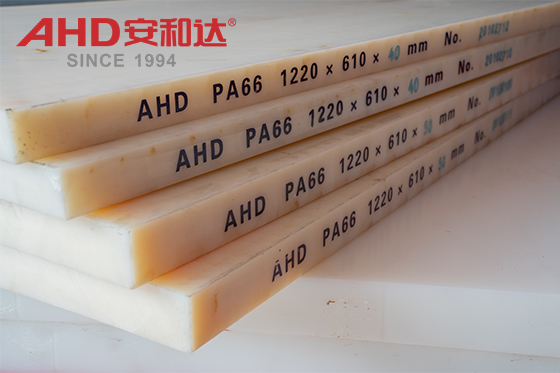
Increasing carbon chain length: In the nylon family, PA12 and PA11 have much lower water absorption than PA6 Sheet and PA Nylon66 Sheet. This is because their methylene (-CH2-) chains between amide bonds are longer, resulting in a lower density of hydrophilic groups. If the application permits, directly using PA12 or PA11 sheets is the best choice.
Crosslinking modification: Crosslinking structures are formed between nylon molecular chains through radiation or chemical methods, restricting the movement of molecular chains and thus hindering the penetration and diffusion of water molecules. However, this alters the processing rheology of the material.
3. Adding Inorganic Fillers (Fiber Reinforcement Modification)
Adding hydrophobic or layered inorganic fillers to nylon can increase the tortuosity of the water molecule penetration path.
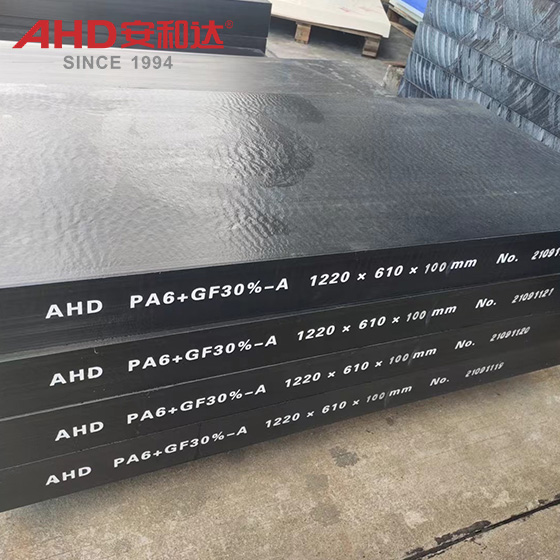
Glass Fiber Reinforcement (GF): This is the most common method. Glass fiber itself does not absorb water and can improve the strength and heat resistance of nylon. Adding 30% glass fiber (PA66-GF30) can significantly reduce the equilibrium water absorption rate.
Mineral Fillers: Such as talc, mica, wollastonite, etc. The layered structure of mica can effectively block water molecules.
Nanocomposites: Such as nano-montmorillonite. Utilizing its nanoscale layered structure, it forms a "maze effect," greatly extending the water molecule diffusion path, thereby effectively reducing the water absorption rate and absorption capacity.
4. Surface Treatment and Coating (Barrier Layer)
A waterproof protective film is formed on the surface of the molded nylon sheet.
Surface Hydrophobic Coating: Spraying or impregnating with Teflon (PTFE), silicone, or other hydrophobic coatings physically isolates nylon from water contact.
Surface Annealing Treatment: Appropriate heat treatment (below the melting point) of the nylon sheet can eliminate internal stress and promote increased surface crystallinity. The tightly packed molecular chains in the crystalline regions make it more difficult for water molecules to penetrate, thus reducing the water absorption rate.
5. Optimizing Processing Technology
Processing technology affects the microstructure of the material, especially its crystallinity.
Increasing Mold Temperature: Higher mold temperatures promote more complete arrangement and crystallization of nylon molecular chains. Higher crystallinity results in a smaller proportion of amorphous regions (where water molecules mainly reside), leading to a relatively lower water absorption rate.
Controlling Cooling Rate: Slow cooling also helps improve crystallinity.
Summary and Recommendations
In practical applications, a combination of solutions is typically used:
Preferred Solution: If budget allows, directly purchase long-chain nylon (such as PA12) sheets. This is the fundamental solution to the water absorption problem.
Cost-Effective Solution: Choose glass fiber reinforced nylon (PA66 + 30% GF). This is the most commonly used industrial solution, achieving a good balance between strength, heat resistance, and reduced water absorption.
High-Performance Solution: Look for polyolefin-modified nylon or nanocomposite nylon materials. These materials are usually supplied by specialized modified plastics manufacturers.
Important Note: No modification method can make nylon completely non-absorbent like PP or PE. The methods mentioned above primarily reduce the water absorption rate and the final equilibrium water absorption rate. In applications requiring extremely high dimensional stability, in addition to material selection, it is usually necessary to pre-dry the nylon sheets before use and allow for dimensional tolerances for water absorption expansion during the design phase.