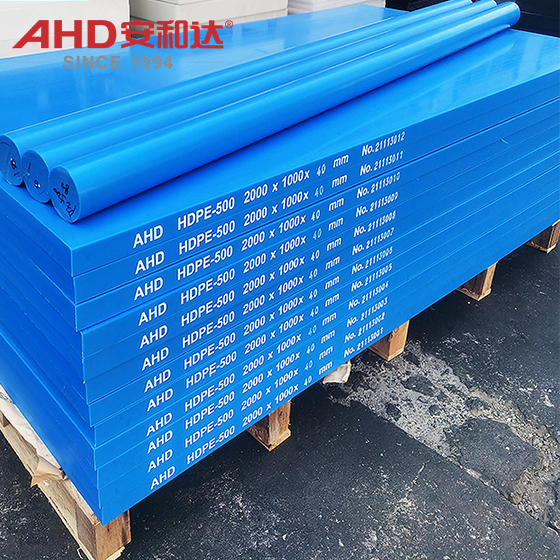
POK, or Polyketone, is a new type of high-performance engineering plastic made by alternating copolymerization of carbon monoxide with olefins such as ethylene and propylene. Its molecular backbone contains carbonyl groups (C=O), has high crystallinity, and its comprehensive performance is between that of special engineering plastics and general engineering plastics. It has been commercially mass-produced by Hyosung in South Korea. Combining excellent mechanical properties, wear resistance, chemical stability, and environmental friendliness, it has gained attention in recent years in the automotive, electronics, and packaging industries.

Ⅰ. Basic Definition and Structure
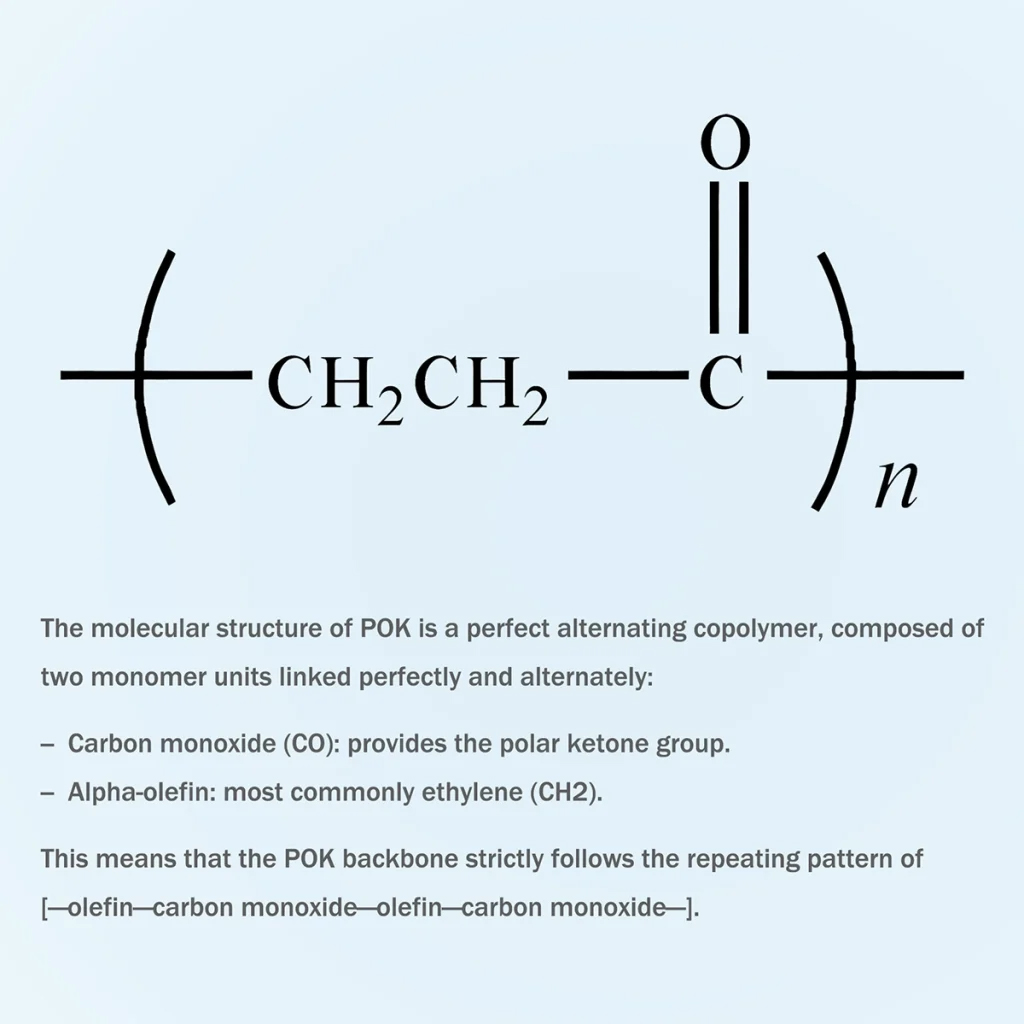
Chemical Nature: Aliphatic polyketide, with a tightly crystalline molecular backbone consisting of alternating carbon monoxide and olefin groups, containing polar carbonyl groups, balancing strength and chemical resistance.
Synthetic Raw Materials: Uses carbon monoxide (recovered from industrial waste gas), ethylene, and propylene as monomers, making it environmentally friendly; the CO consumption during production helps reduce emissions.
Commercial Status: Hyosung of South Korea is a major global supplier, with products covering general-purpose, wear-resistant, chemical-resistant, and flame-retardant series.
Ⅱ. Core Features
| Performance | Specific Performance | Comparative Advantages | Application Scenarios |
| Mechanical Properties | Tensile strength: 60–100 MPa; Elongation at break: 300%–600%; Impact strength higher than nylon; Stiffness close to PA66; Excellent toughness at low temperatures (-40℃). | Impact strength superior to Nylon Plastic Sheet; toughness far exceeding POM (approximately 10 times). | Applications: Automotive structural components, sporting goods, impact-resistant housings. |
| Wear Resistance and Self-Lubrication | Low coefficient of friction, wear rate is 1/14 that of POM, outstanding self-lubricating properties, and dimensional stability over long-term use. | Significantly superior wear resistance to POM and PA66, approaching that of PPS. | Gears, bearings, sliders, precision transmission components. |
| Chemical Resistance | Resistant to acids, alkalis, solvents, fuels, and hydrolysis; exhibits minimal performance change after 3000 hours of fuel immersion; corrosion resistance second only to fluoroplastics and PPS. | Fuel resistance is twice that of PA12, suitable for long-term contact with chemicals. | Applications include automotive fuel lines, chemical equipment components, and seals. |
| Thermal Properties | Heat distortion temperature approximately 200℃; can be used continuously at 120–150℃; high charring rate; self-extinguishing when combined with nylon alloys; low cost for flame-retardant modification. | Heat resistance superior to POM and PA6, approaching that of PPS. | Applications include high-temperature components and flame-retardant electronic housings. |
| Barrier Properties | Gas barrier properties are close to EVOH; oxygen permeability is comparable to PVDC and superior to PTFE; strong resistance to fire and water vapor. | Suitable for food, pharmaceutical, and fuel packaging. | Food packaging films, pharmaceutical containers, automotive fuel systems. |
| Environmentally Friendly and Safe | Certified by FDA, REACH, and RoHS; non-toxic and odorless; safe for food and pharmaceutical contact; free of phthalates and other harmful substances. | An alternative to materials containing bisphenol A and plasticizers. | Suitable for food machinery parts, medical supplies, and baby products. |
| Processing and Cost | Good flowability, suitable for injection molding, extrusion, and blow molding, with a short molding cycle; cost is higher than POM/PA66 but lower than PPS/PEEK, offering excellent cost-effectiveness. | Easy to process + balanced performance, suitable for mass production. | Precision structural parts, thin-walled products, complex injection molded parts. |
Ⅲ. Advantages and Limitations
Core Advantages
Balanced Overall Performance: Integrates wear resistance, chemical resistance, high toughness, and barrier properties, making it a viable alternative to POM, PA66, PPS, and other materials.
Green and Low-Carbon: Raw materials contain recycled CO2, with complete environmental certifications, aligning with sustainable development trends.
Processing-Friendly: High molding efficiency, suitable for complex structural designs, reducing production and modification costs.
Limitations
Limited Resistance to Extreme Corrosion: Strong oxidizing acids (such as concentrated nitric acid) and some strong solvents can affect performance, requiring targeted material selection.
Higher Initial Cost: Priced higher than traditional engineering plastics, suitable for high-value, long-life applications.
Ⅵ. Typical Application Areas
Automotive Industry: Fuel lines, seals, gears, engine peripheral components; replacing PA12 and POM to improve durability.
Electronics & Electrical: Connectors, switches, coil frames; utilizing flame retardancy and chemical resistance.
Food & Medical: Packaging films, delivery pipes, tableware; meeting food contact standards.
Industrial Machinery: Bearings, guide rails, seals; suitable for oil-free lubrication applications.
Ⅴ. Comparison of POK with other standard engineering plastics
POK is an "upgraded high-performance nylon," which optimizes the wear resistance, chemical resistance, and barrier properties of nylon while retaining its high toughness and mechanical strength. It also addresses the shortcomings of nylon in terms of hydrolysis resistance and fuel resistance. It shares only minor similarities with HDPE in terms of chemical resistance and low friction.
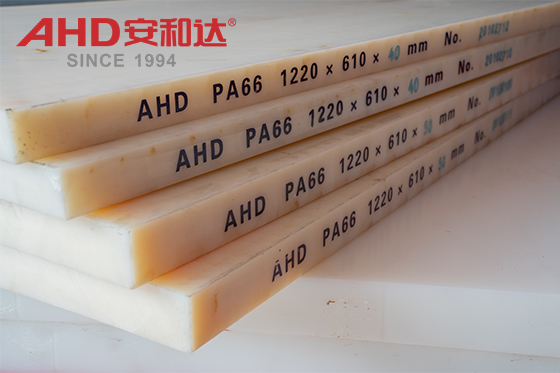
1. Most Similar to Nylon (represented by PA Nylon66 Sheet /PA12 Sheet) – Core Performance Comparable and Upgraded
High Similarity
Both belong to engineering plastics, both have high crystallinity, excellent tensile strength, rigidity, and impact resistance, and good low-temperature toughness (-40℃);
Both can be injection molded/extruded/blow molded, with similar processing adaptability, suitable for structural components, transmission components, and pipes;
Both can have their properties expanded through modification (reinforcement, flame retardancy, wear resistance) to meet different working conditions.
Core Upgrades of POK (Superior to Nylon)
Superior Abrasion Resistance: Abrasion loss is more than 1/5 that of PA66, with superior self-lubricating properties, making it suitable for oil-free transmission components;
Stronger Chemical/Fuel Resistance: Performance shows no significant degradation after 3000 hours of fuel immersion, while PA12's fuel resistance is only half that of POK. Furthermore, POK exhibits greater stability against acids, alkalis, and hydrolysis;
Outstanding Gas/Fuel Barrier Properties: Barrier properties are close to EVOH, far exceeding those of nylon, making it suitable for fuel systems and packaging applications;
Better Dimensional Stability: Water absorption is significantly lower than nylon (POK water absorption ≈ 0.2%, PA66 ≈ 2.5%), making it less prone to deformation under temperature and humidity changes.
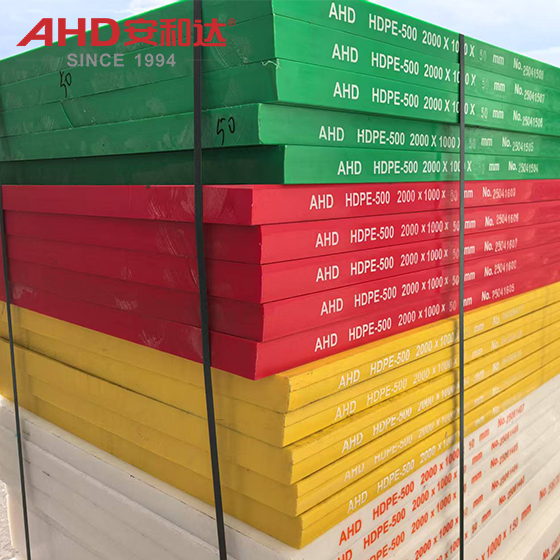
2. Similarities to HDPE (High Density Polyethylene) – Minor Performance Similarities, Vastly Different Positioning
Only Similarities
Excellent Chemical Resistance: Resistant to weak acids and alkalis, and most organic solvents, suitable for applications involving chemical contact;
Low Coefficient of Friction: Smooth surface with some self-lubricating properties, suitable for sealing and sliding components.
Core Differences (POK is Superior to HDPE in All Aspects)
Performance Positioning: POK is an engineering plastic, while HDPE is a standard engineering plastic. POK's tensile strength, rigidity, and impact resistance are 2-3 times that of HDPE Sheet.
Heat Resistance: POK's heat distortion temperature is approximately 200℃, allowing for long-term use at 120-150℃; HDPE's heat distortion temperature is only 60-80℃, and it softens easily at high temperatures.
Crystallization and Strength: POK has a denser crystal structure, resulting in significantly higher mechanical strength and abrasion resistance than HDPE. HDPE is only suitable for low-strength packaging and ordinary pipes, and cannot be used for precision structural components.
Barrier Properties: POK's water vapor and oil retardancy are far superior to HDPE, while HDPE only offers basic barrier properties.
Quick tip: If you find that nylon is not durable enough in terms of abrasion resistance and fire resistance, or that HDPE Plastic Sheet is not strong enough in terms of heat resistance, switching to POK will most likely solve the problem.