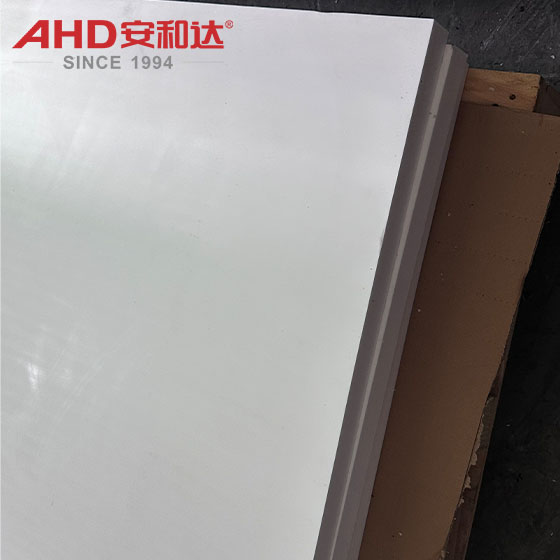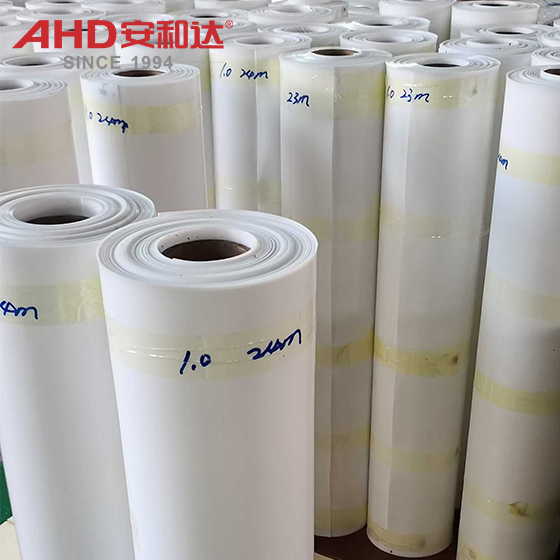
PFA, or tetrafluoroethylene-perfluoroalkoxy vinyl ether copolymer (also known as perfluoroalkylate, soluble polytetrafluoroethylene), is a copolymer of a small amount of perfluoropropyl perfluoroethylene ether and polytetrafluoroethylene. It exhibits enhanced melt adhesion and decreased melt viscosity, while maintaining the same properties as polytetrafluoroethylene.
PFA combines the core advantages of PTFE, such as chemical resistance and high-temperature resistance, with melt processability, allowing it to be molded using conventional thermoplastic processes like injection molding and extrusion, making it suitable for the production of complex and precision components.

Core Characteristics and Advantages of PFA
Excellent Temperature Resistance: Long-term operating temperature range is -196℃ to 260℃, short-term withstands temperatures up to 300℃. It maintains stable performance in extreme temperature environments, making it suitable for high-temperature applications in chemical and semiconductor industries.
Extreme Chemical Corrosion Resistance: Possesses chemical inertness similar to PTFE, resisting corrosion from almost all industrial chemicals and solvents, including strong acids, strong alkalis, and strong oxidants. It only reacts with a few substances such as molten alkali metals and fluorine under high temperature and pressure.
Meltable Processability: The presence of perfluoroalkoxy side chains in the molecular chain reduces crystallinity (approximately 50-70%). Its melting temperature (260-280℃) is much lower than its decomposition temperature, allowing for processing through conventional thermoplastic processes such as injection molding, extrusion, and blow molding. This enables the production of complex-shaped products such as thin-walled tubes and precision parts, resulting in high production efficiency and relatively controllable costs.
Excellent mechanical properties: Tensile strength 3625-4000 psi, elongation ≥300%, creep resistance and compressive strength superior to PTFE, better dimensional stability under sustained stress, less prone to plastic deformation, ensuring long-term component precision.
Excellent electrical properties and low friction: Excellent dielectric properties, insulation unaffected by temperature, dielectric strength 3-4 times that of PTFE; low coefficient of friction, strong non-stick surface, low gas permeability and low exudation, suitable for electronics, electrical engineering, sealing and other fields.
Other advantages: Good light transmittance, facilitating observation of the internal media state of equipment; meets FDA and other hygiene standards, suitable for medical and food-related applications.
Key differences between PFA and PTFE
| PFA | PTFE (Polytetrafluoroethylene) | |
| Molecular Structure | Tetrafluoroethylene and perfluoroalkoxy ether copolymer, with ether bonds in the side chains, crystallinity 50-70% | Pure tetrafluoroethylene homopolymer, with highly regular molecular chains, crystallinity >90% |
| Processing Methods | Melting and processing is possible, suitable for conventional thermoplastic processes such as injection molding and extrusion; complex shapes are easily formed. | Melting and processing is not possible; cold pressing and sintering are required, resulting in a complex process, long cycle time, and high cost. |
| Mechanical Properties | Superior tensile strength and creep resistance; high strength retention at high temperatures (up to 85% at 260℃). | Slightly better ultimate corrosion resistance, but poorer creep resistance; slightly lower strength retention at high temperatures (approximately 78% at 260℃). |
| Transparency | Semi-transparent, allowing observation of the internal medium. | Semi-transparent or opaque, with significant light scattering. |
| Electrical Properties | Higher dielectric strength, approximately 3-4 times that of PTFE. | Lower dielectric loss, with slightly better high-frequency performance. |
PFA vs. PTFE Selection Methods
Scenarios Where PFA is Preferred:
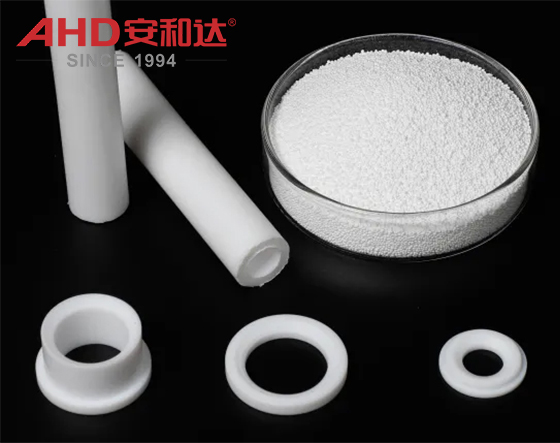
For manufacturing complex-shaped, precision-sized components, such as high-purity piping in semiconductor equipment, precision medical instruments, and thin-walled seals.
For applications requiring high-efficiency production, where conventional processes like injection molding and extrusion are used to increase capacity and reduce the time and cost of customized production.
For applications where high creep resistance and dimensional stability are required, such as linings for chemical equipment subjected to long-term pressure and sliding components in precision instruments.
For applications requiring a balance between corrosion resistance and light transmittance, such as transparent reaction vessels in laboratories and food-grade observation pipes.
Scenarios Where PTFE is Preferred:
For applications requiring extreme corrosion resistance, such as those involving contact with molten alkali metals, fluorine gas, or other highly corrosive media, or for linings and anti-corrosion coatings in large-diameter equipment.
In high-frequency electronics and electrical fields, such as high-frequency cable insulation, PTFE's low dielectric loss is a significant advantage.
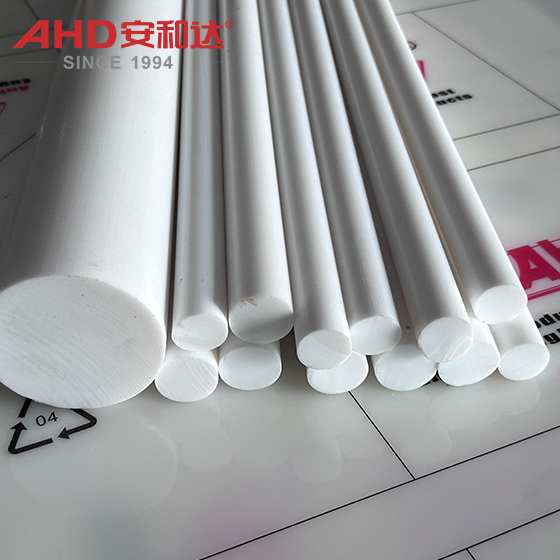
With a limited budget and simple component shapes (such as sheet metal, rods, and simple sealing rings), the processing cycle and cost of cold pressing and sintering are acceptable.
AHD PTFE Plate and PTFE Roll Sheet