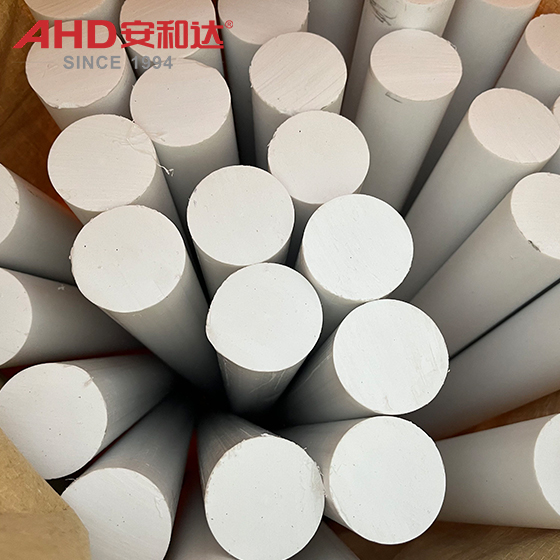
PBT, short for polybutylene terephthalate, is a common engineering plastic belonging to the thermoplastic polyester family. It is related to PET (polyethylene terephthalate, commonly found in beverage bottles), but they differ significantly in performance and applications.
PBT is renowned for its excellent mechanical, thermal, and electrical properties, making it a preferred material for a wide range of high-performance applications. PBT's unique characteristics lie in its combination of strength, toughness, and flexibility, along with heat and chemical resistance.
PBT's structure makes it easy to process through molding and extrusion processes, and it is often used in injection molding to manufacture high-precision parts. While PBT shares some similarities with PET, its unique properties make it more suitable for certain industrial applications.

Characteristics and Advantages of PBT
PBT is renowned among engineering plastics for its excellent overall performance. Its main characteristics and advantages include:
Excellent Mechanical Properties
High Rigidity and High Strength: PBT maintains good rigidity and strength over a wide temperature range, making it suitable for manufacturing structural components.
Good Fatigue Resistance: It can withstand repeated bending or stretching without easily breaking.
Low Creep: Its shape and size change very little under prolonged stress.
Excellent Electrical Properties
PBT is an excellent insulating material; its dielectric strength remains stable even in high-temperature and high-humidity environments. This makes it an ideal choice for electronic and electrical connectors, switches, coil frames, and other components.
Chemical Resistance
It has good resistance to most oils, aliphatic hydrocarbons, alcohols, and salt solutions. Even at room temperature, it resists weak acids and weak alkalis. However, it is easily hydrolyzed in strong acid and strong alkali environments.
Good Processing Performance
Short Molding Cycle: PBT crystallizes quickly and has good melt flowability, resulting in rapid cooling and setting during injection molding, leading to high production efficiency.
Good dimensional stability: Low water absorption, stable molding shrinkage, and high dimensional accuracy of parts.
Heat resistance: Long-term operating temperature can reach 120℃-140℃, and it can withstand even higher temperatures in the short term. If reinforced with glass fiber (GFR-PBT), the heat resistance can be significantly improved to over 200℃.
Main disadvantages:
Not resistant to strong acids and alkalis: Prone to hydrolysis, leading to molecular chain breakage and performance degradation.
Flammable: Although flame retardants can be added to achieve a UL94 V-0 rating, pure PBT is flammable.
Moderate weather resistance: Prone to aging and brittleness upon prolonged exposure to ultraviolet light, usually requiring the addition of UV-resistant additives.
PBT vs PET: A Comparison of Key Differences
| Characteristics | PBT (Polybutylene terephthalate) | PET (Polyethylene terephthalate) |
| Chemical Structure | Butanediol segments (longer, more flexible) | Ethylene glycol segments (shorter, more rigid) |
| Mechanical Properties | Better toughness, stronger impact resistance, slightly lower hardness | Stronger rigidity, higher hardness, but slightly lower toughness, more brittle |
| Heat Resistance | Long-term heat resistance: approximately 120-140℃ (slightly lower) | Long-term heat resistance: up to 140-160℃ (higher) |
| Crystallization Speed | Fast crystallization speed, short processing cycle, easy to mold | Slow crystallization speed, unreinforced transparent, requires high-temperature mold after reinforcement |
| Water Absorption | Extremely low water absorption (approx. 0.1%), more dimensionally stable | Slightly higher water absorption (approx. 0.5%), more sensitive to moisture |
| Surface Gloss | Good surface gloss, smooth to the touch | High surface hardness, good gloss |
| Main Applications | Connectors, switches, gears, bumpers, toothbrush bristles | Beverage bottles, fibers, films, electronic components, automotive parts |
Key differences summarized:
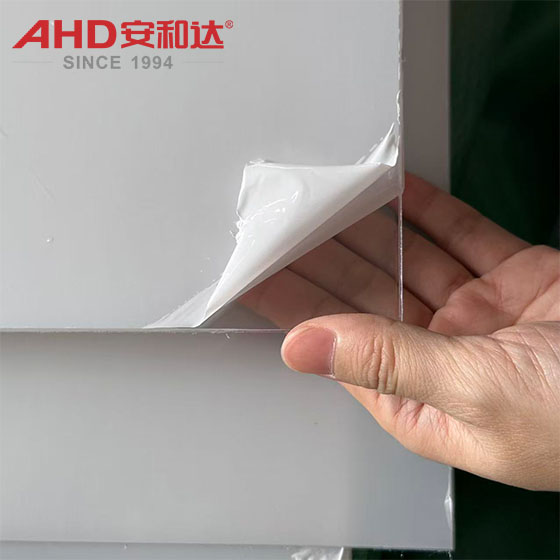
PBT Sheet: Easy to process, crystallizes quickly, has good toughness, and is dimensionally stable, making it suitable for complex shapes and parts requiring rapid prototyping.
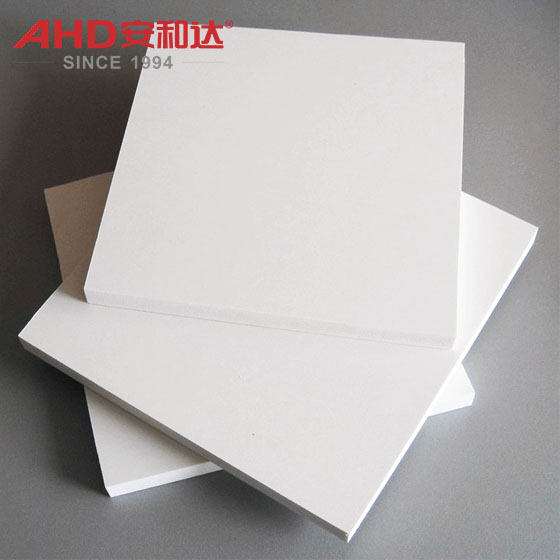
PET Sheet: More heat-resistant and rigid, but requires more stringent processing conditions (higher mold temperatures are needed to promote crystallization), otherwise its performance will be affected.
How to Choose: PBT or PET?
When choosing a material, it's necessary to consider the specific application scenario, performance requirements, and production costs.
Situations where PBT is preferred:
High molding efficiency requirements: Parts requiring rapid injection molding to shorten production cycles and reduce costs.
Complex shapes and thin walls: PBT has better flowability, making it easier to fill complex mold cavities.
Requirements for good toughness and impact resistance: For example, electronic housings requiring snap-fit connections and frequently moving mechanical parts.
Extremely high dimensional stability requirements: In humid environments, PBT's extremely low water absorption ensures almost no dimensional change.
Typical electronic and electrical connectors: This is a traditional strength of PBT because it combines good insulation, processability, and solderability.
Situations where PET is preferred:
Higher temperature resistance requirements: For example, high-temperature components in automotive engine compartments and electronic components that need to withstand higher soldering temperatures.
Higher rigidity/modulus requirements: In structural parts subjected to high stress and where deformation is not allowed, PET's higher rigidity is more advantageous.
Transparency requirements: Unreinforced PET can be transparent for packaging or optical components requiring transparency (PBT is typically opaque).
Cost considerations: In some cases, the price of PET resin as a raw material may be more competitive.
For example:
CPU sockets on computer motherboards: PBT is typically used because it requires extremely high dimensional accuracy to ensure pin alignment and to withstand the high temperatures of wave soldering. PBT's dimensional stability and processability are more suitable for this purpose.
Structural brackets around automotive engines: PET might be chosen because it needs to withstand the high temperatures generated by the engine and requires higher rigidity to support other components.
Summary
PBT is an engineering plastic with excellent overall performance. Its high flowability, rapid crystallization, excellent electrical properties, and dimensional stability make it one of the preferred materials in electronics, automotive, and machinery industries. Compared to PET, PBT excels in processing ease and toughness, while PET has a slight advantage in heat resistance and rigidity. When choosing, it is essential to consider the product's usage environment, performance priorities, and manufacturing process.
AHD PET Plastic Rod