

Have you ever wondered why the casings of appliances in your home, electronic devices in your office, and even the internal components of public transportation don't easily ignite during short circuits or overloads? Behind this lies an invisible "firewall" silently protecting them—flame-retardant plastics. It's not only an achievement of materials science but also a crystallization of wisdom within modern safety regulations. Today, let's unveil its mysteries.
Why do we need fire-retardant plastics?
Plastics, due to their lightweight, ease of processing, and high degree of structural design freedom, have long been an indispensable basic material in modern industrial systems. However, it must be acknowledged that most general-purpose plastics are inherently flammable and easily produce large amounts of dense smoke and toxic gases during combustion.
In fire scenarios, what is truly fatal is often not the open flame, but the high-temperature smoke, asphyxiating gases, and the escape failure caused by rapidly obstructed vision. Therefore, the core engineering goal of flame-retardant materials is not to pursue an ideal "completely non-combustible" solution, but rather to implement predictable and manageable safety constraints on combustion behavior through material design and system control: it needs to be more difficult to ignite, and not prematurely enter a combustion state under abnormal conditions such as short circuits, overloads, or localized overheating; even if ignited, it should self-extinguish as soon as possible after the fire source is removed, rather than continuously fueling combustion; the flame spread rate must be significantly suppressed to buy time for personnel evacuation and emergency response; at the same time, it must minimize smoke density and toxicity to reduce secondary injuries.
From an engineering perspective, the essence of flame-retardant plastics is to delay and reduce the "risk of getting out of control".
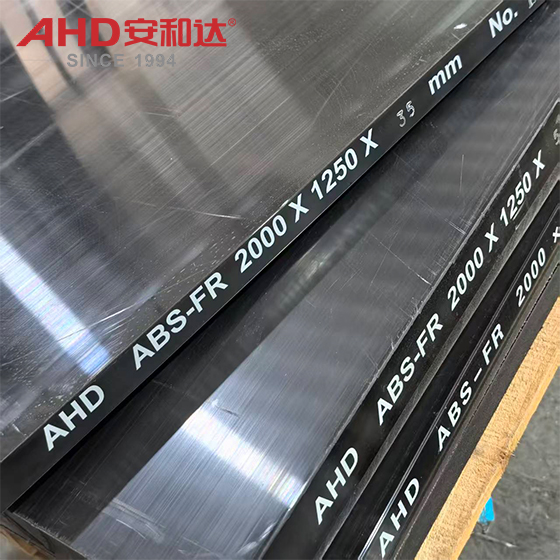 AHD FR ABS Sheet
How exactly does flame retardancy work?
Many people believe that flame-retardant materials are simply "non-combustible," but this is not the case. The goal of flame retardancy is to delay combustion, reduce flame spread, and decrease the production of toxic smoke; it's a comprehensive set of intervention methods targeting the chain reaction of combustion.
Based on material design, flame retardants can be divided into two categories: intrinsic (material molecules contain flame-retardant groups) and additive (external flame retardants added):
1. Intrinsic: These refer to polymers containing atoms or groups with flame-retardant effects (such as nitrogen, silicon, phosphorus, and halogens) in their main chain or side chains. When the polymer is heated and combusts, these atoms undergo a chemical reaction, producing flame-retardant gases, thereby inhibiting the spread of fire.
2. Additive: This involves adding flame retardants to polymers that lack flame-retardant properties or have poor flame-retardant properties using physical methods. The flame-retardant effect of the flame retardant improves the flame-retardant performance of the polymer. (Flame retardants commonly used in the preparation of flame-retardant polymers can be classified as organic flame retardants, inorganic flame retardants, and composite flame retardants.)
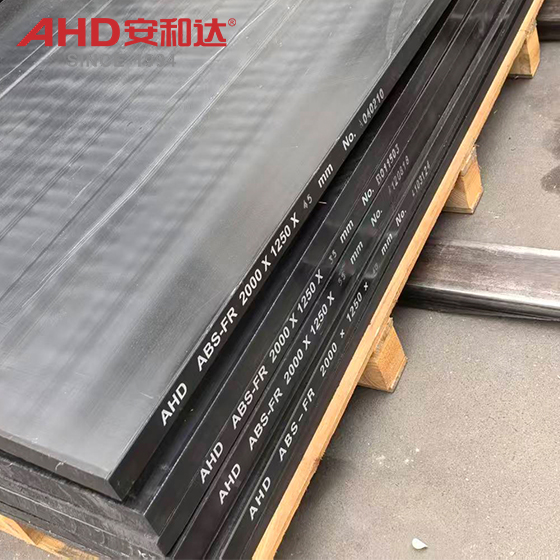
Flame Retardant ABS Sheet
Common flame retardant mechanisms can generally be classified into three categories:
1. Gas-phase flame retardancy: Interrupting the chain combustion reaction, the flame retardant decomposes endothermally, releasing non-flammable inert gases, diluting flammable gases, or causing insufficient oxygen supply during combustion.
2. Condensed-phase flame retardancy: A solid carbon layer provides heat and oxygen insulation, forming a carbonized protective layer on the material surface during combustion, achieving heat insulation, oxygen isolation, and delayed combustion.
3. Endothermic flame retardancy: Absorbing heat to inhibit the formation of flammable gases. The flame retardant undergoes a strong endothermic reaction, absorbing some of the heat released during combustion, lowering the surface temperature of the combustible material, effectively inhibiting the formation of flammable gases, thereby interrupting the combustion cycle.
However, in practical applications, these three mechanisms often work synergistically to construct a more effective flame retardant system.
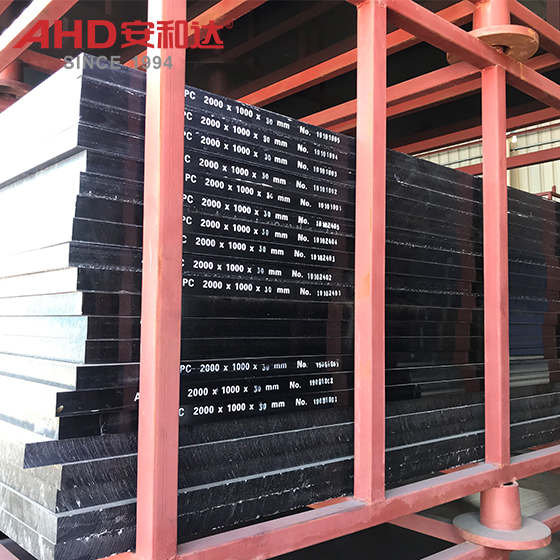
FR PC Sheet
How is flame retardancy rating determined? Understanding flame retardant "behavior" through the UL94 test
Flame retardancy performance is not determined by subjective judgment, but by standardized, repeatable scientific testing. The UL94 vertical burning test is one of the most common methods for evaluating the flame retardancy of engineering plastics. During the test, a standard-sized plastic strip is suspended vertically, and its bottom is burned with a specified flame for 10 seconds before being removed. The afterflame time, whether molten droplets are produced, and whether the droplets ignite the cotton underneath are recorded.
Based on the test results, common ratings include (from highest to lowest):
V-0: Afterflame time ≤ 10 seconds; molten droplets are not allowed to ignite the cotton. This is one of the most common flame retardancy requirements for critical components in electronics, electrical appliances, and automobiles.
V-1: Afterflame time ≤ 30 seconds; molten droplets are also not allowed to ignite the cotton.
V-2: Afterflame burning time ≤ 30 seconds, but molten droplets are allowed, and these droplets may ignite absorbent cotton, resulting in a relatively higher risk of flame spread.
HB: This is a horizontal flammability test rating, requiring the material to burn at a rate lower than the specified value or self-extinguish within a limited length. It is the lowest flame retardancy rating in the UL94 system.
In addition, UL94 also includes higher ratings such as 5VA/5VB, using higher-energy flames and more stringent combustion conditions to assess the material's fire resistance and structural integrity under direct exposure to strong flames.
However, a higher flame retardancy rating is not simply "safer the higher." Different components face different types of heat sources, failure modes, and consequences. High-grade flame retardant materials can be used in critical locations; however, in components with relatively controllable risks, excessively pursuing a high flame retardancy rating may sacrifice the material's structural performance, processing stability, or even introduce new hazards. Truly scientific flame retardant design involves using the appropriate rating in the appropriate location. Standards are the starting point for flame retardant materials entering the market, but not the end point; the real environment is the ultimate test.
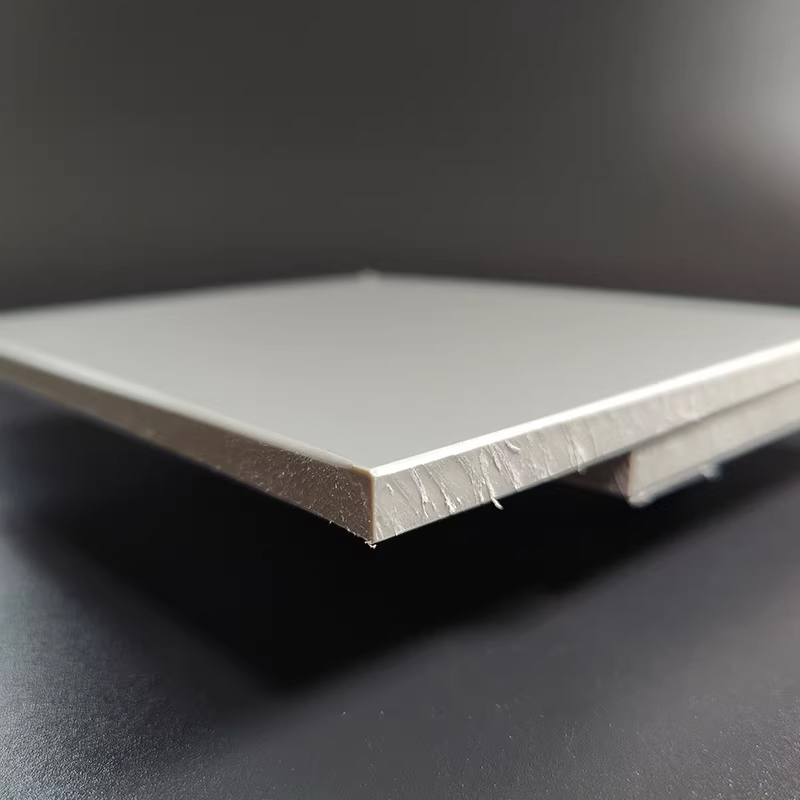
Flame Retardant PP Sheet
Flame retardancy cannot rely on luck, and safety cannot depend on complacency.
From material procurement to the final product's use, every step requires utmost care. The selection of flame-retardant materials, the assessment of the usage environment, and standardized operation all require rigorous data support and scientific judgment. Any compromise on safety performance can lead to costs far exceeding the initial investment in the event of an accident.
In industrial safety management, there is no room for complacency. Only a systematic and strictly controlled flame retardant strategy can provide truly reliable protection for users and the environment.
In numerous fire incidents, the improper use of materials, neglect of safety design, and simplified testing procedures are often not the direct causes of fire, but rather key factors contributing to the rapid spread of fire and amplified casualties and losses. Especially in high-risk application scenarios such as electrical equipment, building components, and public facilities, whether materials possess genuine, stable, and sustainable flame-retardant capabilities often determines whether an accident is "controlled" or "exacerbated."
Major international standards include the IEC 60695 series (fire hazard testing) (equivalent to GB/T 5169), UL 94 (plastics flammability standard), FMVSS 302 (combustion characteristics of automotive interiors), EN 45545 (rail transport), and FAR 25.853 in the aerospace field. Different standards correspond to different ignition source types—such as needle flame, horizontal/vertical flame, and glow wire—reflecting the thermal stress scenarios that may be encountered in actual use.
Flame retardancy is not just a compliance requirement, but a lifeline. Therefore, "flame retardancy" is never an optional requirement or a requirement merely stated in standard documents, but a fundamental respect for life and public safety, and a bottom line.
Fire safety is the core bottom line for industrial production and application. AHD consistently adheres to strict quality control standards, from raw material selection to finished product testing, to ensure that every flame-retardant plastic sheet meets fire-retardant performance standards and is of stable and reliable quality. Upholding its commitment to quality and respect for safety, AHD continuously refines its core product competitiveness, aiming to deliver safe and high-quality flame-retardant plastic sheets to the market. With professional products and services, AHD strives to build a strong fire safety barrier for various industries, becoming a trusted flame-retardant material partner for its customers.
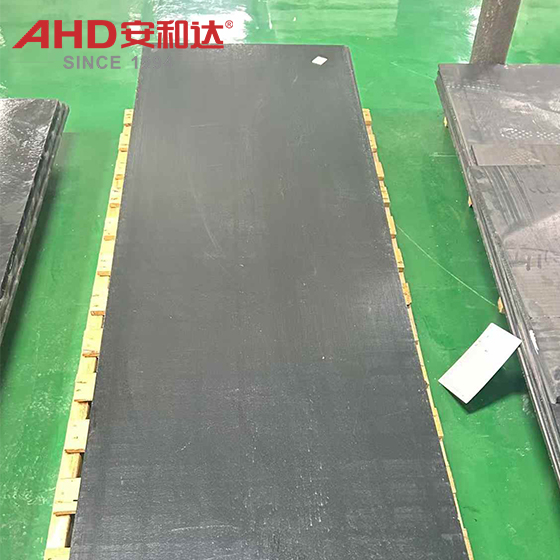
AHD FR +GF PA6 Sheet
When choosing our AHD flame-retardant plastic sheets, prioritize according to your core needs:
For high transparency and impact resistance: Choose FR PC. It's flame-retardant while maintaining excellent light transmittance and strong impact resistance, suitable for scenarios requiring visibility and drop resistance.
For high strength and creep resistance: Choose FR PA6+GF. Reinforced with glass fiber, it offers high rigidity, wear and oil resistance, suitable for structural load-bearing and mechanical components.
For chemical resistance and low cost: Choose FR-PP. It's resistant to acid and alkali corrosion, lightweight, and cost-effective, suitable for general flame-retardant protection and enclosures.
For balanced overall performance: Choose FR-ABS. It balances rigidity and toughness, is easy to process and mold, and is suitable for general applications such as appliance and electronic enclosures.
Core selection principle: Prioritize transparency requirements, strength requirements, and cost budget, and match the selection according to your needs.