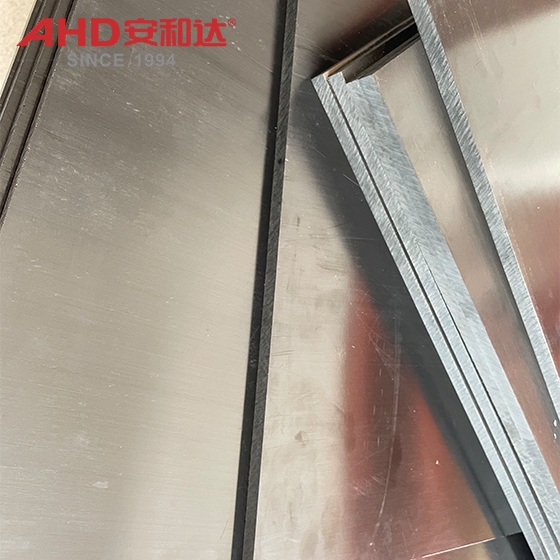
Stiffness refers to the force required for an object to undergo a unit deformation; flexibility refers to the magnitude of deformation an object undergoes under a unit force. Higher stiffness makes deformation less likely; higher flexibility makes deformation easier. Materials with good toughness are relatively soft, with higher elongation at break and impact strength, but lower hardness, tensile strength, and tensile modulus.
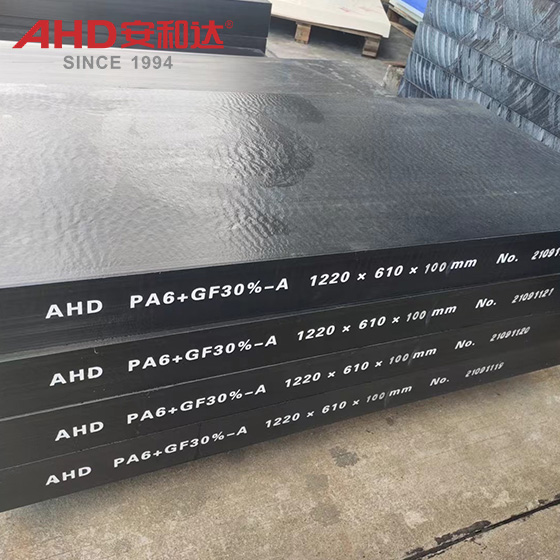
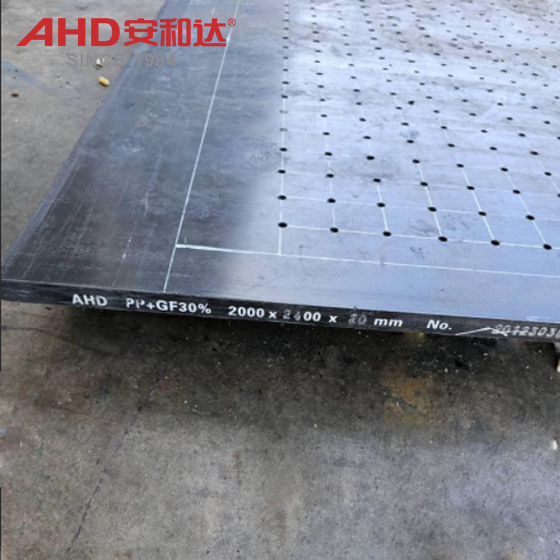
As can be seen from the above description, stiffness and toughness are opposites, but for modified plastic products, they can be interdependent. For example, when glass fiber reinforced plastics, while their stiffness increases, their tensile strength and impact strength may also increase, such as in Glassfiber PP Sheet, GF PA6 Sheet, and GF PEEK Sheet.
How to Improve the Toughness of Plastics?
Tests on plastic products have shown that improving the toughness of the matrix resin is beneficial to improving the toughening effect of the toughened plastic.
There are many ways to increase toughness, such as increasing the molecular weight of the matrix resin to narrow the molecular weight distribution, or controlling crystallization, crystallinity, crystal size, and crystal form. Toughness.
How to differentiate commonly used toughening agents for plastics?
Rubber elastomer toughening: EPR (ethylene propylene diene monomer), EPDM (ethylene propylene diene monomer), butadiene rubber (BR), natural rubber (NR), isobutylene rubber (IBR), nitrile rubber (NBR), etc., are suitable for toughening and modifying all plastic resins.
Thermoplastic elastomer toughening: SBS, SEBS, POE, TPO, TPV, etc., are mostly used for toughening polyolefins or non-polar resins. When used for toughening polyesters, polyamides, and other polymers containing polar functional groups, compatibilizers need to be added.
Core-shell copolymer and reactive terpolymer toughening: ACR (acrylates), MBS (methyl acrylate-butadiene-styrene copolymer), PTW (ethylene-butyl acrylate-glycidyl methacrylate copolymer), E-MA-GMA (ethylene-methyl acrylate-glycidyl methacrylate copolymer), etc.; mostly used for toughening engineering plastics and high-temperature resistant polymer alloys.
High-toughness plastic blend toughening: PP/PA, PP/ABS, PA/ABS, HIPS/PPO, PPS/PA, PC/A3S, PC/PBT, etc.; polymer alloying technology is an important method for preparing high-toughness engineering plastics;
Other toughening methods include nanoparticle toughening (such as nano-CaCO3), and Salin resin (DuPont metal ionomer) toughening.